In 2021, a Northwestern University-led research team received a Defense Advanced Research Projects Agency (DARPA) contract worth up to $33 million to develop an implantable “living pharmacy” to control the human body’s sleep/wake cycles. Now, the researchers have completed a major step toward achieving this goal.
In new work, researchers have developed a novel device that produces oxygen at the site in order to keep cells alive inside the self-contained implant. Oxygen is a major ingredient for keeping cells alive — and thriving — for longer periods of time inside of the implantable pharmacy. Because the longer cells can stay alive and healthy, the longer they can autonomously produce therapeutics for the body.

By using electricity to split water that the cells are already bathed in, the researchers were able to produce oxygen while avoiding the production of harmful byproducts such as chlorine or hydrogen peroxide. And by controlling the amount of electricity used, the researchers could change how much oxygen it produces.
In new experiments, the novel device (called the “electrocatalytic on-site oxygenator” or “ecO2”) kept cells (70-80%) alive for close to a month in low oxygen conditions in vitro or for weeks in vivo. Without ecO2, only about 20% of cells were alive after 10 days, but the researchers hypothesize that the cells would lose their ability to secrete drugs long before that. With advances in wireless power and communication, the researchers are confident that chronic operation over multiple months or more is within reach.
Sign up for the Daily Dose Newsletter and get every morning’s best science news from around the web delivered straight to your inbox? It’s easy like Sunday morning.
The research will be published on Thursday (Nov. 9) in the journal Nature Communications.
“Our device can be used to improve the outcomes of cell-based therapies, which use biological cells to treat diseases or injuries in the body,” said Northwestern’s Jonathan Rivnay, who co-led the study. “Cell-based therapies could be used for replacing damaged tissues, for drug delivery or augmenting the body’s own healing mechanisms, thus opening opportunities in wound healing and treatments for obesity, diabetes and cancer, for example. Generating oxygen on site is critical for many of these ‘biohybrid’ cell therapies. We need many cells to have sufficient production of therapeutics from those cells, thus there is a high metabolic demand. Our approach would integrate the ecO2 device to generate oxygen from the water itself.”
Rivnay is a professor of biomedical engineering and materials science and engineering at Northwestern’s McCormick School of Engineering and principal investigator of the DARPA-funded NTRAIN (Normalizing Timing of Rhythms Across Internal Networks of Circadian Clocks) project. He co-led the new study with Tzahi Cohen-Karni, a professor of biomedical engineering and materials science and engineering at Carnegie Mellon University (CMU). The study’s co-first authors are Northwestern’s Abhijith Surendran and CMU’s Inkyu Lee.
A longer-lasting implant
Ultimately, the goal of the implantable “living pharmacy” strategy is to develop devices that never run out of drugs. Then, people will never have to worry about remembering to take their medicine or inject therapeutics. But, for this to work successfully, the implant needs to last for long periods of time without needing to be refilled.
Combining synthetic biology with bioelectronics, Northwestern leads a collaboration with Rice University biomedical engineering professor Omid Veiseh to produce the therapeutics on site within the device. Keeping these engineered cells alive is a crucial step in the development of these potentially life-saving devices. Although previous research has explored strategies for delivering oxygen to cells, those methods used bulky equipment that is impractical for use inside the human body.
“Some approaches introduce gaseous oxygen from outside the body to tackle this problem. This is akin to using a scuba tank while diving,” Surendran said. “It is bulky. You have to carry it around with you. The air can run out, and there is a high risk of gas embolism.”
Ditching the scuba tank
To bypass the need for impractical equipment, the researchers turned to water-splitting, a popular strategy for energy conversion and storage. For example, other researchers have explored splitting water into hydrogen and oxygen in order to use hydrogen as fuel. However, these technologies focus on water splitting at alkaline or acidic conditions. Rivnay’s team, on the other hand, is more interested in oxygen production at conditions comparable to those within the human body.
The secret behind the team’s new ecO2 device is sputtered iridium oxide, a successful electrocatalyst that has also been used in biomedical applications. Inside the device, the cells are already living in a fluid of water, salts and nutrients. Iridium oxide helps drive an electrochemical reaction at low voltage to deliver oxygen using the already-available water in biofluids. The electricity splits the water into hydrogen and oxygen.
“It is as simple as a Chemistry 101 experiment we all did as kids,” Rivnay said. “You pass electricity through water and bubbles form at the metals, and the water splits into oxygen and hydrogen. We are doing this but in a smarter manner. Using unique materials allows more efficient and low energy production of oxygen. And in our device, we aren’t forming oxygen bubbles. We operate our devices under conditions where the oxygen generated is dissolved in water — without bubbles.”
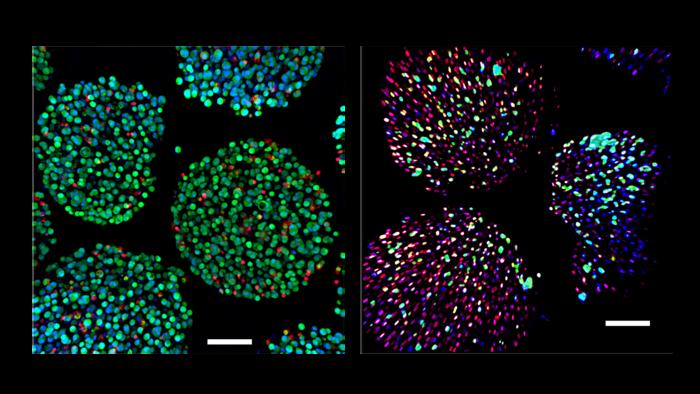
In experiments, ecO2 generated enough oxygen to keep densely packed cells (60,000 cells per cubic millimeter) alive in hypoxic conditions. These results prove that ecO2 devices can be readily integrated into bioelectronic platforms, enabling high cell loadings in smaller devices with broad applicability.
Without ecO2, control cells met a swift demise.
“The cell density used in our study is about six times higher than the average cell density of pancreatic islets reported in the literature,” Surendran said. “Normal oxygen concentration in blood is not sufficient to sustain their viability for extended periods. After the first week, 70% of the cells in control devices lost functionality. The remaining 30% took about 10 more days to lose functionality.”
Next, Rivnay and collaborators will focus on long-term deployment of ecO2. Specifically, they are working on highly stable materials that can operate inside the body for months at time — eventually using this approach to treat chronic disease conditions.
“We believe this technology will enable smaller, more potent cell therapy and regulated cell-therapy devices,” Rivnay said. “Our goal is to translate this technology to clinic. We are currently exploring various disease models.”
IMAGE CREDIT: NASA.
If you enjoy the content we create and would like to support us, please consider becoming a patron on Patreon! By joining our community, you’ll gain access to exclusive perks such as early access to our latest content, behind-the-scenes updates, and the ability to submit questions and suggest topics for us to cover. Your support will enable us to continue creating high-quality content and reach a wider audience.
Join us on Patreon today and let’s work together to create more amazing content! https://www.patreon.com/ScientificInquirer


Leave a Reply