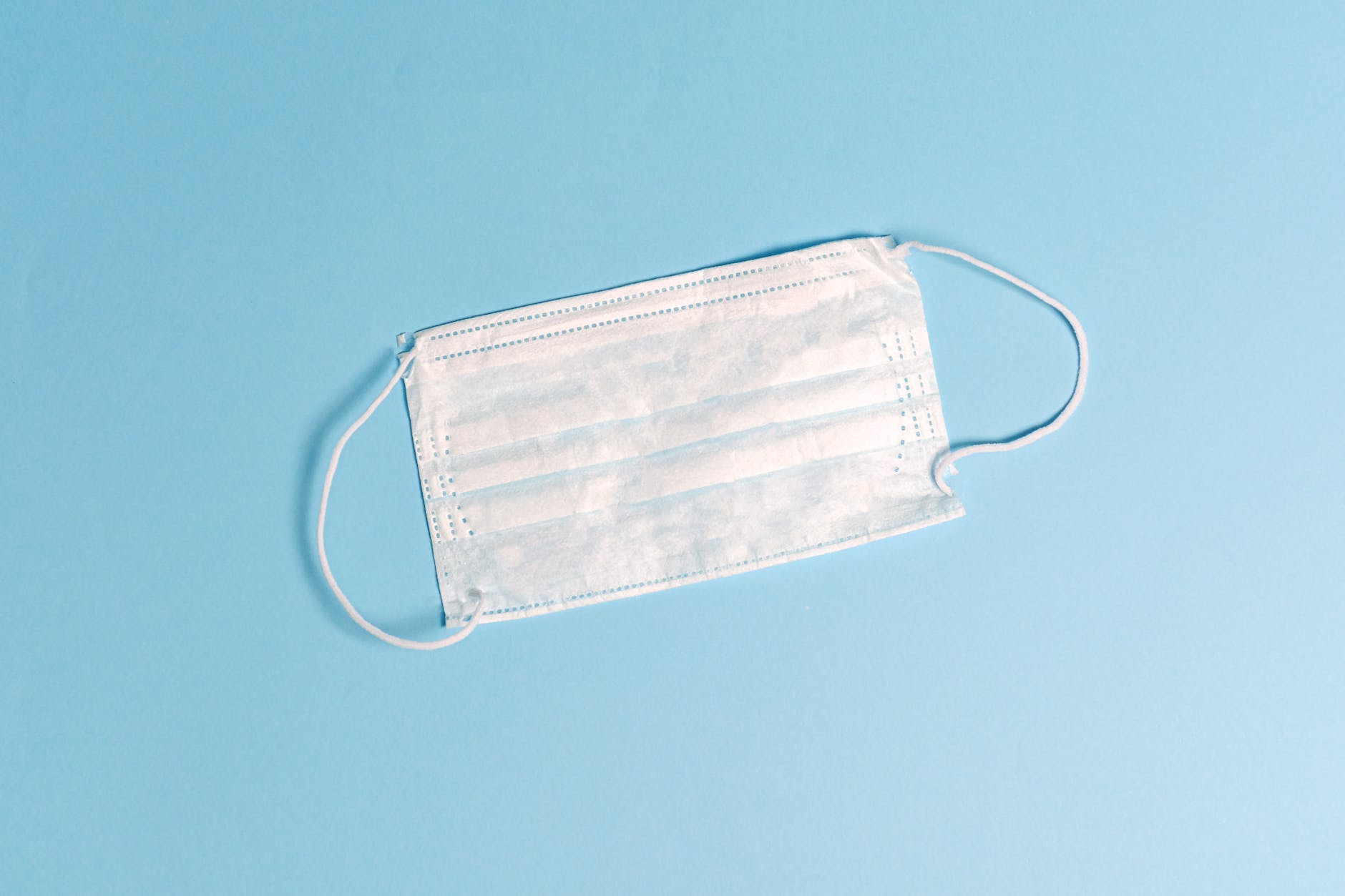
Nurses, researchers, and workplace safety officers worry new guidelines from the Centers for Disease Control and Prevention might reduce protection against the coronavirus and other airborne pathogens in hospitals.
A CDC advisory committee has been updating its 2007 standards for infection control in hospitals this year. Many health care professionals and scientists expressed outrage after the group released a draft of its proposals in June.
The draft controversially concluded that N95 face masks are equivalent to looser, surgical face masks in certain settings — and that doctors and nurses need to wear only surgical masks when treating patients infected by “common, endemic” viruses, like those that cause the seasonal flu.
The committee was slated to vote on the changes on Aug. 22, but it postponed action until November. Once the advice is final, the CDC begins a process of turning the committee’s assessment into guidelines that hospitals throughout the United States typically follow. After the meeting, members of the public expressed concern about where the CDC was headed, especially as covid-19 cases rise. Nationwide, hospital admissions and deaths due to covid have been increasing for several consecutive weeks.
“Health care facilities are where some of the most vulnerable people in our population have to frequent or stay,” said Gwendolyn Hill, a research intern at Cedars-Sinai Medical Center in Los Angeles, after the committee’s presentation. She said N95 masks, ventilation, and air-purifying technology can lower rates of covid transmission within hospital walls and “help ensure that people are not leaving sicker than they came.”
“We are very happy to receive feedback,” Alexander Kallen, chief of the Prevention and Response Branch in the CDC’s Division of Healthcare Quality Promotion, told KFF Health News. “It is our goal to develop a guideline that is protective of patients, visitors, and health workers.” He added that the draft guidelines are far from final.
In June, members of the CDC’s group — the Healthcare Infection Control Practices Advisory Committee — presented a draft of their report, citing studies that found no difference in infection rates among health providers who wore N95 masks versus surgical masks in the clinic. They noted flaws in the data. For example, many health workers who got covid in the trials were not infected while wearing their masks at work. But still, they concluded the masks were equivalent.
Their conclusion runs contrary to the CDC’s 2022 report, which found that an N95 mask cuts the odds of testing positive for the coronavirus by 83%, compared with 66% for surgical masks and 56% for cloth masks. It also excludes a large clinical trial published in 2017 finding that N95 masks were far superior to surgical masks in protecting health workers from influenza infections. And it contradicts an extensive evaluation by the Royal Society, the United Kingdom’s national academy of sciences, finding that N95 masks, also called N95 respirators, were more effective against covid than surgical masks in health care settings around the world.
Sign up for the Daily Dose Newsletter and get every morning’s best science news from around the web delivered straight to your inbox? It’s easy like Sunday morning.
“It’s shocking to suggest that we need more studies to know whether N95 respirators are effective against an airborne pathogen,” said Kaitlin Sundling, a physician and pathologist at the University of Wisconsin-Madison, in a comment following the June meeting. “The science of N95 respirators is well established and based on physical properties, engineered filtered materials, and our scientific understanding of how airborne transmission works.”
Her assertion is backed by the California occupational safety agency, Cal/OSHA, whose rules on protecting at-risk workers from infections might be at odds with the CDC’s if the proposals are adopted. “The CDC must not undermine respiratory protection regulation by making the false and misleading claim that there is no difference in protection” between N95 masks and surgical masks, commented Deborah Gold, an industrial hygienist at Cal/OSHA, at the August meeting.
Researchers and occupational safety experts were also perplexed by how the committee categorized airborne pathogens. A surgical mask, rather than an N95, was suggested as protection for a category they created for “common, endemic” viruses that spread over short distances, and “for which individuals and communities are expected to have some immunity.” Three committee representatives, researchers Hilary Babcock, Erica Shenoy, and Sharon Wright, were among the authors of a June editorial arguing that hospitals should no longer require all health care workers, patients, and visitors to wear masks in hospitals. “The time has come to deimplement policies that are not appropriate for an endemic pathogen,” they wrote.
However, in a call with KFF Health News, Kallen clarified that the committee put coronaviruses that cause colds in that category, but not yet the coronavirus causing covid.
The committee’s next tier consisted of viruses in a “pandemic-phase,” when the pathogen is new and little immunity through infection or vaccination exists. It recommended that health workers wear an N95 mask when treating patients infected by bugs in this category. Its third, highest tier of protection was reserved for pathogens like those causing measles and tuberculosis, which, they claimed, can spread further than lower-tier threats and require an N95.
Virologists said the committee’s categories hold little water, biologically speaking. A pathogen’s mode of spreading isn’t affected by how common it is; common viruses can still harm vulnerable populations; and many viruses, including SARS-CoV-2, can travel significant distances on microscopic droplets suspended in the air.
“Large COVID outbreaks in prisons and long-term health care facilities have demonstrated that the behavior of infectious aerosols is not easily classified, and these aerosols are not easily confined,” wrote the deputy chief of health at Cal/OSHA, Eric Berg, in a letter of concern to the CDC committee, obtained by KFF Health News.
The committee pitted its assessment of N95 masks against their drawbacks. Its draft cites a study from Singapore in which nearly a third of health care personnel, mostly nurses, said wearing such masks negatively affected their work, causing acne and other problems exacerbated by hot and humid conditions and prolonged shifts. Rather than discard the masks, the authors of that study recommend better-fitting masks and rest breaks.
Noha Aboelata, a doctor and the CEO of Roots Community Health Center in Oakland, California, agrees. “There are other strategies to bring to bear, like improved mask design and better testing,” she said, “if we decide it’s unacceptable to give a patient covid when they go to the hospital.”
Aboelata is one of hundreds of doctors, researchers, and others who signed a letter to CDC Director Mandy Cohen in July, expressing concern that the CDC committee will weaken protections in hospitals. They also warned that scaling back on N95 masks could have repercussions on emergency stockpiles, rendering doctors and nurses as vulnerable as they were in 2020 when mask shortages fueled infections. More than 3,600 health workers died in the first year of the pandemic in the United States, according to a joint investigation by KFF Health News and The Guardian.
The concerned clinicians hope the committee will reconsider its report in light of additional studies and perspectives before November. Referring to the draft, Rocelyn de Leon-Minch, an industrial hygienist for National Nurses United, said, “If they end up codifying these standards of care, it will have a disastrous impact on patient safety and impact our ability to respond to future health crises.”
This story was originally published in KFF Health News and NBC News.
WORDS: Amy Maxmen.
IMAGE CREDIT: Anna Shvets.
If you enjoy the content we create and would like to support us, please consider becoming a patron on Patreon! By joining our community, you’ll gain access to exclusive perks such as early access to our latest content, behind-the-scenes updates, and the ability to submit questions and suggest topics for us to cover. Your support will enable us to continue creating high-quality content and reach a wider audience.
Join us on Patreon today and let’s work together to create more amazing content! https://www.patreon.com/ScientificInquirer



Leave a Reply