
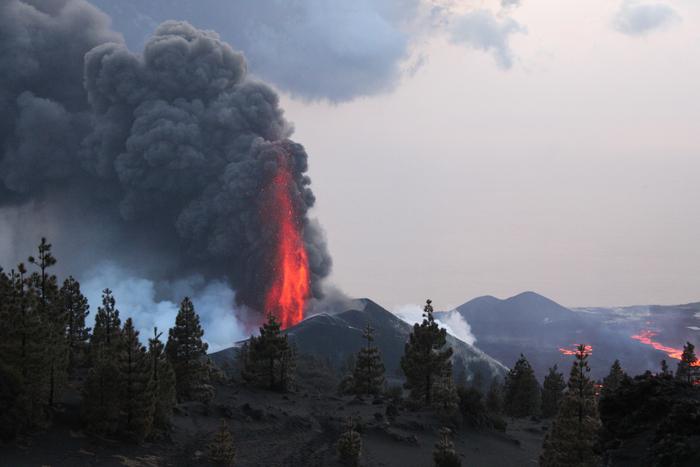
Precursors of the molecules needed for the origin of life may have been generated by chemical reactions promoted by iron-rich particles from meteors or volcanic eruptions on Earth approximately 4.4 billion years ago, according to a study published in Scientific Reports.
Previous research has suggested that the precursors of organic molecules — hydrocarbons, aldehydes and alcohols — may have been delivered by asteroids and comets or produced by reactions in the early Earth’s atmosphere and oceans. These reactions may have been promoted by energy from lightning, volcanic activity, or impacts. However a lack of data has meant that it is unclear what the predominant mechanism that produced these precursors was.
Oliver Trapp and colleagues investigated whether meteorite or ash particles deposited on volcanic islands could have promoted the conversion of atmospheric carbon dioxide to the precursors of organic molecules on the early Earth. They simulated a range of conditions that previous research has suggested may have been present on the early Earth by placing carbon dioxide gas in a heated and pressurised system (an autoclave) under pressures ranging between nine and 45 bars and temperatures ranging between 150 and 300°C. They also simulated wet and dry climate conditions by adding either hydrogen gas or water to the system. They mimicked the depositing of meteorite or ash particles on volcanic islands by adding different combinations of crushed samples of iron meteorites, stony meteorites, or volcanic ash into the system, as well as minerals that may have been present in the early Earth and are found in either the Earth’s crust, meteorites, or asteroids.
If you enjoy the content we create and would like to support us, please consider becoming a patron on Patreon! By joining our community, you’ll gain access to exclusive perks such as early access to our latest content, behind-the-scenes updates, and the ability to submit questions and suggest topics for us to cover. Your support will enable us to continue creating high-quality content and reach a wider audience.
Join us on Patreon today and let’s work together to create more amazing content! https://www.patreon.com/ScientificInquirer
The authors found that the iron-rich particles from meteorites and volcanic ash promoted the conversion of carbon dioxide into hydrocarbons, aldehydes and alcohols across a range of atmosphere and climate conditions that may have been present in the early Earth. They observed that aldehydes and alcohols formed at lower temperatures while hydrocarbons formed at 300°C. The authors suggest that as the early Earth’s atmosphere cooled over time, the production of alcohols and aldehydes may have increased. These compounds may then have participated in further reactions that could have led to the formation of carbohydrates, lipids, sugars, amino acids, DNA, and RNA. By calculating the rate of the reactions they observed and using data from previous research on the conditions of the early Earth, the authors estimate that their proposed mechanism could have synthesised up to 600,000 tonnes of organic precursors per year across the early Earth.
The authors propose that their mechanism may have contributed to the origins of life on Earth, in combination with other reactions in the early Earth’s atmosphere and oceans.




Leave a Reply