HAVE YOUR SAY.
We are proud to announce the inaugural session of The Bullpen, where the members of the Scientific Inquirer community get to shape the site’s editorial decision making. We’ll be discussing people and companies to profile on the site. On Wednesday June 8th at 5:30pm EST, join us on Discord and let’s build the best Scientific Inquirer possible.
Health care workers are among the most trusted messengers of COVID-19 vaccine information, but many fail to leverage that trust on social media to encourage vaccination, according to a first-of-its-kind study led by scientists at the University of Pittsburgh School of Public Health that reveals vaccination motivations and hesitancies among health care workers and how those feelings are shared on social media.
The findings, published today in the Journal of Community Health, point to new messages about COVID-19 vaccination – such as those involving freedom – that public health practitioners and clinicians can use to connect with patients, colleagues and community members. Combined with techniques that foster constructive conversations, the Pitt researchers believe the insights gleaned from their study can turn the tide on vaccine hesitancy.
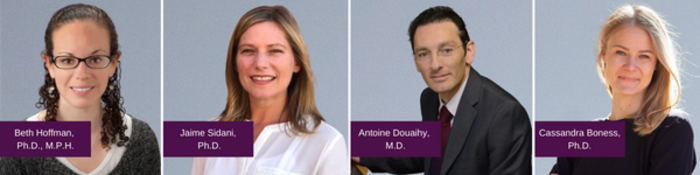
“In the survey, health care workers gave us really compelling, heartwarming reasons why they got vaccinated, but we didn’t see a lot of that data on social media,” said lead author Beth Hoffman, M.P.H., a doctoral candidate in the Department of Behavioral and Community Health Sciences at Pitt Public Health. “It speaks to the importance not only of health care workers sharing their stories, but also providing them support to do so. It’s not enough to say, ‘You should share your story.’ We need to offer training on how they can do that.”
Hoffman and senior author Jaime Sidani, Ph.D., M.P.H., assistant professor at Pitt Public Health, partnered with scientists in the Department of Psychiatry at Pitt’s School of Medicine to survey hundreds of health care workers at UPMC Western Psychiatric Hospital about COVID-19 vaccination. They also analyzed a sample of thousands of tweets to learn similarities and differences between survey responses and what they saw on Twitter.
The team defined “health care worker” as anyone working in the hospital to provide for patients, including nurses, cafeteria staff, therapists, security personnel and physicians. Coauthor Antoine Douaihy, M.D., professor of psychiatry and medicine at Pitt, explained it was particularly insightful to get COVID-19 vaccination views of employees at UPMC Western Psychiatric Hospital – one of the largest free-standing psychiatric hospitals in the nation – because the patients they serve are often stigmatized.
“COVID-19 vaccination uptake among our patients is low because of historical and cultural issues that get in the way of people accepting the vaccine,” Douaihy said. “Learning about the motivations of the health care workers who interact with them can teach us how to connect and build trust with patients.”
Of the 511 health care workers who responded between April and June 2021, 93.2% reported receiving at least one dose of a COVID-19 vaccine, and a third of them said they’d posted about receiving the vaccine on social media.
Among a random sample of almost 2,300 tweets about COVID-19 vaccination, the team determined 1,863 were authored by individuals. Of those, 6% were authored by people who identified as a health care worker or health sciences student. The majority of those – 95% – were either positive or neutral, but only 14% included a personal narrative, despite previous research demonstrating that tweets in which physicians share personal stories are deemed most effective at motivating others to action.
In both the social media analysis and the health care worker surveys, the researchers identified “freedom” as a powerful motivational theme, which suggests that emphasizing “freedom from fear” once vaccinated could be effective at reducing vaccine hesitancy. Addressing misinformation related to reproductive health and vaccination, as well as making vaccine clinics accessible and convenient, were other insights the scientists gleaned from the research.
Coauthor Cassandra Boness, Ph.D., who began this research while at Pitt and is now a research assistant professor at the University of New Mexico, said these kinds of findings are important for public health practitioners using social media to improve vaccination rates and clinicians talking with their patients.
“These insights can inform a practice called ‘motivational interviewing,’ which is a brief, nonconfrontational, empathic approach using a guiding style to connect with patients and facilitate health-related behavior change,” Boness said. “Talking with someone about the COVID-19 vaccine doesn’t have to be a time-consuming lecture – in fact, that probably won’t work. Rather, hearing their concerns, sharing personal experiences and giving thoughtful feedback that validates and explores those concerns – something that can take less than 10 minutes – is far more powerful.”
IMAGE CREDIT: University of Pittsburgh and UPMC


Leave a Reply