Sweaty palms during a job interview. Racing heartbeat before the walk down the aisle. Stomach pains ahead of a final exam. Many of us have experienced a classic stress response in new, unusual, or high-pressure circumstances.
But reevaluating how one perceives stress can make a big difference to a person’s mental health, general wellbeing, and success, according to University of Rochester psychologists.
For their latest study, which appears in the Journal of Experimental Psychology: General, Rochester researchers trained adolescents and young adults at a community college to treat their stress response as a tool rather than an obstacle. The team found that in addition to reducing the students’ anxiety, that “good stress” mindset reset helped them score higher on tests, procrastinate less, stay enrolled in classes, and respond to academic challenges in a healthier way.
To reframe their understanding of stress, the students completed a standardized reading and writing exercise that taught them that their stress responses had a function in performance contexts that applied directly to them, such as test taking.
“We use a type of ‘saying is believing’ approach whereby participants learn about the adaptive benefits of stress and they are prompted to write about how it can help them achieve,” says lead author Jeremy Jamieson, a Rochester associate professor of psychology and the principal investigator at the University’s Social Stress Lab. He researches how experiences of stress affect decisions, emotions, and performance. The study builds on his earlier research on optimizing stress responses.
Q&A
Stress often gets a bad rap. How can stress actually be a good thing?
Conventional thinking suggests that stress is inherently bad and should always be avoided. This may sometimes be misguided because stress is a normal and even defining feature of modern life. For instance, students preparing for their first job interview might perceive their racing heart and sweaty palms as signs they are nervous and about to “bomb” when, in fact, the stress response is helping deliver oxygen to the brain and releasing hormones that mobilize energy.
Throughout the lifespan, people must acquire a wide and varied array of complicated social and intellectual skills, and then apply those skills to thrive. This process is inherently stressful, but it’s also essential to being a productive member of society. Furthermore, if people simply disengaged from the stressors they faced, it could put them at a serious disadvantage. So, for people to thrive in modern life and overcome threats to personal and global survival, they must find a way to embrace and overcome the stressful demands.
What exactly is stress reappraisal or reevaluation?
People experience increases in sympathetic arousal—which can be sweaty palms or a faster heartbeat—during stressful situations. Instead of thinking of everything as “bad” stress, stress responses, including the stress arousal, can be beneficial when it comes to psychological, biological, performance, and behavioral outcomes.
Stress reappraisal is not aimed at eliminating or dampening stress. It does not encourage relaxation, but instead focuses on changing the type of stress response: If we believe we have sufficient resources to address the demands we’re presented with—it doesn’t matter if the demands are high—if we think we can handle them, our body is going to respond with the challenge response, which means stress is seen as a challenge, rather than a threat.
What happened to the “reappraisal” students versus the control group?
In our study of community college students taking math courses, we found that the reappraisal participants exhibited lower levels of math evaluation anxiety both immediately and on a subsequent exam. They also performed better on the exam than the control group immediately after completing our reappraisal exercise.
We then assessed procrastination and goals outside the classroom. While we measured procrastination only once—so I can’t speak to the lagged effects there—the reappraisal students reported procrastinating less, which then predicted higher scores on their next exam.
We also found that the reappraisal students reported more approach goals—that is, goals focused on achieving positive outcomes, such as winning a game or passing a test, rather than on avoiding negative outcomes, such as trying not to lose a game or not to fail a test—which predict positive performance outcomes and wellbeing.
You looked at cortisol and testosterone levels in your two groups. What did you find?
Broadly speaking, cortisol is a catabolic stress hormone and elevations are observed when people are threatened. So, it’s often interpreted as a “negative stress” indicator though it is not always “bad,” whereas testosterone is an anabolic hormone that supports optimal performance.
We found that the reappraisal manipulation led to increases in testosterone and decreases in cortisol in the students for the classroom exam situations, which is a helpful pattern for performing at one’s peak.
What advice do you have for parents whose kids are stressed and anxious, especially now during the pandemic?
The first step is dissociating stress from distress and anxiety. Stress is simply the body’s response to any demand, good or bad. Excitement is a stress state, as is anxiety.
It’s also important for parents to understand that struggles are normal and can even be growth-promoting with proper support. Nobody innovates and thrives without moving beyond their comfort zones. For kids to grow, learn, and succeed, they will need to engage with and take on difficult tasks. The goal should not be to help kids get an A, but rather to push the limits of their knowledge and abilities. Taking that difficult math course and earning a middling grade can be more important for long-term success than settling for an easy course and acing it.
Normalizing experiences of stress and pushing past obstacles can help kids understand that they can do hard things. Reducing stress by removing obstacles, such as eliminating exams, making coursework easier, etc. can even hinder their progress.
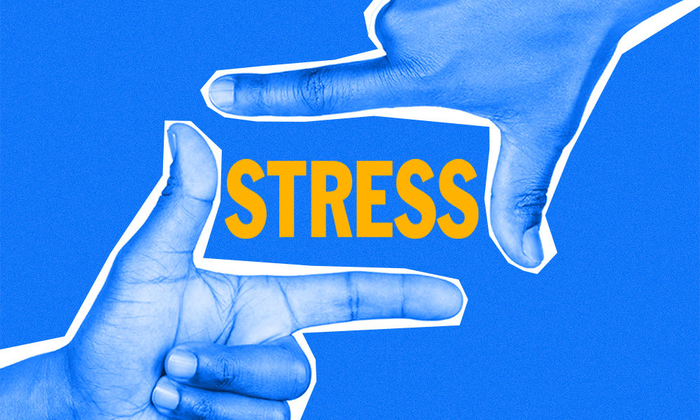
IMAGE CREDIT: University of Rochester illustration / Julia Joshpe

Leave a Reply