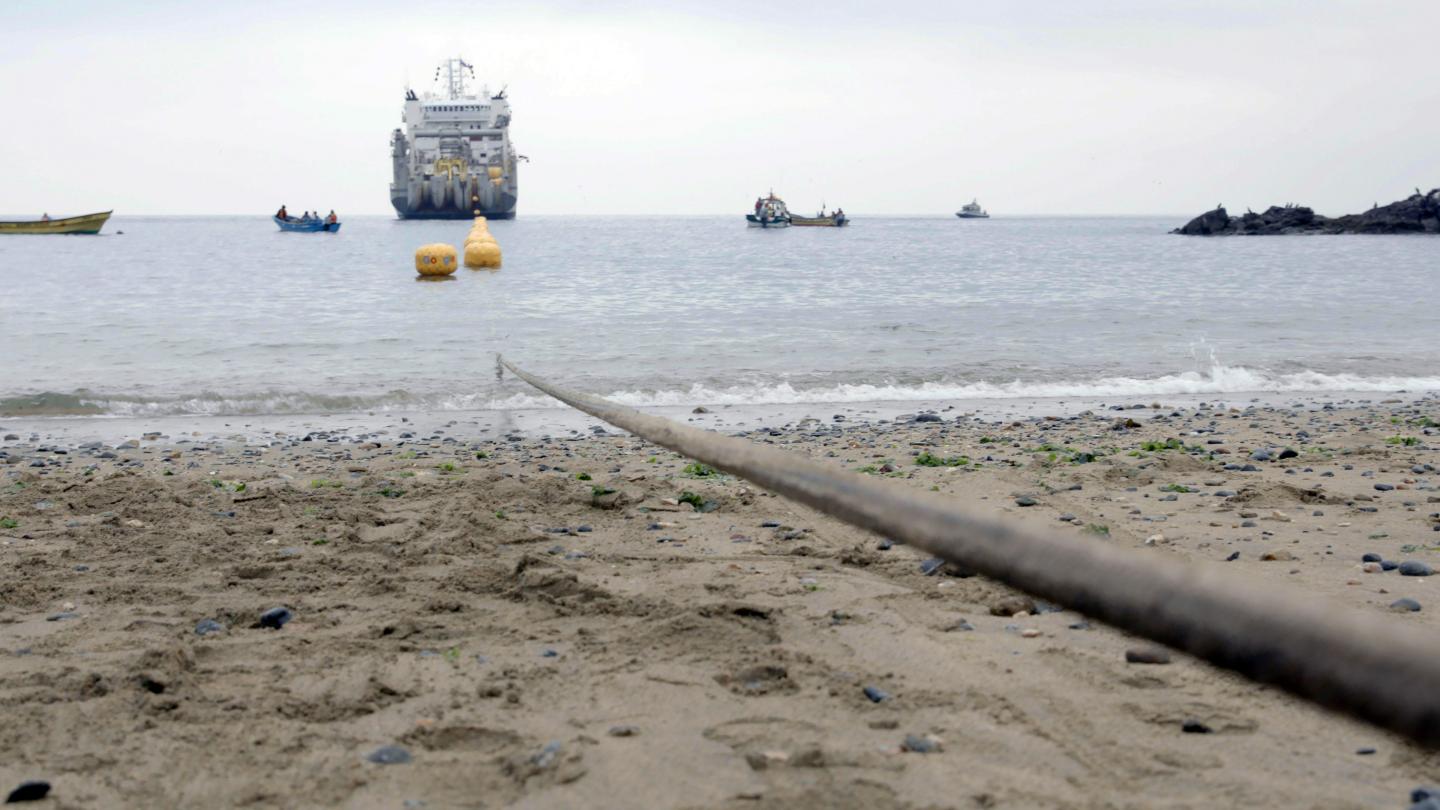
In a new study, researchers show that the fiber optic cables that carry data across the world’s oceans can also be used to sense geophysical events and monitor ocean and seafloor conditions.
Although buoys and cabled observatories can be used to monitor parts of the ocean, the information they provide is limited to their immediate surroundings. The new approach could offer a way to use the global network of subsea fiber optic cables to study otherwise inaccessible parts of the ocean.
“Once perfected, this new technique will allow geophysical sensing in the ocean depths, which are largely unexplored because of a lack of instrumentation that works in this environment,” said Zhongwen Zhan, assistant professor of geophysics at Caltech. “It could one day be used to detect earthquakes with epicenters in the ocean, allowing earlier warnings of earthquakes and tsunamis, for example.”
COPY II

.jpg)
Leave a Reply