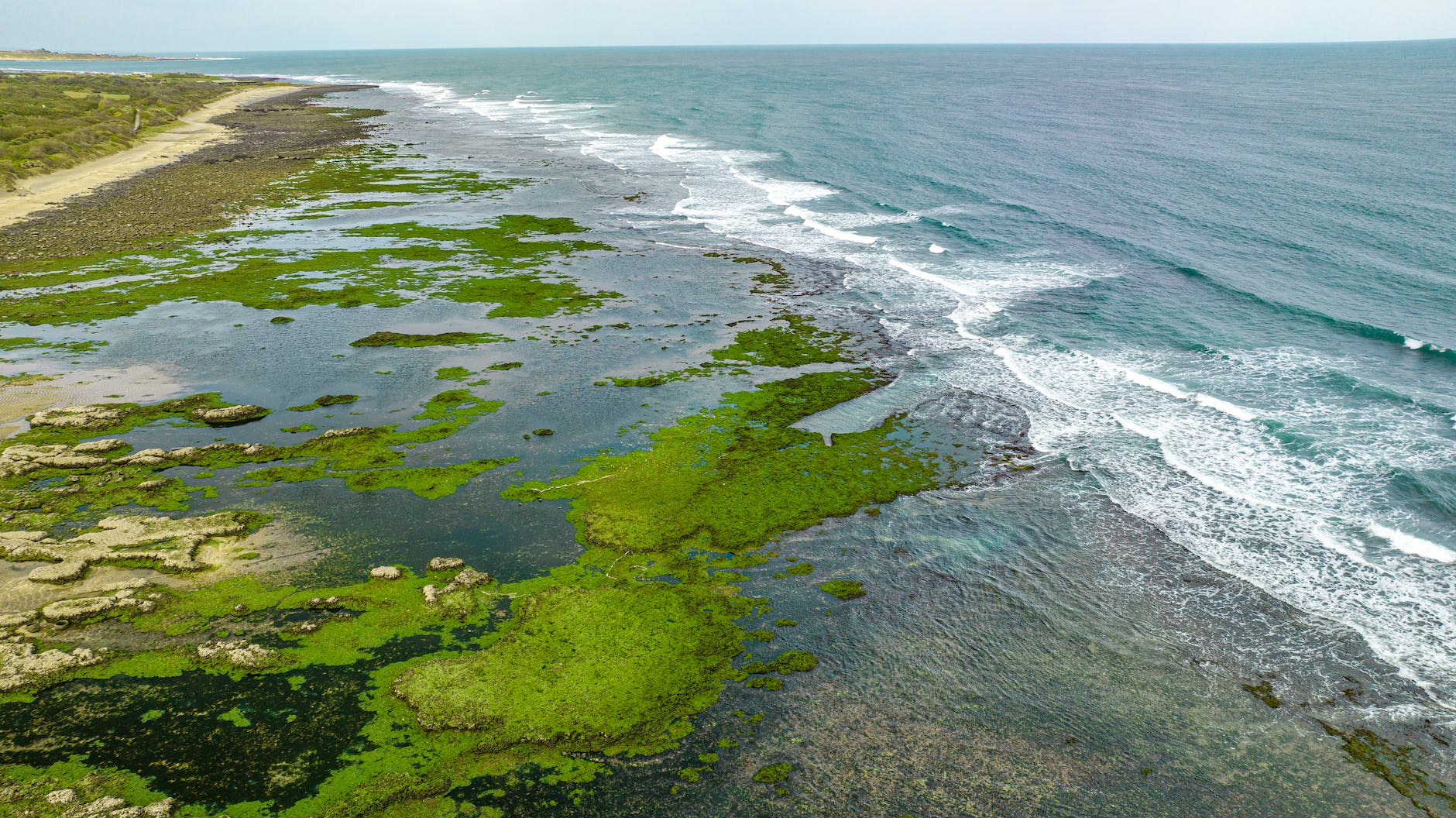
KAIST researchers found that bloom conditions reshape the microbes living on polyethylene, speeding the surface damage that precedes fragmentation.
Algal blooms and plastic pollution are usually treated as separate environmental problems. One turns lakes and rivers green and can poison drinking water; the other litters waterways with bags, bottles and fragments that persist for decades. A study from the Korea Advanced Institute of Science and Technology (KAIST) suggests the two may be working together.
The researchers report that bloom conditions can make discarded plastic more likely to break apart, potentially speeding the formation of microplastics. The study was published in Water Research.
Life on plastic
Plastic that ends up in water does not stay clean for long. Within days, microorganisms colonize its surface, forming a slimy community that scientists call the plastisphere. Earlier research has linked these communities to the spread of pathogens and to the way microplastics move through the environment. But little was known about how algal blooms, which dramatically alter the microbial life of a water body, affect them.
Algal blooms occur when algae or cyanobacteria grow explosively, typically fuelled by nutrient pollution from fertilizers, sewage and livestock waste, and encouraged by warm, still water. Some blooms produce toxins that can sicken people, pets and wildlife. In 2014, a cyanobacterial bloom in Lake Erie left about half a million people around Toledo, Ohio, without safe tap water for several days. Warming temperatures are expected to make such blooms more frequent and intense in many regions.
A pond in a bottle
To study the interaction, the team, led by first author Youngju Kim, a doctoral student, and Professor Jaewook Myung of KAIST’s Department of Civil and Environmental Engineering, collected water from Duck Pond, a pond on the KAIST campus. They used it to build laboratory microcosms, small controlled ecosystems, and induced blooms by adjusting light and nutrients.
Into these microcosms they placed low-density polyethylene, or LDPE, the soft, flexible plastic used in shopping bags, food wrap and packaging film. Over six weeks, they tracked the growth of biofilms on the plastic, how the microbial community changed over time and which functional genes its members carried.
Thicker slime, faster damage
Under nutrient-rich bloom conditions, cyanobacteria and other bacteria multiplied on the plastic, producing a thicker biofilm. Microbes that produce large amounts of extracellular polymeric substances, a sticky matrix that helps microorganisms cling to surfaces, became significantly more abundant.
As the community shifted, early weathering of the plastic accelerated. Microbes carrying genes for enzymes linked to plastic oxidation and the first stages of degradation became more common under bloom conditions.
Physical measurements backed this up. Infrared spectroscopy showed more oxygen-containing chemical groups, carbonyl and hydroxyl groups, on the plastic surface, a classic signature of oxidation. Scanning electron microscopy revealed more fine cracks. Together, the results suggest the plastic had become more vulnerable to physical breakdown.
In open water, plastic usually weathers through a combination of sunlight, heat and physical abrasion. Ultraviolet light breaks chemical bonds in the polymer, oxygen attacks the damaged sites, and the material grows brittle and starts to crack. Chemists track that process by measuring oxygen-containing groups on the surface, which is why the infrared results are significant: they show the bloom-driven community pushing the plastic along the same path toward brittleness.
The researchers attribute the change to the combined activity of the microbial community rather than any single species. The bloom did not introduce a plastic-eating superbug; it reshaped an entire ecosystem in ways that, collectively, wore the plastic down faster.
Why that is not good news
It might seem that faster plastic breakdown is a benefit. In practice, partial degradation tends to turn large, visible debris into countless smaller pieces rather than removing it. Microplastics, fragments smaller than 5 millimetres, have been found in water, soil, air, food and human tissue. They are harder to clean up than intact items, can be eaten by wildlife and can carry chemicals and microbes with them.
Polyethylene is the most widely produced plastic in the world, and global plastic production now runs to hundreds of millions of tonnes each year, a substantial fraction of which escapes into the environment. If bloom conditions accelerate the first step in breaking that plastic into fragments, nutrient pollution could be amplifying the microplastic problem in lakes, reservoirs and coastal waters.
“As algal blooms become more frequent because of climate change, we expect this work to provide an important scientific basis for integrated environmental management strategies that consider water quality management and plastic waste management together,” Myung said.
From microcosm to the real world
The study has clear limits. It was a six-week laboratory experiment using water from a single pond and a single type of plastic. It measured early-stage weathering, surface oxidation and microscopic cracking, rather than the full fragmentation of plastic into microplastic particles, and the release does not report field validation or the number of replicate microcosms.
Real water bodies are far more variable, with shifting temperatures, currents, sunlight and mixtures of plastic types. Sunlight itself is a major driver of plastic weathering, and how ultraviolet exposure interacts with bloom-driven biofilms remains to be explored.
Still, the work identifies a plausible and previously overlooked connection between two of the most pervasive forms of water pollution. The study involved researchers from KAIST and the Hong Kong University of Science and Technology and was funded by the National Research Foundation of Korea, Korea’s Ministry of Oceans and Fisheries and KAIST’s Grand Challenge 30 Program.
Notes
- Kim, Y., Wang, Y., Xu, W., Yung, C. C. M., & Myung, J. “Eutrophication drives taxonomic and functional trajectories in plastic-associated biofilms.” Water Research, 25 May 2026. DOI: 10.1016/j.watres.2026.126183.
- The Korea Advanced Institute of Science and Technology (KAIST). “KAIST finds algal blooms make plastic more prone to breaking apart, revealing a mechanism of microplastic formation.” EurekAlert!, 27 July 2026. https://www.eurekalert.org/news-releases/1137844.
Featured image: Photo by William Chen on Pexels.com

Leave a Reply