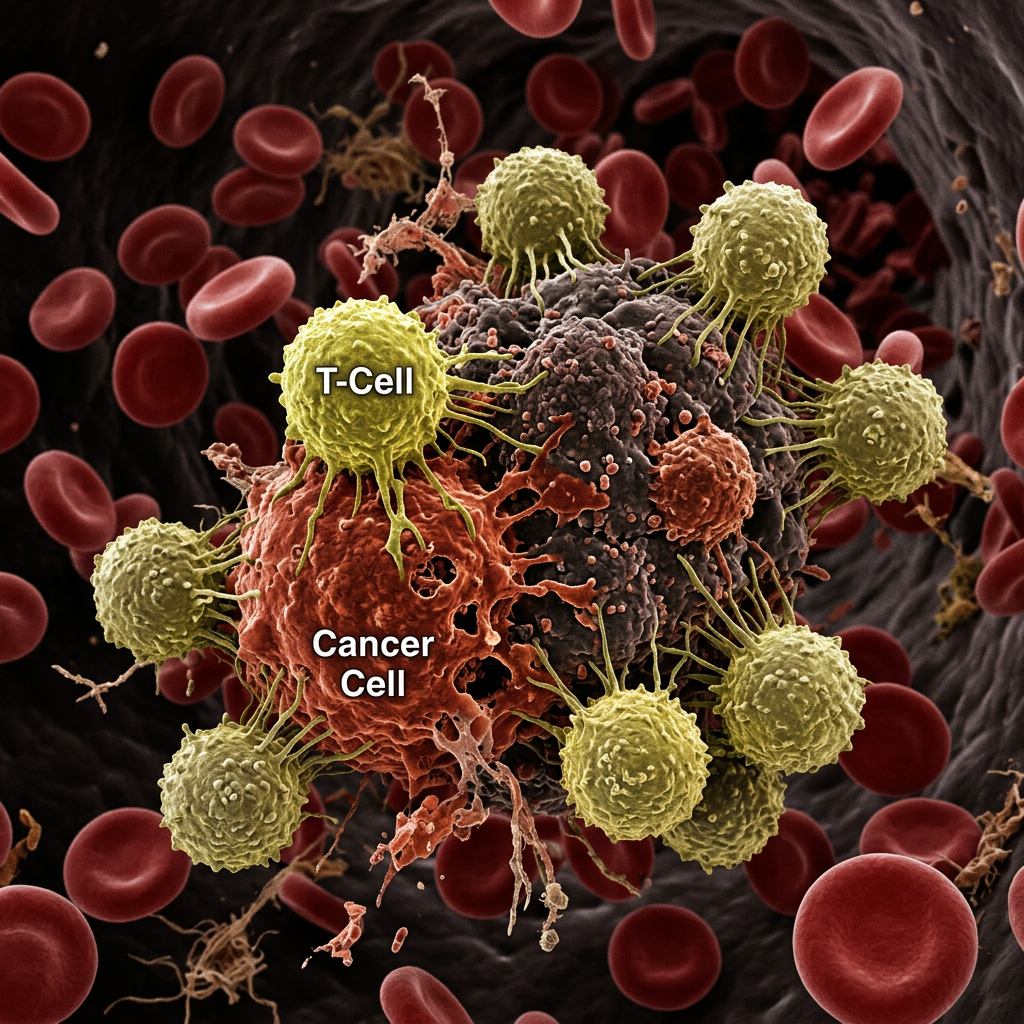
Chiba University researchers show that immune cells ferry tumor antigens to the thymus, deleting would-be cancer fighters, and identify the receptor CCR9 as a possible target.
The immune system is supposed to recognize and destroy abnormal cells, including cancerous ones. Tumors survive by evading that surveillance, and most of what scientists know about how they do it involves tricks played close to home, inside the tumor and its immediate surroundings. A new study suggests some tumors reach much further, into the very organ where the immune system learns what to attack.
Researchers at Chiba University’s Graduate School of Medicine in Japan report in Science Advances that tumors in mice can exploit the thymus, the small organ behind the breastbone where T cells are trained, to make the immune system systemically tolerant of the cancer.
“Our findings suggest that tumors can hijack the physiological machinery of central tolerance to induce systemic immune unresponsiveness against themselves,” said Professor Motoko Y. Kimura, who led the team.
Until now, most explanations of tumor immune evasion have focused on the battlefield itself. Tumors can coat themselves in molecules such as PD-L1 that switch off attacking T cells, recruit regulatory T cells that dampen immune responses, and surround themselves with suppressive immune cells that create a hostile microenvironment. Checkpoint inhibitor drugs work by disrupting some of those local defenses. What has been far less clear is whether tumors also interfere with the immune system centrally, before T cells ever reach the tumor.
The thymus as a classroom
T cells are the immune system’s precision killers. Each carries a receptor that recognizes a particular molecular fragment, or antigen. Because those receptors are generated somewhat randomly, some inevitably recognize the body’s own tissues. The thymus acts as a classroom that weeds those out: developing T cells that react strongly to self-antigens presented there are eliminated before they can cause autoimmune disease. Immunologists call this central tolerance.
It is an elegant safeguard. But it raises an unsettling possibility. If antigens from a tumor were presented in the thymus as though they were part of the healthy self, the immune system might learn to delete the very T cells that could fight the cancer.
Dendritic cells on the move
That is what Kimura and first author Dr. Yangsong Wang found. As tumors grew in mice, a type of immune cell called plasmacytoid dendritic cells, or pDCs, accumulated in the thymus, carrying tumor antigens with them. The buildup began within two weeks of tumor implantation and continued as the tumors grew. The result was the deletion of developing T cells capable of recognizing the tumor.
The migration depended on a single molecular address label: the chemokine receptor CCR9, which guides cells toward the thymus. In mice genetically engineered to lack CCR9, the accumulation of pDCs in the thymus during tumor growth was largely prevented.
The team also discovered that two distinct populations of pDCs work in complementary ways. One, arising from common dendritic cell progenitors, carries tumor antigens into the thymus and presents them to developing T cells, triggering their deletion. The other, arising from common lymphoid progenitors, releases the signaling molecule interferon-alpha in the thymus, which suppresses the production of new T cells. Together they amount to a two-pronged assault on the immune system’s ability to mount a response.
Plasmacytoid dendritic cells are best known as first responders against viruses, pumping out large amounts of interferon when they detect an infection. They have also been linked to immune tolerance in some settings, but their role in carrying tumor antigens to the thymus had not been described. The finding suggests a cell type usually associated with sounding the alarm can, in the context of cancer, help silence it.
Blocking the route
The consequences were measurable. Mice lacking CCR9 developed smaller tumors and preserved a population of tumor-specific CD8+ T cells, the cytotoxic cells that kill cancer cells directly, suggesting a stronger anti-tumor response.
“Our findings reveal a previously unrecognized mechanism of tumor immune evasion through manipulating thymic function,” Wang said, “and identify CCR9 as a potential therapeutic target in cancer immunotherapy.”
That has implications for treatments already in use. Immune checkpoint inhibitors, which release the brakes on existing T cells, have transformed care for some cancers but help only a minority of patients. One reason may be that there are too few tumor-specific T cells to unleash in the first place. Preventing their deletion in the thymus could, in principle, enlarge that pool.
“By blocking the migration of tumor antigen-carrying pDCs from tumors to the thymus, it may be possible to enhance anti-tumor immunity and improve responses to existing treatments such as immune checkpoint inhibitors,” Wang said.
A wider principle
The authors suggest the mechanism may not be unique to cancer. Chronic or dormant infections might exploit similar thymic tolerance pathways to persist undetected. Future therapies, they propose, could pair immune-activating treatments with approaches that block this route to tolerance.
Caution is warranted. The findings come entirely from mouse studies, and the release does not report how many animals or tumor models were used. The human thymus also shrinks substantially with age, so how much this pathway matters in adults with cancer, who are often older, remains an open question. Turning CCR9 into a drug target would require showing that blocking it is safe, given its other roles in the body.
Still, the study adds a new dimension to how scientists think about tumor immune evasion. Cancer may not simply hide from the immune system. In some cases, it may be rewriting the immune system’s education.
Co-authors include Ryo Koyama-Nasu, Yukihiro Endo, Ichita Hasegawa, Atsushi Onodera, Mingyu Chen of Tokyo University of Science, Kiyoshi Hirahara, Shinichiro Motohashi and the late Toshinori Nakayama.
Notes
- Wang, Y., et al. “Distinct thymic pDC populations promote tumor immune tolerance through complementary mechanisms.” Science Advances, 23 July 2026. DOI: 10.1126/sciadv.adx9864.
- Chiba University. “How systemic immune regulation is ‘hijacked’ during tumor progression.” EurekAlert!, 23 July 2026. https://www.eurekalert.org/news-releases/1136331.


Leave a Reply