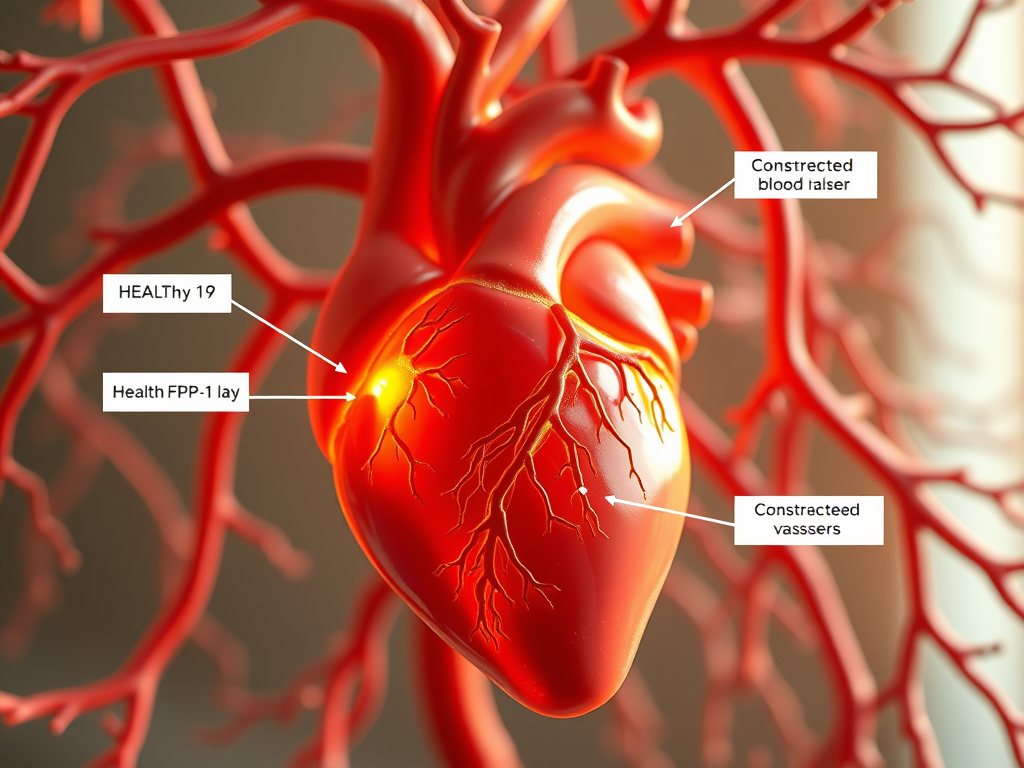
A new synthesis argues that a family of DNA-reshaping proteins divides the work of building a heart by stage, with implications for diagnosing congenital heart defects.
Building a human heart is an exercise in timing. In the first weeks of embryonic life, a sheet of cells must fold into a tube, loop, divide into chambers, sprout valves and wire itself to the developing circulation, all while thousands of genes switch on and off in exactly the right cells at exactly the right moments. When that choreography falters, the result can be a congenital heart defect, the most common category of birth defect worldwide.
Much of the attention in developmental cardiology has gone to transcription factors, the proteins that bind DNA and turn genes on. A new review published in World Journal of Pediatrics focuses on a less-celebrated layer of control: a family of proteins that physically reshape how DNA is packaged, determining which genes are even accessible to be read.
Remodeling the genome’s packaging
Inside the nucleus, DNA is wound around protein spools and folded into a compact material called chromatin. Before a gene can be activated, the chromatin around it often has to be loosened or shifted. That job falls to chromatin remodelers, molecular machines that use energy to slide, eject or reposition the spools.
The review, from a team in China, concentrates on one family of these machines, the CHD proteins (for chromodomain helicase DNA-binding). Drawing on decades of evidence from human genetics, animal models and stem-cell systems, the authors assembled a working model linking individual family members to specific stages of heart development.
Their central message is that the family should not be lumped together. “The data show that we cannot treat these proteins as a single, interchangeable group,” the authors said in an interview accompanying the publication. “They have very distinct, stage-specific jobs.”
A division of labor
According to the review, CHD7 has the strongest connection to cardiac development. It is the gene most frequently mutated in CHARGE syndrome, a rare condition whose features include heart defects, and it appears to play a dominant role early on, when the heart’s basic structure, including the outflow tract that connects it to the major arteries, is being built.
CHD3 and CHD4, which work as part of a larger regulatory assembly known as the NuRD complex, act as what the authors call “identity guardians,” helping heart cells commit to and maintain the correct fate as the chambers form. CHD8, for which the evidence is still emerging, appears to regulate later ventricular growth and the functional maturation of the heart.
“For example, CHD7 is the key player in the early morphogenetic events that build the heart’s structure,” the authors explained, “while CHD4 helps lock in the identity of heart cells as they differentiate.”
The picture that emerges is roughly sequential: CHD7 early, CHD4 in the middle, CHD8 late. But the review is candid that direct evidence of the proteins working in a coordinated way is still lacking. To guide future experiments, the authors propose three testable models for how the remodelers relate to one another, which they describe as “parallel, sequential, and compensatory.” In other words, they may operate independently, hand off to one another in turn, or step in when another family member is missing.
“This refined view points us toward which specific gene to look at when studying different types of heart defects,” the authors said, “and it opens the door to asking whether these remodelers work together or buffer each other’s loss.”
From map to clinic
The stakes are substantial. Congenital heart defects affect roughly 1 in 100 babies and remain a leading cause of infant death from birth defects. Many cases have no identified genetic cause. CHARGE syndrome, whose name is an acronym for some of its characteristic features, including coloboma of the eye, heart defects, atresia of the nasal passages, growth retardation, genital abnormalities and ear abnormalities, is one of the clearest examples of how a single chromatin remodeler can shape the heart: a majority of patients carry mutations in CHD7.
The framework carries practical suggestions. For genetic screening, the review points to CHD7 when a child has an outflow-tract defect, CHD4 for anomalies in how the chambers are patterned, and CHD8 for ventricular dysfunction. Matching the gene to the defect in this way could make diagnostic testing more efficient.
Treatment is a harder problem. Because these remodelers are active in many tissues throughout the body, drugs that target them directly would carry a high risk of side effects. The authors suggest instead looking downstream, at the pathways the remodelers control, such as those governing how heart muscle cells proliferate and manage their energy. Those, they argue, may prove safer drug targets.
Looking ahead, the review calls for studies that combine time-resolved multi-omics, measuring gene activity, chromatin state and other molecular layers at many points during development, with combinatorial genetics, in which several remodelers are disrupted at once. Such work could reveal how the proteins coordinate across developmental time and might one day support epigenetic therapies timed to specific windows of development.
A review, not a new experiment
It is worth being clear about what kind of study this is. The paper is a synthesis of existing research rather than a new experiment, and the release reports no new data. Its value lies in organizing a scattered literature into a framework that can be tested. Whether the division of labor it proposes holds up will depend on the experiments it is designed to provoke.
Still, for families affected by congenital heart disease, and for the clinicians and geneticists trying to explain why a heart formed the way it did, a clearer map of who does what during heart development is a meaningful step.
Notes
- “Role of CHD chromatin remodelers in heart development.” World Journal of Pediatrics, 20 June 2026. DOI: 10.1007/s12519-026-01049-y.
- Zhejiang University / World Journal of Pediatrics. “Heart development’s hidden choreographers: How CHD proteins orchestrate gene expression.” EurekAlert!, 23 July 2026. https://www.eurekalert.org/news-releases/1137435.


Leave a Reply