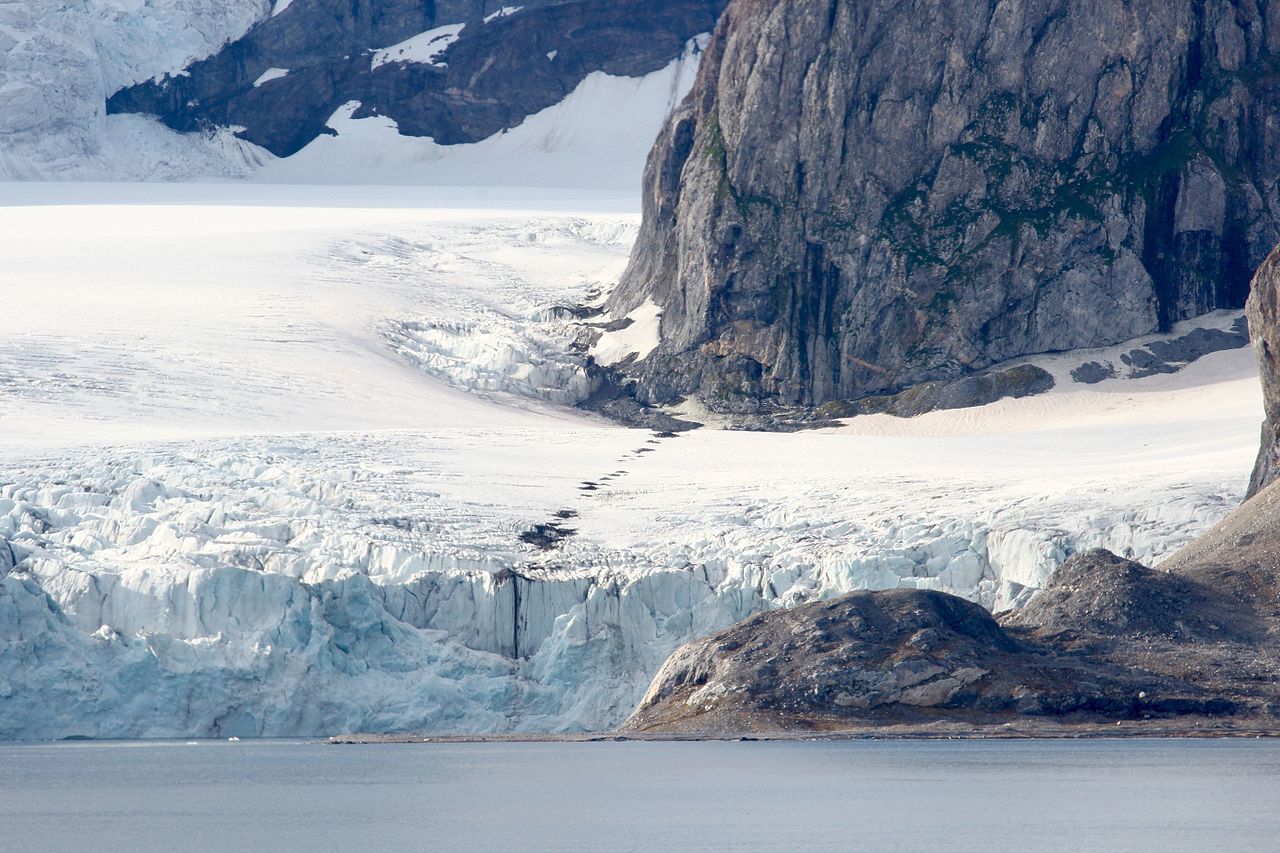
A low-snow winter and record summer heat pushed melt to the highest elevations, erased two small glaciers and brought five-year losses to nearly a fifth.
Switzerland’s glaciers had another devastating year. According to the annual report of Glacier Monitoring Switzerland, they lost more than 5 percent of their remaining ice volume in 2026, following a winter with little snow and a summer of relentless heat. The figure falls just short of the record losses of 2022, but it caps a run of years that has reshaped the Swiss Alps.
In the past five years alone, Swiss glaciers have lost nearly 20 percent of their volume.
Switzerland has roughly 1,400 glaciers, more than any other country in the Alps. In 2022, the country’s glaciers lost about 6 percent of their volume, and a further 4 percent followed in 2023. The 2026 losses place this year just behind 2022.
Thinner, and in some places gone
The data come from GLAMOS, the Swiss glacier monitoring network, which is headquartered at ETH Zurich and run with the universities of Fribourg and Zurich. Its findings are published each year in a report for the Swiss Academy of Sciences.
Glaciologists measure that change directly. They drill stakes into the ice and return to see how much of each stake has been exposed by melting, and they measure snow depth and density in spring to gauge how much mass the winter added. Combined with aerial and satellite surveys, those measurements produce a detailed annual balance sheet for the country’s ice.
Across the country, glaciers thinned by an average of about 2.5 to 4 metres in 2026, and some glacier tongues lost as much as 10 metres of ice. Three of the country’s best-known glaciers, the Rhône, the Aletsch and the Clariden, each recorded their largest melt on record.
Some smaller glaciers did not survive the year. Bella Tola in the canton of Valais and Griessfirn in the canton of Glarus disappeared completely and permanently. They join a growing list of Alpine glaciers that have vanished in recent decades.
Shrinking ice also brings direct dangers. As glaciers retreat and permafrost thaws, slopes that were once held together by ice can become unstable. In May 2025, the collapse of the Birch Glacier above the Swiss village of Blatten buried most of the village under ice and rock, after authorities had evacuated residents days earlier. Such events are a reminder that glacier loss is not only a long-term water problem but an immediate hazard for mountain communities.
No snow to protect them
Two factors combined to make 2026 so damaging. The winter of 2025–2026 was among the ten least snowy since measurements began. Snow matters to glaciers in two ways: it adds mass, and its bright surface reflects sunlight, shielding the darker ice beneath.
Then came the heat. Hot, dry conditions from May through September drove high melt rates that reached even the highest elevations. Summer heat waves kept the freezing level above 4,000 metres for 76 days, more than twice the average and a Swiss record. By September, no snow remained even at 3,500 metres, leaving glaciers exposed with no protective cover.
That pattern, a thin winter snowpack followed by a long, hot summer, is the one glaciologists have warned will become more common as the climate warms. Mountain regions, including the Alps, are warming faster than the global average.
Water now, less later
The melt had an immediate upside. Between July and September, Swiss glaciers released about 2,200 billion litres of water, more than four times the annual drinking-water use of Swiss households. During a dry summer, that meltwater helped sustain rivers, hydropower and agriculture and eased water shortages.
But the report stresses that this is a declining resource. As glaciers shrink, the amount of ice available to melt each summer falls, and with it the buffer that glaciers provide during droughts. Scientists describe this as passing “peak water”: an initial increase in meltwater as glaciers retreat, followed by a long decline once they become too small to sustain it. Many Alpine catchments are expected to pass that point within decades, with consequences for rivers such as the Rhône and the Rhine that flow far beyond Switzerland’s borders.
A long record of retreat
Switzerland has one of the longest and most detailed glacier monitoring records in the world, with some measurements stretching back more than a century. That history makes the recent pace of change stark. One image from the report compares the ice at Konkordiaplatz on the Great Aletsch Glacier, the largest glacier in the Alps, between 2022 and 2026 with measurements from 1953 to 1983, showing how much the ice surface has dropped.
Studies of Alpine glaciers suggest that even if global warming is limited in line with the Paris Agreement, a large share of the ice remaining in the Alps will disappear this century, and under higher emissions scenarios most of it could be gone by 2100.
The release contains no direct statements from researchers, and it does not detail measurement methods or uncertainties. Its expert contact is glaciologist Matthias Huss of ETH Zurich, who leads GLAMOS and is one of the report’s authors. The numbers speak plainly enough. For the glaciers that define the Swiss landscape, and for the communities downstream that rely on them, each hot summer subtracts something that will not come back on any human timescale.
Notes
- Huss, M., Bauder, A., Linsbauer, A., & Barandun, M. GLAMOS annual report 2026. Glacier Monitoring Switzerland (GLAMOS), 2026. DOI: 10.18752/annualrep_2026.
- ETH Zurich. “Devastating year for Switzerland’s glaciers.” EurekAlert!, 30 September 2026. https://www.eurekalert.org/news-releases/1145404.



Leave a Reply