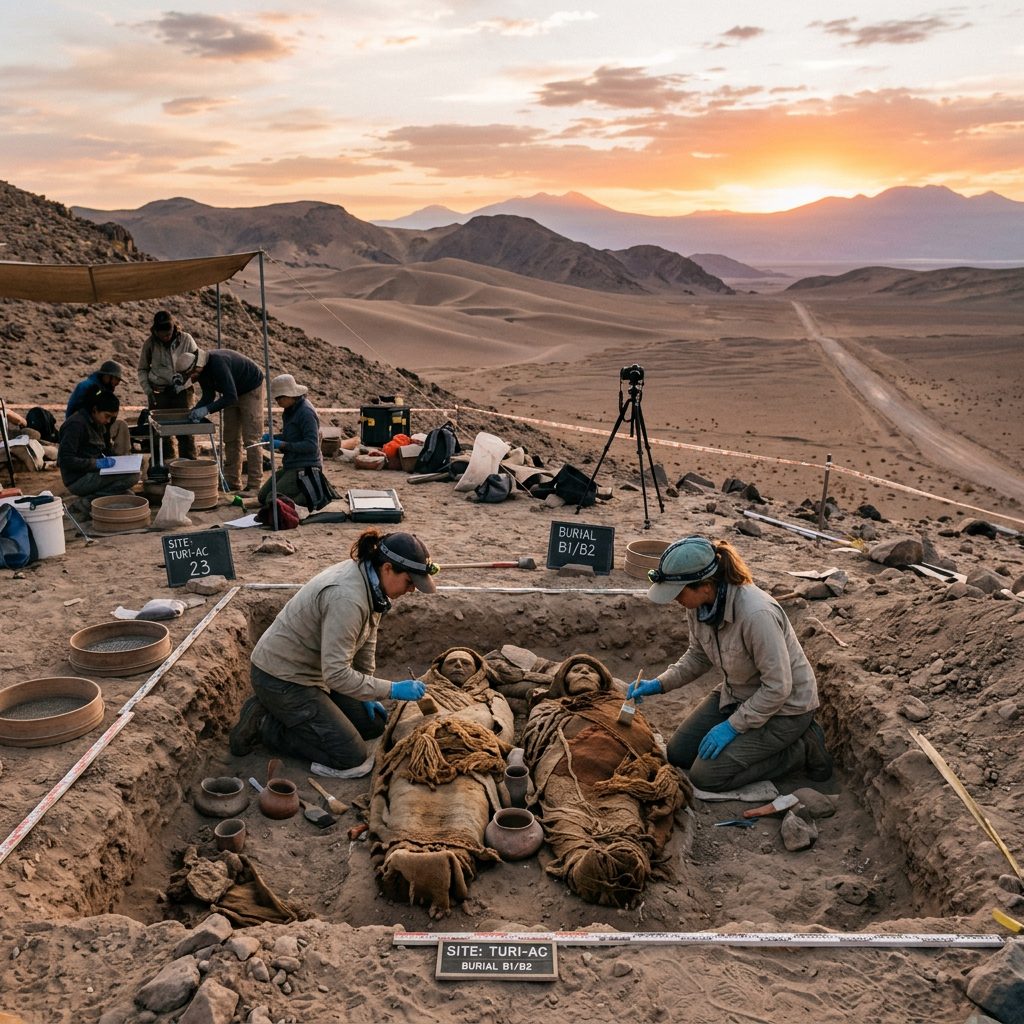
An international team led by the Universities of Córdoba and Pisa has reconstructed diet, mobility, and social status at the Novilara necropolis in central Italy, a large burial ground belonging to the Picene culture, a pre-Roman society that existed alongside groups such as the Tartessians of the Iberian Peninsula. The study, published in the Journal of Archaeological Science, combined bioarchaeological analysis with stable isotopes of carbon, nitrogen, and sulfur measured in bones, teeth, hair, and nails. “As they form, bones and teeth absorb the isotopic composition of the food and water consumed,” explained researcher Laffranchi of the University of Córdoba, which is what let the team reconstruct diet, mobility, and environment from the remains.
The isotope data show that men at Novilara had greater access to animal protein than women, pointing to a gendered division in diet within the community. Despite the Adriatic Sea lying only about 6 kilometers away, the population relied mainly on cereals and meat rather than fish. Isotopic evidence also indicated that a small share of the buried individuals, between roughly 1.4% and 6.4%, came from other regions, suggesting the community had contact, sometimes over considerable distances, with outside populations.
Perhaps the most striking finding concerned social status. Individuals buried with valuable objects such as amber ornaments or weapons showed no isotopic sign of having eaten better in life than those buried more simply. “The study shows that social inequality cannot be interpreted solely based on the objects placed in graves,” Laffranchi said. Co-author Marco Milella of the University of Pisa added that “the study demonstrates the potential of bioarchaeological approaches to understand how people experienced identity,” complicating assumptions that richer burials reflect richer lives.
Endnotes
- Laffranchi, Milella, et al., “Multi-isotopic insights into diet, mobility, and status in the Picene necropolis of Novilara, Italy (8th–7th centuries BCE),” Journal of Archaeological Science, June 20, 2026, DOI: 10.1016/j.jas.2026.106633.
- University of Córdoba, “Diet reveals what life was like 2,700 years ago in a local community: Gender inequality, social status, and migration,” news release via EurekAlert!, July 27, 2026.



Leave a Reply