Approximately one-third of fresh fruits are lost in the supply chain, with half the losses occurring during in-field harvesting and in-plant grading. The complexity of supply chain, waste and economic losses could be reduced through integrated non-destructive harvesting and in-field quality grading. Here researchers developed a self-decoupled tactile sensor for a robotic soft gripper, embedding three-axis self-decoupled triboelectric soft tactile sensors across fingers. During a single harvesting operation, the strategy can measure the gripping force, fruit firmness, and weight by tactile sensors. Hence, integrated non-destructive harvesting and in-field quality grading can be achieved.
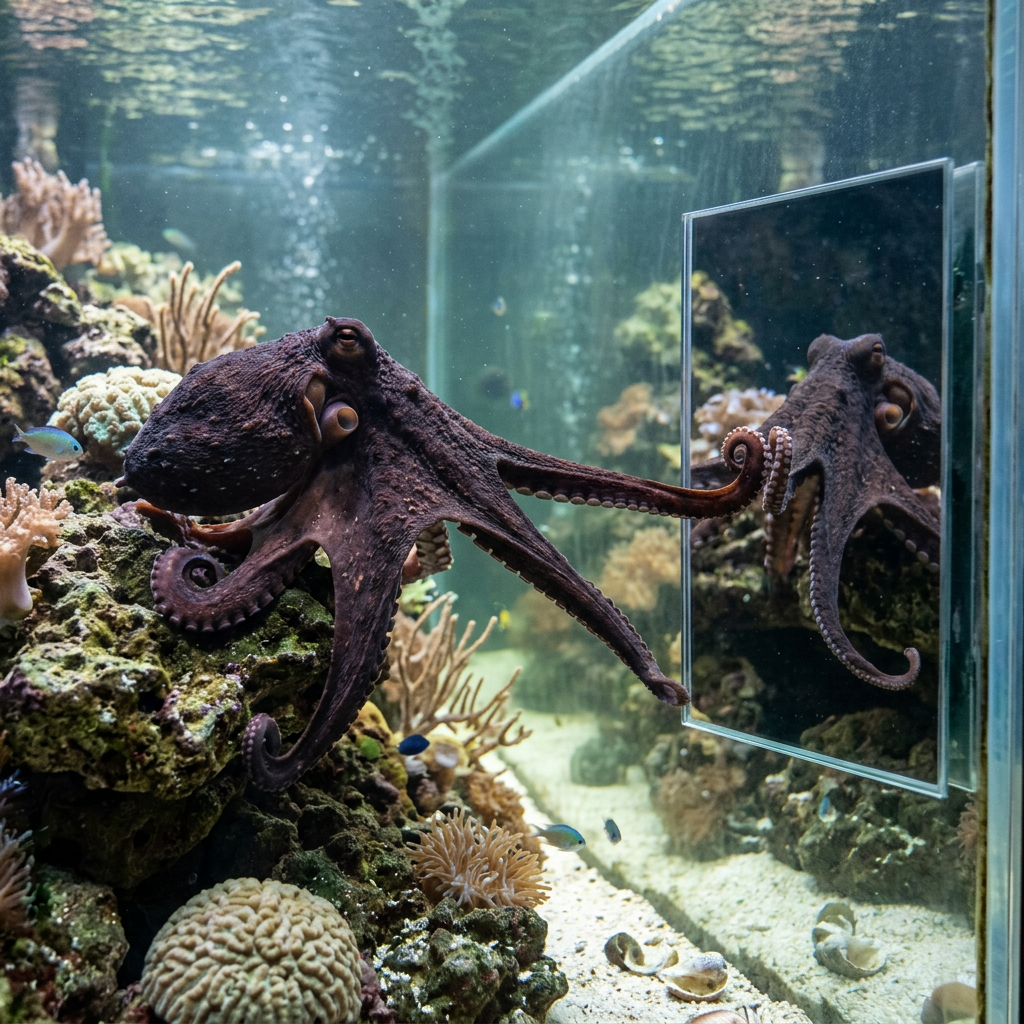
The tactile sensors are bioinspired by the deformation mechanics of octopus suckers under normal and tangential forces. The design features a dual-mode triboelectric nanogenerator (TENG), integrating vertical contact-separation and horizontal sliding modes. This structure can independently respond to normal and tangential forces, generating a superimposed triboelectric signal with three spatially decoupled components. Consequently, the three-axis force can be easily decoupled with three triboelectric signals independently, achieving high-precision measurement within the 0-20 N range.
The researchers demonstrated the practical efficacy of the sensing strategy through in-field experiments. During grasping, fruit firmness is evaluated from the normal force response over time. Upon fruit detachment, tactile sensors monitor both normal and tangential forces in real-time to prevent damage. Finally, with the gripper reoriented palm-down, the fruit weight is non-destructively calculated via static equilibrium between the tangential force and the fruit’s gravity.
Inspired by octopus suckers, the research team developed a three-axis self-decoupled triboelectric tactile sensor and integrated it into a soft robotic harvesting gripper. During a single picking cycle, the system can simultaneously resolve multidirectional forces, assess fruit firmness, and determine fruit weight, thereby integrating non-destructive harvesting with in-field quality grading. This approach offers a new pathway for advancing intelligent agricultural robots while improving quality and reducing losses across fresh-fruit supply chains.
Journal: Nano Research
DOI: 10.26599/NR.2026.94909003
Article Title: An octopus-sucker inspired triboelectric self-decoupling three-axis force-sensing strategy
Article Publication Date: 7-Jul-2026
Source: EurekAlert



Leave a Reply