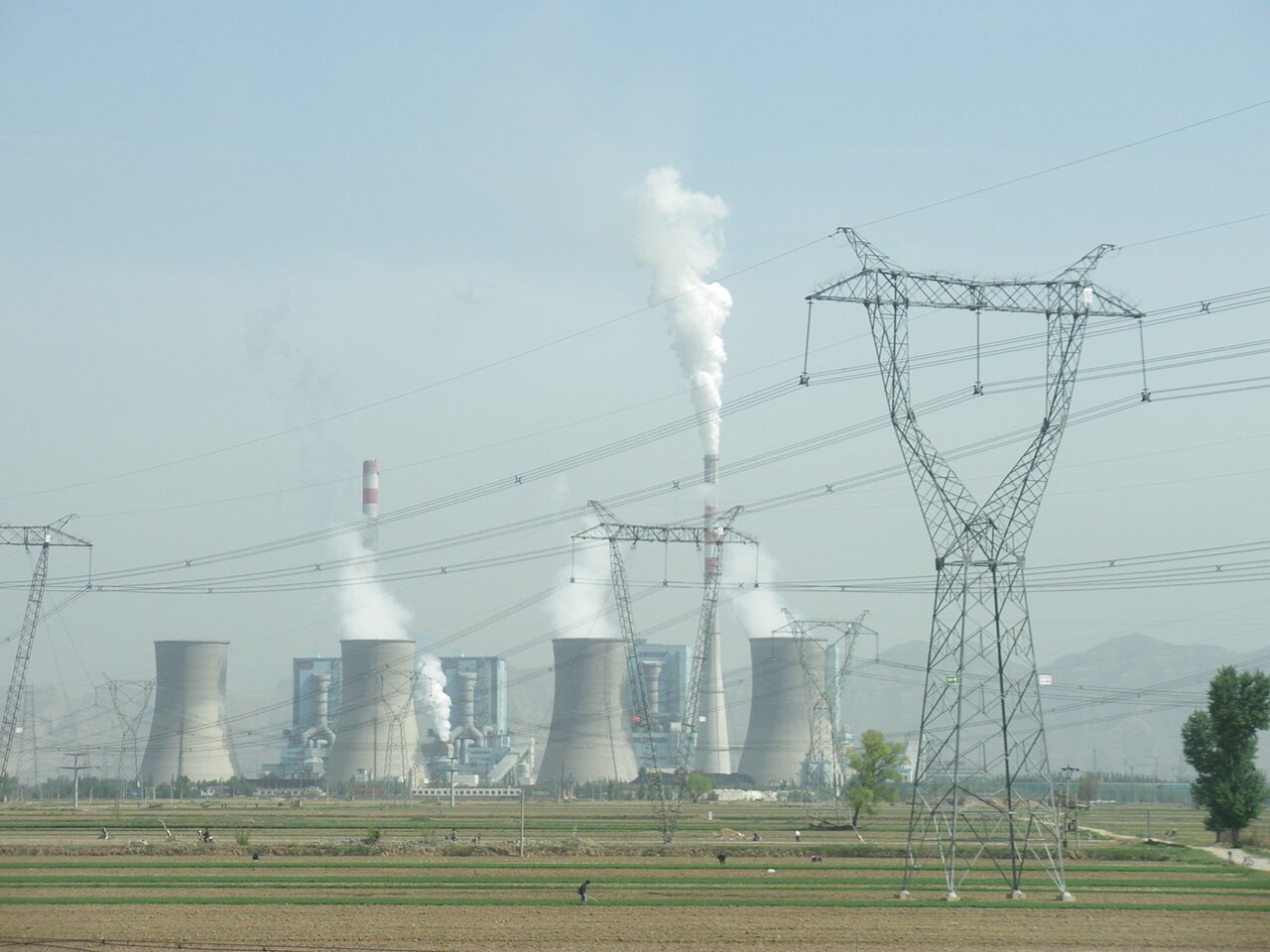
Researchers at Tsinghua University’s Institute of Energy, Environment and Economy used a causal-loop-diagram analysis to examine the feedback among renewable energy deployment, storage investment, market price signals, capacity remuneration, and coal plant retirement, asking whether China can keep its power supply secure as it phases down coal.
Variable renewable energy made up 18.2% of China’s electricity generation in 2024 and is projected to reach 65 to 70% by 2060. The researchers found that China’s current coal capacity payment mechanism may stabilize coal plant revenues in the near term, but it excludes emerging flexible resources such as battery storage, demand response, distributed resources, and virtual power plants, risking overpayment to coal generators and delaying the retirement of inefficient coal units.
The study contrasts this with the United Kingdom’s competitive-auction capacity market, which reveals capacity prices and supports a more diverse mix of resources, but risks favoring short-duration batteries over the longer-duration storage the grid will eventually need. China’s existing storage mandates, meanwhile, produced only 9% average utilization in 2023, largely because storage lacked meaningful access to markets and revenue; thermal generators captured 91.4% of ancillary-service revenue in the first half of that year.
The paper recommends deepening spot market reform, loosening price limits, expanding competitive ancillary-service markets, and treating flexibility as a system-wide resource rather than a technology-specific mandate. The researchers estimate China may need more than 700 gigawatts of long-duration storage in a fully decarbonized system, and propose strategic reserves, retiring coal units held outside the regular market and called on only during periods of system stress, as a transitional tool.
Journal: Energy and Climate Management
DOI: 10.26599/ECM.2026.9400033
Article Title: Maintaining security of power supply in the context of technological change driven by low-carbon transition
Authors: Ying Zhou, Jian Han, Da Zhang
Publication Date: 25-May-2026
Funding: National Natural Science Foundation of China (72401160, 72504282), International Science and Technology Cooperation Project (20253000014), China Three Gorges Corporation Research Project (202303160), Sichuan Province Science and Technology Innovation Cooperation Project for Hong Kong Macao and Taiwan (2025YFHZ0226)
Source: EurekAlert



Leave a Reply