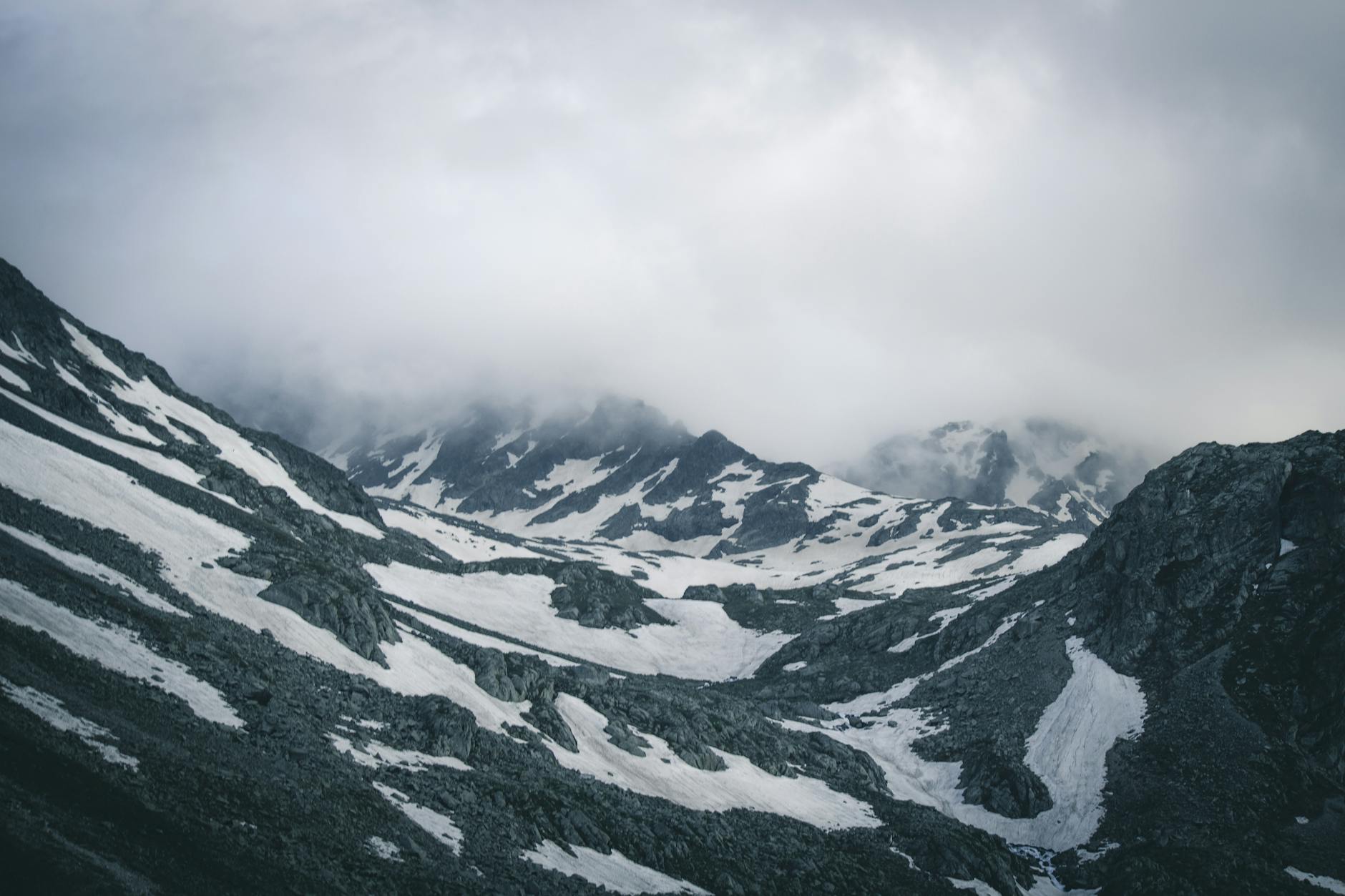
Researchers at the Institute of Geographic Sciences and Natural Resources Research, part of the Chinese Academy of Sciences, analyzed four decades of snow drought in China’s Xinjiang region, from 1980 to 2021, using a long-term daily snow depth dataset, ERA5 reanalysis data, and CMIP6 climate projections.
The team classified snow droughts into three types based on snow water equivalent, precipitation, and thawing degree: warm-only, dry-only, and compound warm-dry droughts. Across the study period, Xinjiang averaged roughly 23 snow drought years, with warm-only droughts dominant at about 10 years, warm-dry droughts at about 7 years, and dry-only droughts at about 6 years.
Spatial hotspots differed by type: the Altai Mountains, the northern slopes of the Tianshan range, and the Yili River Valley in the north, and the Kunlun Mountains and the northern foot of the southern Tianshan in the south. The Kunlun Mountains stood out as a hotspot for all three drought types, logging 20 or more drought years across most of the range.
The researchers identified a clear shift in the pattern around the year 2000: compound warm-dry snow droughts became markedly more widespread after that point, while purely precipitation-driven dry-only droughts declined, indicating a shift from single-driver snow droughts toward a more complex, compound warming-and-precipitation-deficit process. The team also documented a “cold snow drought” phenomenon that may be driven by snow sublimation, and their future projections flag the southern Kunlun Mountains as a high-risk zone that should be prioritized for monitoring going forward.
Journal: Science China Earth Sciences
DOI: 10.1007/s11430-025-1964-6
Article Title: Classification, heterogeneity, and evolution of snow drought in Xinjiang under climate warming
Authors: Zhu H, Cui P, Wang Y, Hao J, Chen G, Lin C, Li L
Publication Date: 20-Jul-2026
Source: EurekAlert



Leave a Reply