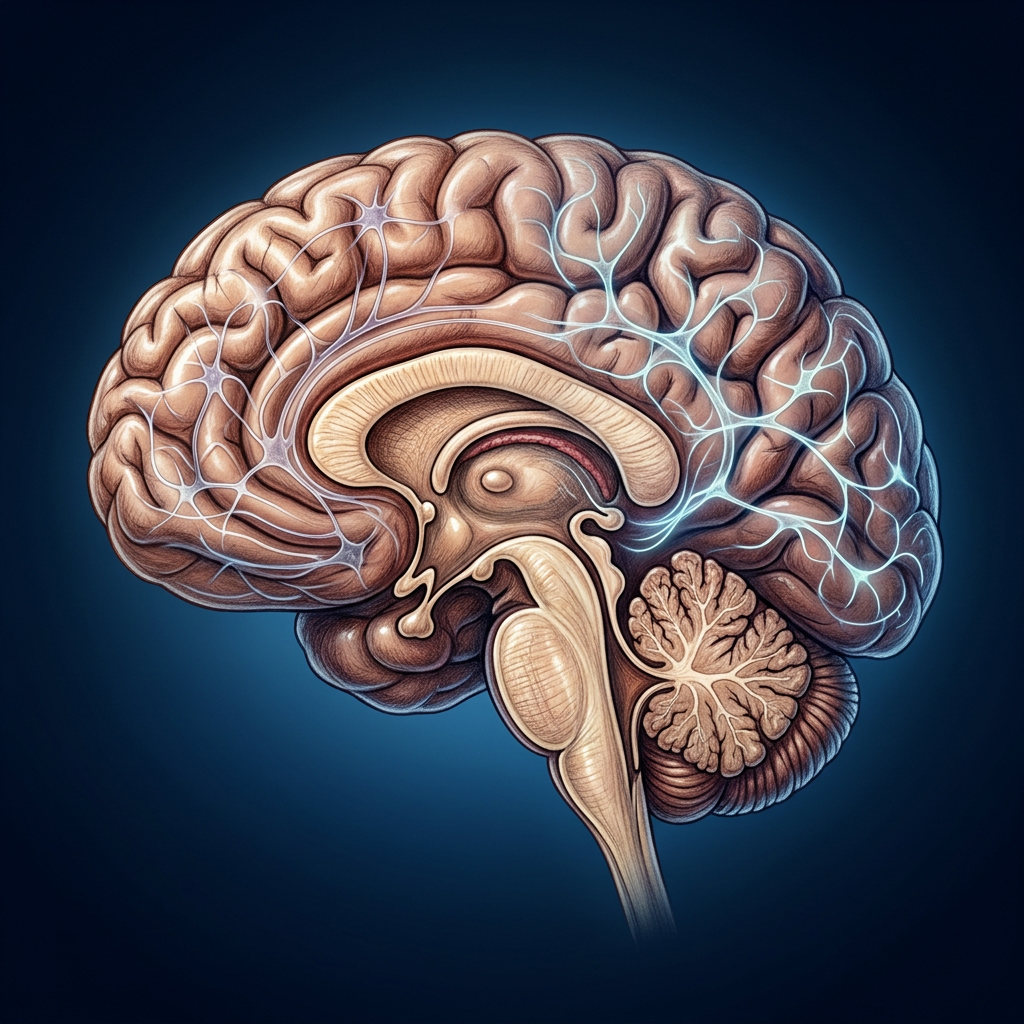
Sugarcoating isn’t just for making things taste or sound sweeter. In the brain, complex sugar molecules decorate key proteins and help them function.
Researchers from Gifu University have now discovered that one long-overlooked class of these sugars is essential for maintaining the tiny structures, called nodes of Ranvier, that keep electrical impulses racing through the brain quickly and reliably.
The study was published in Communications Biology on July 13.
Glycans are sugar molecules, attached to proteins, that influence how those proteins behave inside and outside cells. One type, O-mannose glycans, is known as essential for muscle health, but the functions of most O-mannose glycans have remained elusive. Since these glycans are especially abundant in the brain, scientists have long suspected they play important roles in the nervous system.
“Defects in O-mannose glycans have previously been associated with neurological” issues, though mechanisms remained unclear, according to Yasuhiko Kizuka, a Gifu University researcher and study corresponding author.
To investigate, researchers deleted in laboratory mice the gene encoding MGAT5B, a brain-specific enzyme that produces branched O-mannose glycans. The team then combined biochemical analyses with electrophysiological measurements and behavioral studies to determine how the loss of these sugar branches affects the nervous system.
The researchers found that mice lacking MGAT5B developed abnormally widened nodes of Ranvier in the brain’s white matter.
Nodes of Ranvier are tiny gaps in the insulating myelin sheath surrounding nerve fibers. These microscopic relay stations allow electrical impulses to “jump” rapidly along axons, enabling fast and reliable communication throughout the nervous system. The structural changes in the nodes impaired nerve signaling, causing electrical impulses to travel more slowly and with greater variability than in healthy mice. The knockout mice also performed worse on a test of motor coordination.
The team traced these effects to neurofascin 186 (NF186), a protein that helps organize nodes of Ranvier. MGAT5B adds branched O-mannose glycans to NF186, and the researchers found that these sugar modifications regulate NF186’s interaction with Contactin 1, another protein involved in organizing the node. By fine-tuning these molecular interactions, the glycans help preserve the narrow architecture required for efficient nerve conduction.
It’s worth noting that restoring MGAT5B specifically in neurons corrected the nodal defects in the knockout mice, demonstrating that the enzyme acts directly within neurons to maintain node structure.
The findings establish branched O-mannose glycans as critical regulators of node of Ranvier formation and function, providing a long-sought understanding of the physiological role for these brain-specific sugar structures.
The team noted that important questions remain. The precise molecular mechanism by which O-mannose glycan branching controls node width is still unclear, and the detailed glycan structures attached to NF186 have yet to be characterized.
Journal: Communications Biology
Article Title: Branching of O-mannose glycans regulates node of Ranvier organization and saltatory conduction
DOI: 10.1038/s42003-026-10622-0
Publication Date: 13-Jul-2026
Source: EurekAlert



Leave a Reply