Research teams from INRAE, the University of Clermont Auvergne and the CNRS have reconstructed 10 ancient genomes (paleogenomes) that are the common ancestors of 84 botanical species of agronomic interest. Their work makes it possible to identify particular genes, shared across different species of plants and retained throughout their evolutionary history, that might play a key role in adapting to environmental constraints such as drought. The comparative study, which focuses on wheat and barley genes, has enabled the identification of around a hundred variants of genes that have been key to helping these crops to adapt to changes in climate across the 10,000-year history of their domestication and selection by humans. The teams have developed two open-access tools for scientists and plant breeders. The results, published in Molecular Plant and Nature Plants, open up new avenues for varietal selection programmes now faced with the challenge of adaptation to a changing climate.
Reconstructing the ancestral ‘founder’ genes of modern plants
Plants of different species share common genes that could be important in driving adaptation to specific environmental constraints. The teams set out to discover how knowledge of a gene’s role in one species could be applied to the study of another species of interest for plant breeding. They analysed and compared 84 genomes from modern flowering plants that are representative of cultivated plants across the world. This allowed them to reconstruct 10 ancestral paleogenomes over 200 million years old that can be described as the ‘founder’ genes for modern species. These paleogenomes make it possible to identify genes that have conserved a shared genomic ancestral context and the same biological function, meaning that they could still contribute today to traits or processes across different species. Such genes potentially drive the development of traits of interest for modern agricultural challenges, such as drought tolerance or flowering dates. Beyond the identification of genes of major agronomic interest, the reconstruction of paleogenomes also brings key knowledge on the evolutionary history of plants. In particular, it has enabled the team to establish the timing of the emergence of the major botanical families, and has allowed them to retrace key evolutionary trajectories, for example, those leading to divergence between aquatic and terrestrial plants, between herbaceous and woody species, between C3 and C4 species, and between modulator and non-modulator species.
Genes from over 1000 varieties of wheat and barley compared
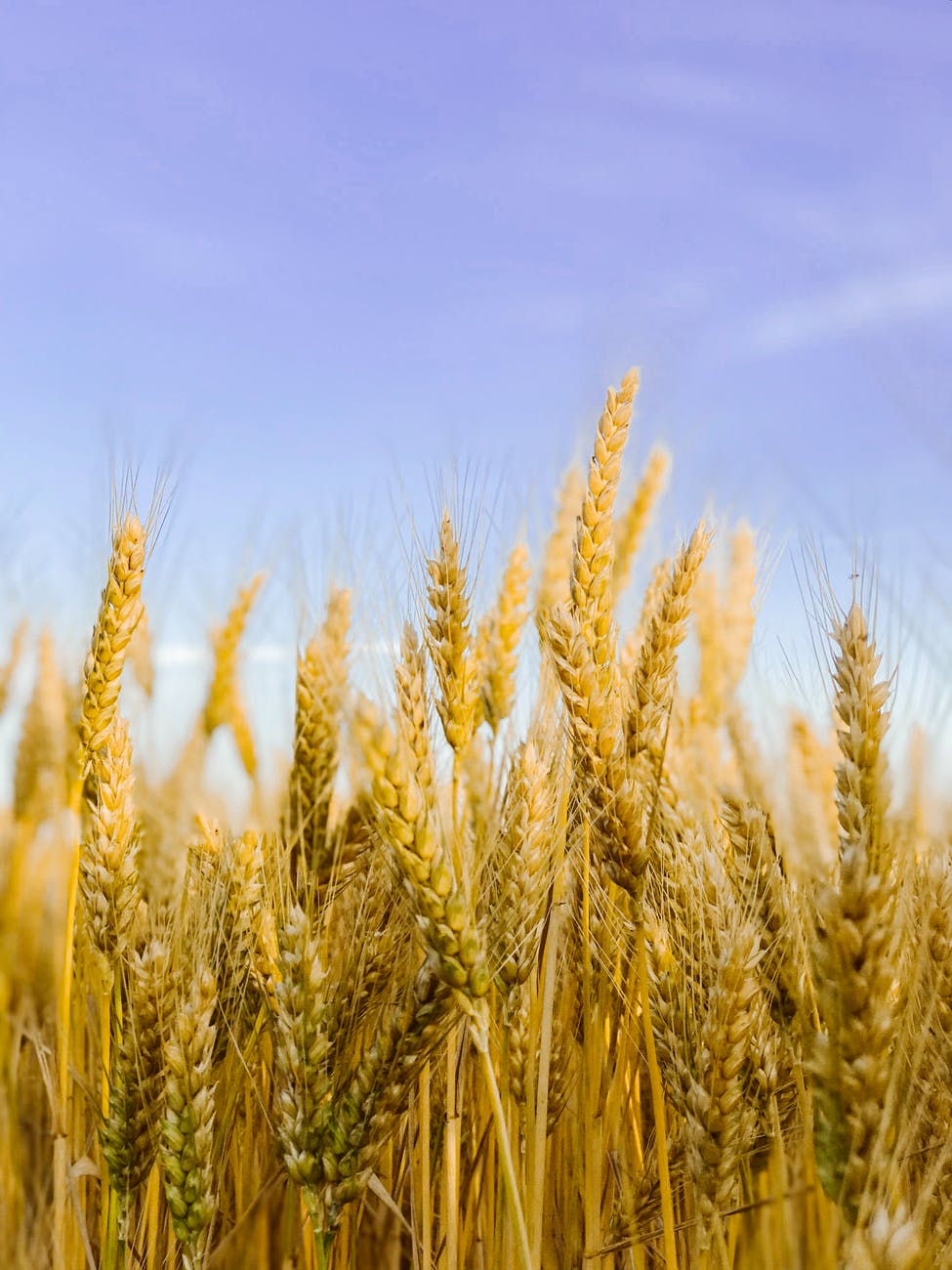
Wheat and barley were selected as the focus of the study, both being grain crops of major agronomic interest. They figure among the earliest crops to have been domesticated over 10,000 years ago in the Fertile Crescent. These two cereals supported the emergence of agriculture, displaying considerable parallels in both their historical timelines and the environmental conditions under which they have been cultivated by humans, making them highly relevant to the analysis and comparison of key retained genes. The researchers studied and compared 1,420 modern varieties representative of the global genetic diversity of wheat and barley, along with the remains of ancient wheat from 5,000 years ago. This enabled them to identify the genetic variants that had been retained by both species in the course of their historical evolution. In wheat, the team validated the role of three known genes from other species, two of which affect yield and flowering date, respectively, while the third is implicated in epigenetic regulation (potentially modulating gene activation). Comparison of the paleogenomes shared by these species provided information on both the retained genes and the selected adaptive genes in wheat and barley populations that have evolved under similar climate constraints, requiring them to adapt to similar environments in the course of ten millennia of domestication and selection by humankind. The identification of these variants opens up new avenues for varietal selection programmes, particularly in the context of agricultural adaptation to climate change.
Two open access tools to compare and identify genes of interest in cultivated plants
As part of this work, two free, open-access computational tools were developed for use by the scientific community and private plant breeders. The first, called AGR (Ancestral genome reconstruction), enables the comparison of modern plant genomes and the reconstruction of extinct founding paleogenomes, delivering a curated repertoire of genes conserved across species. The second, OrthoViewer, is a database providing access to these conserved genes for 84 plant species of agronomic interest, incorporating 1,142 genes described in the scientific literature for their biological function and agronomic value. This catalogue of conserved genes makes it possible to compare globally available genetic diversity data across species and to identify adaptive genetic variants that have been jointly selected in different species and that are of potential interest for varietal selection.
A method that can be applied to multiple species of agronomic interest
The workflow described in this study on wheat and barley can be applied to all plant types, being based on the founding paleogenomes of 84 plant species from many botanical families, including crop species currently in cultivation. The teams are continuing their work on these paleogenomes, seeking to identify genes of interest, with a particular focus on genetic variants with retained adaptive functions in wheat, barley, rice, maize and sorghum.
“Understanding how genetic variants have evolved in the course of the domestication and selection of plant and animal species of agricultural interest enables us to identify those that have been selected across species in environments with the same climate constraints, and that are of interest for the selection of genotypes adapted to the current challenges of climate change and of the agro-ecological transition,” said Jérome Salse, Research Director at INRAE.
This study has received funding as part of the Auvergne-Rhône-Alpes Region’s PaleoLAB project, from the FEDER fund, the Carnot Plant2Pro, SyntenyViewer and OrthoBreeding projects, the ANR PAGE and ArkaeoAG projects, the ISITE CAP2025 TransBlé project, the Agroecology and Digital Technology PEPR’s BReIF and AgroDIV projects, and the European WHEALBI project (WHEAt and barley Legacy for Breeding Improvement).
Journal: Molecular Plant
DOI: 10.1016/j.molp.2026.06.012
Article Title: Reconstruction of ancestral plant genomes for inter-crop translational research
Article Publication Date: 7-Sep-2026
Source: INRAE – National Research Institute for Agriculture, Food and Environment
Featured image: Photo by Semenov Sergey on Pexels.com




Leave a Reply