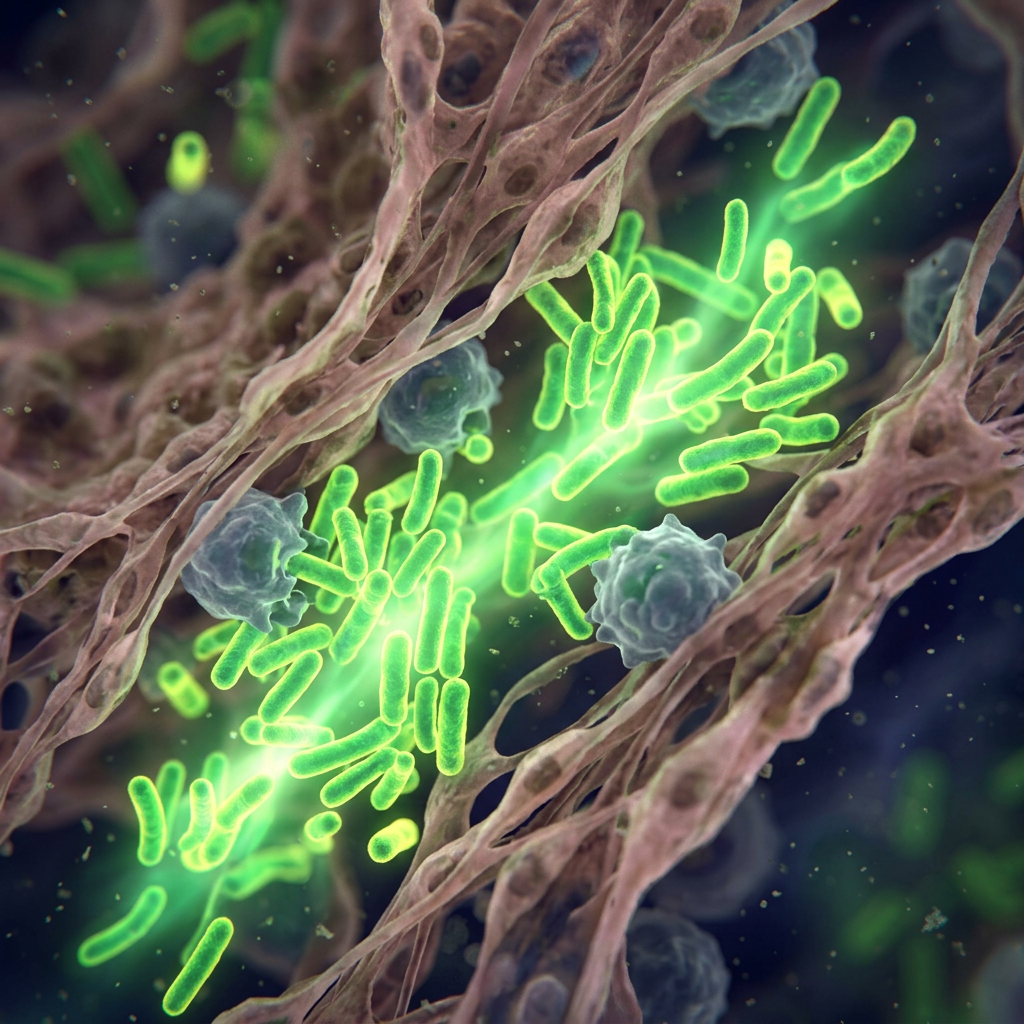
An international team of scientists including Beth McCormick at UMass Chan Medical School discovered how neutrophils are guided to infection sites without damaging healthy tissue. Neutrophils are the body’s most abundant type of white blood cells and are a first line of defense against infections. Published in Science Advances, the findings may help researchers develop more targeted anti-inflammatory therapies.
UMass Chan Medical School scientist Beth McCormick, PhD, and her team collaborated with researchers at the University of Bath to discover how neutrophils travel to infection sites without damaging healthy tissue. These findings represent a potential new target for anti-inflammatory drugs.
Dr. McCormick explained the significance: “By uncovering this molecular navigation system that precisely directs neutrophils to sites of infection, we’ve identified a promising therapeutic strategy” for developing targeted anti-inflammatory therapies.
What are neutrophils and why are they important?
Neutrophils play a key role in the innate immune response. These cells act as a rapid, first line of defense against microbial and viral infections. Understanding their travel mechanisms is crucial for developing new therapeutic strategies, as current anti-inflammatories dampen inflammation throughout the body.
How do neutrophils fight infection without damaging healthy tissue?
McCormick and Dr. Randy Mrsny identified a multi-step process where neutrophils are guided to specific tissue sites. When a cell becomes infected, it releases hepoxilin A₃, detected by a sensor protein (TRPV2) on neutrophil surfaces. TRPV2 combines with type 2 cannabinoid receptor (CB2R) to form a signaling complex that directs neutrophil migration toward infection sites. Remarkably, neutrophils do not release caustic agents while migrating, explaining how they reach infections without damaging tissues.
Understanding the finely tuned neutrophil navigation system
Previous research showed CB2R activation could suppress hepoxilin A₃ release, acting as a brake. The current study revealed that when TRPV2 signaling binds to CB2R, it switches off this brake and directs neutrophils toward infections where they release chemicals to kill microbes. This creates a finely tuned navigation system combining accelerator and brake functions.
Mrsny stated: “We’ve identified exactly how neutrophils ‘know’ how to move, stop and change direction to specifically target infection sites.”
What’s next for this area of research?
A new treatment blocking the hepoxilin A₃ signal through TRPV2/CB2 receptor actions could specifically treat inflammation only where it occurs, limiting chronic events. The next step involves exploring how blocking this signal pathway could develop a novel anti-inflammatory drug class.
Journal: Science Advances
DOI: 10.1126/sciadv.adz1986
Institution: UMass Chan Medical School
Source: EurekAlert

Leave a Reply