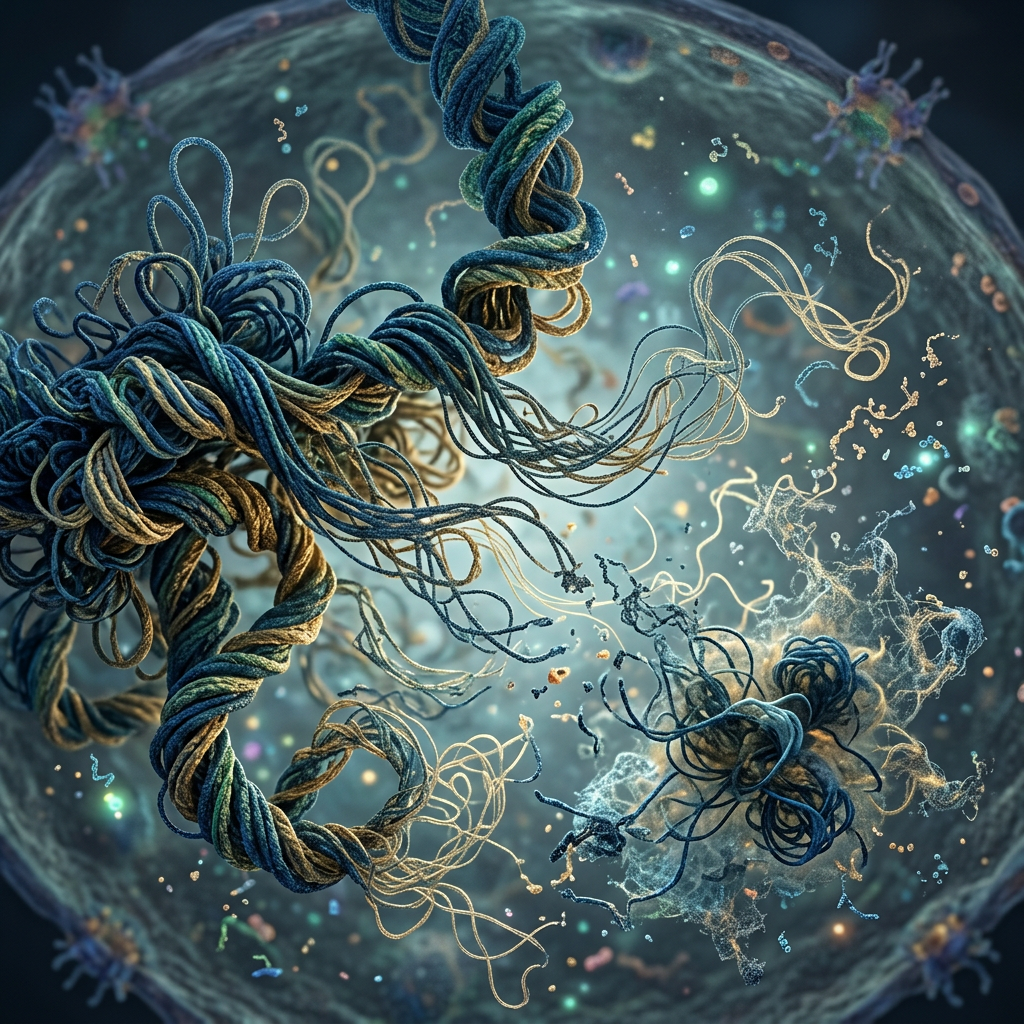
Researchers at Harvard Medical School have discovered that instructions from different genes can combine to create chimeric mRNAs that produce previously unknown, functional proteins. The findings, published September 2 in Nature, reveal the existence of potentially thousands of new chimeric proteins.
Key Discovery
Senior author Ruaidhrí Jackson explained: “Nobody knows these exist. Medicine doesn’t know they exist, the pharmaceutical industry doesn’t know they exist.” The team compiled a list of over 30,000 chimeric mRNAs observed in mammalian cells, calling it a “dark genome” library.
Functional Evidence
The researchers investigated one chimeric mRNA in mice combining genes encoding GSDMD and TMEM106A. They found this chimeric protein plays an important role in immune response. Mice lacking this chimeric protein showed reduced ability to fight bacterial infection and were more resistant to lethal endotoxin doses—demonstrating the protein’s vital role in inflammatory processes.
Future Implications
The Jackson Lab is investigating chimeric mRNAs potentially involved in cancer, inflammatory disease, and neurodegenerative disease. Co-first author Harry Kane noted: “If it is possible to leverage chimeric RNAs for drug discovery and medicine, then this is very exciting.”
Journal: Nature
DOI: 10.1038/s41586-026-10982-x
Publication Date: 2-Sep-2026
Institution: Harvard Medical School
Source: EurekAlert


Leave a Reply