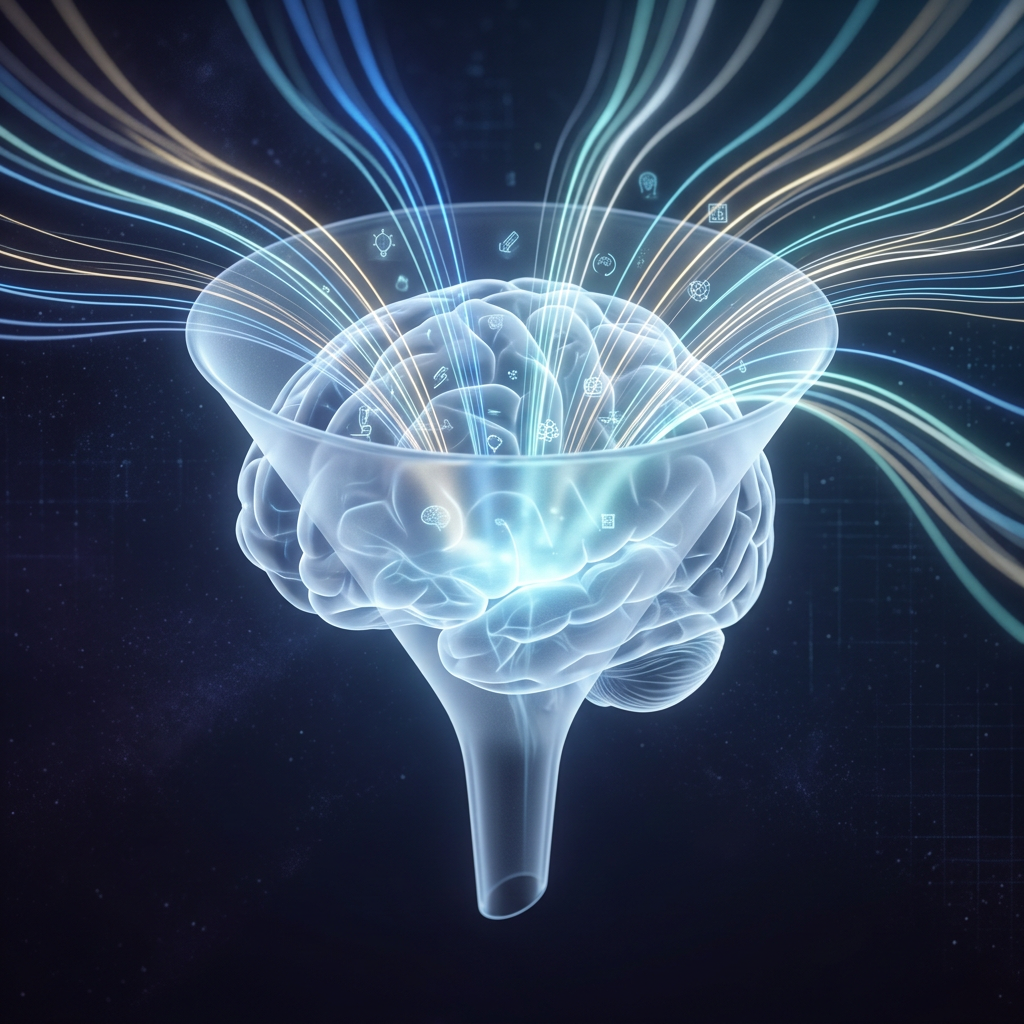
In the new review article, “Categorization is Baked into the Brain,” cognitive scientists Lisa Feldman Barrett, University Distinguished Professor at Northeastern, and Earl K. Miller, Picower Professor at MIT, contend that categorization is part of a predictive process the brain uses to efficiently meet the body’s needs in a fast-paced, otherwise overwhelming sensory world. In that sense, their paper in Nature Reviews Neuroscience challenges decades of dogma about how and why the brain boils down what it sees, hears, smells, tastes and feels.
Categories are groups of things that are similar enough to be considered functionally equivalent. When you walk through a neighborhood, you’ll naturally experience the furry, four-legged, barking animal ahead of you as a “dog.” In the classic view of cognition, your brain arrives at that categorization by soaking in lots of basic sensory features of the hound—its shape, its size, the sounds it makes, its behavior—and compares that to some prototype “dog” stored in your memory. Hundreds of milliseconds after the first sensory inputs, you can then decide what you might want to do about the dog.
Barrett and Miller argue that’s wrong. Instead, they propose that your brain comes prepared for sensory patterns with predictions of the motor action plans that are most likely to achieve the needs and goals you bring to the moment. Those prediction signals can be described as a momentary category that the brain constructs to shape the processing of sensory signals. From the very start, incoming sensory signals are compressed and abstracted into that category to efficiently select the best predicted plan. If you are in an unfamiliar neighborhood your brain might construct the category “dog” to avoid being bit, resulting in: “back away slowly while saying nice doggie.” If you are on your own block and encounter a familiar dog, your brain might construct a category to kneel and open up your arms to summon your neighbor’s adorable pup for a satisfying petting.

In either case, the category “dog” arises in the context of your needs and your prediction from a menu of learned action plans for similar situations, not from some intellectual exercise of neutrally regarding sensory inputs, comparing them to a fixed prototype, and then planning from there. If the brain really worked the classically believed way, you’d be on the back foot when the unfamiliar dog lunged at you.
“One of the main things your brain has to do is predict the world,” said Miller, a faculty member of The Picower Institute for Learning and Memory and the Department of Brain and Cognitive Sciences at MIT. “It takes several hundred milliseconds to process things and meanwhile the world is moving on. Your brain has to anticipate things.”
The most pragmatic and efficient way to survive and thrive in such a world, Barrett said, is to have your needs and potential plans ready for the sensory situation. If your predictions are right, you’re prepared in time. If they are wrong, you adjust and learn from it.
“The stimulus, cognition, response model of the brain is wrong,” said Barrett, a faculty member in Northeastern’s Department of Psychology and co-director of the Interdisciplinary Affective Science Laboratory. “The brain prepares for a response and then perceives a stimulus. A brain is not reactive. It’s predictive. Action planning comes first. Perception comes second, as a function of the action plan.”
Anatomical and functional evidence
Throughout the review, Barrett and Miller ground the provocative proposal in copious anatomical, electrophysiological and imaging evidence about the brain. They cite numerous experimental results that show how the brain is structured to broadcast memories to create motor plans that flow back toward signals that arrive from the body’s sensory surfaces, actively whittling them down and shaping them to give them meaning.
“The capacity to create similarities from differences — to abstract — is embedded in the architecture of the nervous system and you can see that by looking at what is connected to what and by observing signal flow,” Barrett said.
For example, as circuits feed signals “forward” from sensory surfaces (such as the retina), to regions of the cerebral cortex that are focused on sensory processing (such as the visual cortex), towards the areas that are important for executive control (the prefrontal cortex) and control of the body (limbic cortex), information passes from many small, barely connected neurons to fewer, bigger, and more well-connected neurons. Such an architecture compresses sensory details into increasingly abstract representations that group many different features into smaller groups of similar features, and in doing so helps to select a predicted action plan from the broader category that’s already there.
“Your brain is a big funnel to take the outside world and turn it into an output,” Miller said.
Moreover, anatomical evidence shows that the neurons in the cortex maintain many more connections to provide feedback from memory that control sensory regions than to feed sensory information forward. As much as 90 percent of synapses in the visual cortex are “feedback” instead of “feedforward,” Barrett and Miller wrote. In other words, the brain is built to use memory to filter incoming sensory signals, consistent with imposing needs and goals on what would otherwise be a deluge of sights, sounds and other sensations.
Yet another line of evidence are numerous studies from Miller’s own lab showing that at the broad network level of information flow in the cortex, the brain uses beta frequency waves that carry information about goals and plans, to constrain the expression of gamma frequency waves that carry information about specific sensory inputs.
Finally, the dominance of “feedback” over “feedforward” signals in the cortical architecture allows for the possibility that sensory signals are made meaningful in terms of predicted plans. When these plans are wrong, the resulting surprise can be integrated for future use.
“In science, there is a special name for that: Learning,” Barrett said
Implications for human thought and disease
In the end, Barrett and Miller’s proposal completely changes the idea of categorization, shifting it from being a particular intellectual skill to being a fundamental function for predictively meeting the body’s needs (or, “allostasis”).
“A category may not be a representation that an animal has, but a signal processing event than an animal does, predictively, to constrain the meaning of a high-dimensional ensemble of signals in a particular situation,” the authors wrote. “Categorization renders these signals meaningful—similar to one another and to past allostatic events—in terms of some goal or function.”
Humans, Barrett said, have a relatively massive amount of the neural network architecture to perform these pragmatic abstractions and therefore can make categorizations that seem outright metaphorical (e.g. a functional similarity between “climbing the career ladder” and climbing a literal physical ladder).
But these processes can also go awry in disease, Barrett and Miller note. Depression can be seen as a disorder in which the brain imposes overly broad categories, such as “threat” or “criticism” on sensory episodes that don’t have to be perceived that way. By contrast, autism can manifest with features of inadequately compression of incoming sensory signals, not generalizing enough to recognize when a situation is similar enough to a prior one to select the appropriate plan.




Leave a Reply