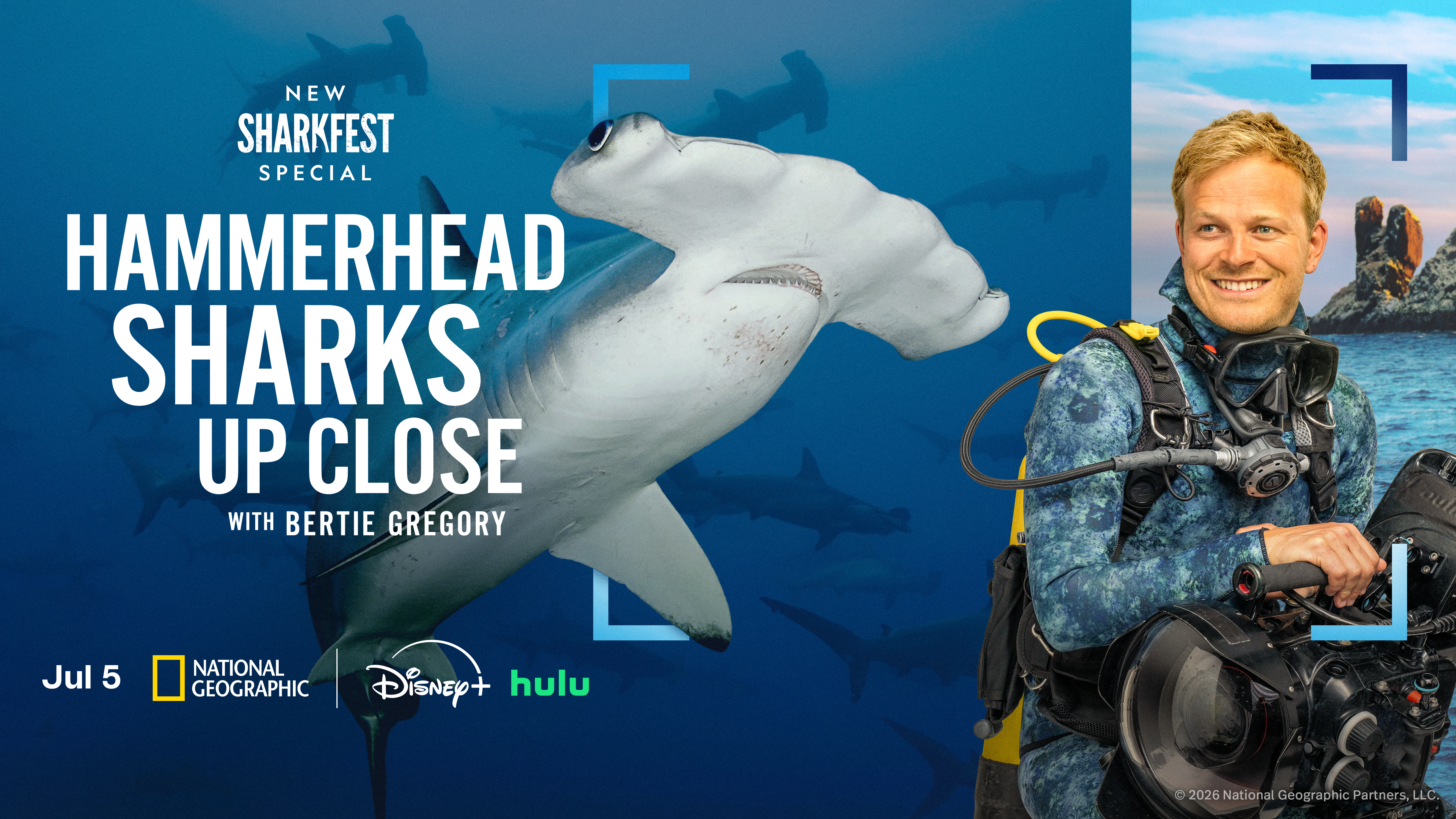
Bertie Gregory has a gift for making the ocean feel like it’s showing off just for him. In Hammerhead Sharks Up Close, National Geographic’s Sharkfest centerpiece, he heads into Mexico’s Pacific waters chasing one of the ocean’s most recognizable predators — and turns what could’ve been a straightforward creature-feature into something genuinely hopeful.
The setup is simple: hammerheads used to swarm these waters by the hundreds. Now they barely show up. Instead of wallowing in that decline, Gregory turns the search itself into the story — can a protected ecosystem still pull off the kind of spectacle that made hammerheads famous in the first place? That question carries the whole hour, and Gregory’s easy, curious energy keeps it from ever feeling like a lecture.
What makes Gregory such a good fit for this kind of documentary is that he never treats the animals like trophies. He’s clearly an expert, but he wears it lightly — more field biologist thrilled to be there than TV host performing enthusiasm. Here, he’s less interested in nailing one perfect shot than in figuring out whether Mexico’s conservation efforts are actually working.
The film is best when it just lets the water do the talking. The dive sequences around the Revillagigedo Islands are stunning, especially at Roca Partida — a volcanic spike that drops away into blue nothing. Gregory’s description of the scale barely does it justice; the camera does the rest, turning the rock into this looming, current-swept tower in the middle of open ocean.
Before the hammerheads ever show up, the film hands you plenty to chew on. There’s a manta ray named Chocolate Chip, reportedly over 50 years old, gliding through like she owns the place. There are whitetip reef sharks piled together in these oddly cozy clusters — a behavior unique to the species that makes them look almost like they’re napping in a group chat. None of it feels like padding. It’s proof that this ecosystem, left alone long enough, fills back in.
That’s the film’s real trick: it doesn’t just argue that conservation works, it shows you what it looks like when it does — density, ease, animals occupying the same reef without tension. The science is there in the narration and the expert interviews, but the footage is what actually convinces you.
Still, the hammerheads are the emotional center. The film is honest about how uncertain the search is — these sharks are rare enough now that finding them isn’t a given, and that uncertainty makes the eventual payoff land hard. When a pair of dolphins finally lead Gregory to a full school, it plays less like a triumphant reveal and more like a held breath finally released.
That school isn’t just a great shot — it’s evidence. Proof the sharks are still out there, still moving as a unit, still doing what hammerheads do. The film doesn’t pretend the crisis is over, but it makes a convincing case that it isn’t too late either.



Leave a Reply