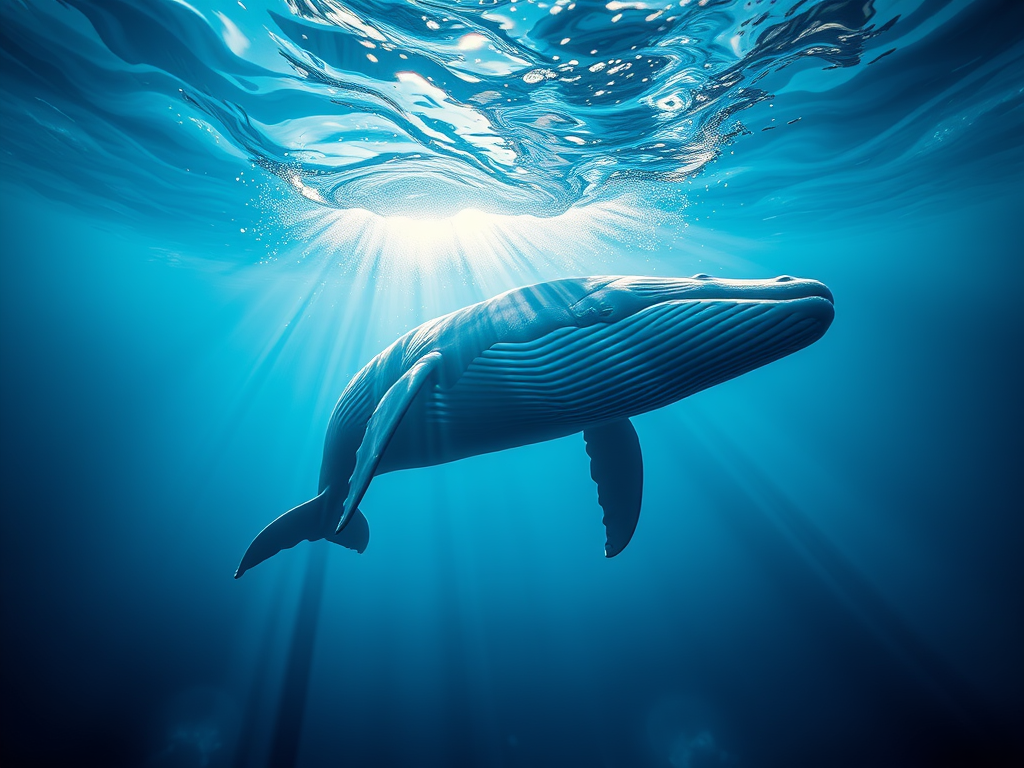
Whales are swimming further than previously estimated – up to 20% more – according to a new study published in Ecology.
Co-authored by Griffith University’s Dr Olaf Meynecke, the study reveals traditional methods for calculating animal movement may be drastically underestimating the actual distance travelled, particularly for marine species such as whales.
“For years, we’ve tracked whales using satellite tags, plotting their movements across oceans,” Dr Meynecke said.
“But this research shows we’ve been looking at only part of the picture.”
The study, led by a multidisciplinary team of global researchers from the University of Connecticut, Smithsonian Institute and Pontific University of Ecuador, underlines the notion that animal movement isn’t confined to flat maps.
Marine animals such as whales move in three dimensions – across the surface and up and down through the water column.
Sign up for the Daily Dose Newsletter and get every morning’s best science news from around the web delivered straight to your inbox? It’s easy like Sunday morning.
By integrating geodesy (the science of Earth’s shape) with animal tracking data, the researchers revealed the curvature of the Earth and diving behaviour significantly extend the total distance travelled.
Using satellite data from the Whales & Climate Program’s longest continuous humpback whale track from Ecuador to near Antarctica, the team compared two methods of measuring distance: a standard surface track of approximately 6,658 kilometres and a revised, 3D geodesic estimate that factored in average dive depths and speed.
The result was an additional 1,055 kilometres or about 16% more distance covered.
“For humpback whales migrating between South American breeding grounds and Antarctic feeding areas, that could mean covering up to 14,000 kilometres in a single migration season,” Dr Meynecke said.
“That’s seven times more than the average human travels in a year.
“These findings are more than just fascinating; they have real implications for how we understand the energy demands and ecological pressures on migrating species.
“If animals are expending more energy than previously estimated, we may be underestimating the ecological costs of migration and the impacts of environmental change.”
The study ‘Accounting for Earth’s curvature and elevation in animal movement modeling’ has been published in Ecology.




Leave a Reply