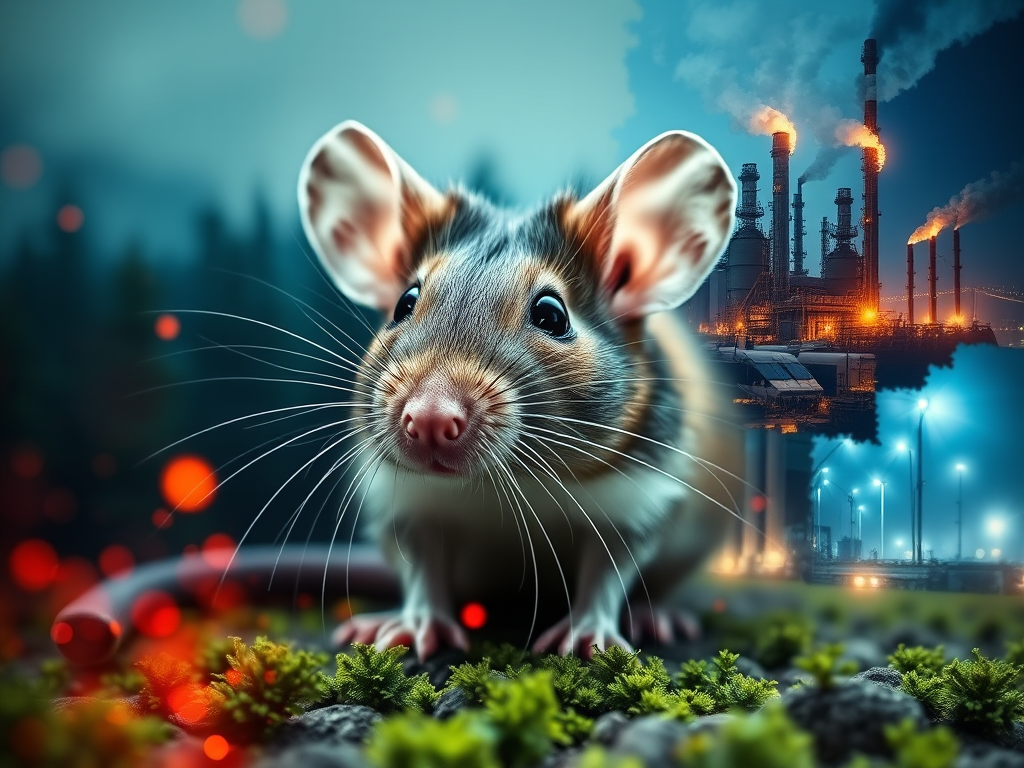
Two Fathers, One Mouse: Breakthrough in Sperm-Only Reproduction
Researchers have successfully produced viable mice from two sperm cells, using gene editing and stem cell technology. The team converted one sperm cell into a haploid embryonic stem cell and edited it to function as an egg. After fertilization with another sperm, the embryo was implanted into a surrogate mother. The result was fertile, healthy offspring. Though not intended for human reproduction, the research paves the way for deeper understanding of reproductive biology and genetic development. The work also highlights technical barriers and ethical concerns that would need to be addressed before such methods are considered beyond animal models. (Ars Technica)
Trump Moves to Strip Protections From 58 Million Acres of Forest
The Trump campaign has unveiled plans to eliminate environmental protections for 58 million acres of national forests if re-elected, including Alaska’s Tongass and Idaho’s roadless areas. The proposal would ease logging and development, alarming conservationists and Indigenous communities. While pitched as an economic opportunity, critics argue it would devastate ecosystems and worsen climate change impacts. The plan builds on earlier efforts to undo forest protections during Trump’s presidency. Experts suggest the rollback could face legal and regulatory challenges, and point to the growing partisan divide over federal land management and environmental policy. (New York Times)
Cambodia Reports Fifth H5N1 Death as U.S. Mulls Poultry Vaccination
Cambodia has reported its fifth human fatality from H5N1 avian influenza in 2024, raising concerns about ongoing transmission and viral mutations. Health officials are conducting contact tracing and containment measures. Meanwhile, the U.S. Department of Agriculture is weighing the adoption of poultry vaccination to curb outbreaks, particularly after a costly wave affected commercial flocks. Experts continue to monitor the virus’s evolution for signs of increased transmissibility or resistance. The dual front—rising human cases and agricultural impacts—illustrates the complex threat posed by avian flu globally. (CIDRAP)
Japan Weighs AI and Hydrogen as Key to Future Growth
Japan’s Cabinet Office released a new draft strategy outlining priorities for the country’s growth, focusing heavily on artificial intelligence, semiconductors, hydrogen energy, and generative AI. Prime Minister Fumio Kishida emphasized innovation and green technologies as pillars of national security and economic independence. The strategy proposes closer collaboration between academia and industry to fuel breakthroughs. The government will also revise regulations to foster entrepreneurship and deploy public funds strategically. The proposal highlights the nation’s urgency in competing globally while transitioning to a sustainable economy. (Asahi Shinbun)

Spike in Infant RSV Hospitalizations Reveals Post-Pandemic Vulnerability
New U.S. data show that infant hospitalizations for RSV surged in the 2022–2023 season, peaking at 26.9 per 100,000 infants under six months. Rates were highest among those under two months. The spike followed a lull during the pandemic, highlighting reduced population immunity. Hospitalization rates also varied by race and ethnicity, with higher rates among Black and Hispanic infants. The CDC emphasizes the importance of new preventive tools, including maternal vaccines and monoclonal antibodies, especially before the next RSV season. These findings underscore the ongoing threat RSV poses to infants and the need for targeted public health responses. (CDC)
Amazon Bets Big on AI With New Data Center Investments
Amazon is investing heavily in data centers to power its AI ambitions, with plans to spend over $150 billion globally in the next 15 years. The push includes expanding in Northern Virginia and other U.S. states, drawing scrutiny over energy use, water demands, and environmental costs. Amazon claims the facilities will be efficient and powered by renewable energy. Analysts note the move is driven by competition with Microsoft and Google in the AI space. Critics question how sustainable the infrastructure is amid climate concerns and whether local communities will truly benefit. (New York Times)
China-Linked Hackers Breach Canadian Telecom via Known Flaw
Suspected state-backed Chinese hackers breached a major Canadian telecommunications provider by exploiting a known vulnerability in Fortinet’s FortiGate firewalls—even after the flaw was patched. The intrusion highlights how attackers can still find ways in using credentials stolen before patches are applied. The attackers reportedly maintained stealthy access and extracted sensitive data. Canadian intelligence confirmed the campaign as part of a broader wave targeting critical infrastructure. The incident underscores persistent threats from state-sponsored actors and the challenges in fully securing patched systems. (Ars Technica)
Giant Sky-Eye Telescope Set to Transform Astronomy
A massive new telescope—the Vera C. Rubin Observatory—is nearing completion in Chile. Equipped with the world’s largest digital camera, the observatory will capture the entire southern sky every few nights, generating 20 terabytes of data daily. This “all-seeing eye” will revolutionize how we study transient phenomena like supernovae and near-Earth asteroids. Scientists expect breakthroughs in dark matter, dark energy, and the formation of galaxies. The data will also be available to the public, with machine learning tools aiding analysis. The telescope marks a new era in big data astronomy. (Science)
Japan’s ispace Blames Altitude Misreading for Moon Crash
Japanese space firm ispace has confirmed that its HAKUTO-R lunar lander crashed in 2023 due to a sensor malfunction that incorrectly interpreted its altitude, causing the spacecraft to shut off its descent engine too early. The craft fell from approximately 5 kilometers above the lunar surface. This was Japan’s first attempt at a commercial moon landing. Despite the failure, ispace plans future missions and remains optimistic about becoming a key player in lunar exploration. The incident illustrates the difficulties of precision landings on the Moon. (AP)
Space Weed? Scientists Launch Cannabis Seeds to OrbitScientists are sending cannabis seeds into space aboard a SpaceX mission to test how cosmic radiation and microgravity affect plant biology. The goal is to investigate genetic mutations and potential agricultural applications. The experiment may yield new cannabis strains or insights into space farming resilience. It’s part of a broader initiative to explore how plants adapt in extreme environments—knowledge that could be vital for future Mars or Moon missions. The project merges agriculture, genomics, and space science in unconventional but forward-looking ways. (Wired)
Thanks for reading. Let’s be careful out there.
WORDS: The Biology Guy.

Leave a Reply