For decades, the United States has held considerable power in determining the direction of global health policies and programs. President Donald Trump issued three executive orders on his first day in office that may signal the end of that era, health policy experts said.
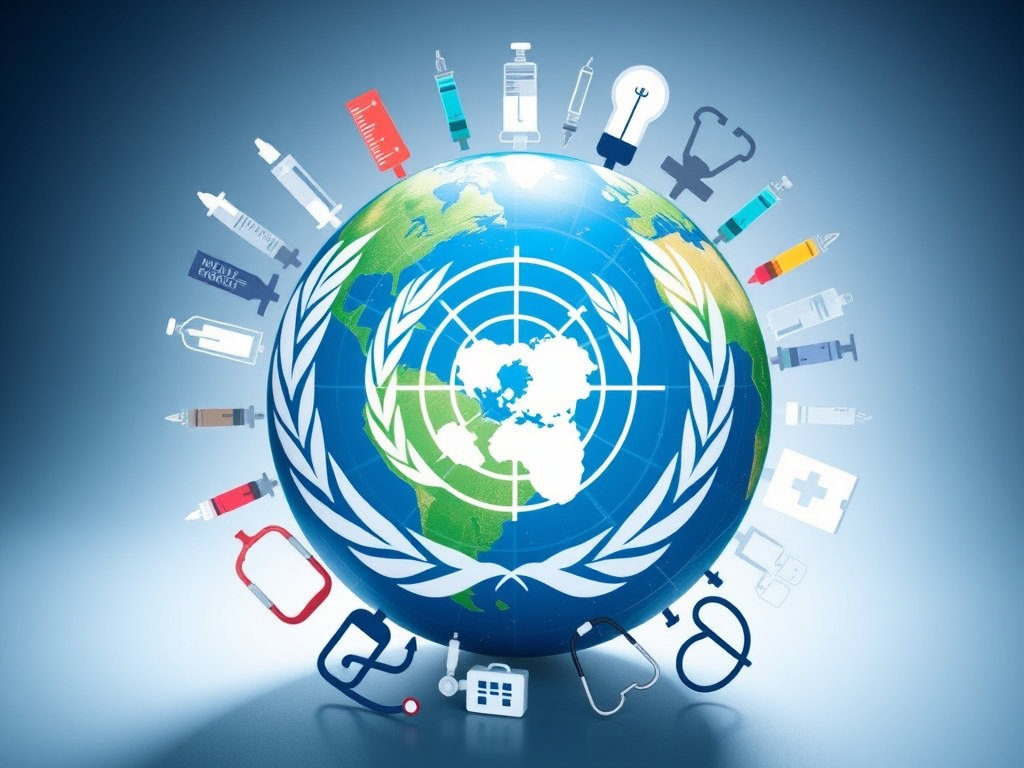
Trump’s order to withdraw from the World Health Organization means the U.S. will probably not be at the table in February when the WHO executive board next convenes. The WHO is shaped by its members: 194 countries that set health priorities and make agreements about how to share critical data, treatments, and vaccines during international emergencies. With the U.S. missing, it would cede power to others.
“It’s just stupid,” said Kenneth Bernard, a visiting fellow at the Hoover Institution at Stanford University who served as a top biodefense official during the George W. Bush administration. “Withdrawing from the WHO leaves a gap in global health leadership that will be filled by China,” he said, “which is clearly not in America’s best interests.”
Executive orders to withdraw from the WHO and to reassess America’s approach to international assistance cite the WHO’s “mishandling of the COVID-19 pandemic” and say that U.S. aid serves “to destabilize world peace.” In action, they echo priorities established in Project 2025’s “Mandate for Leadership,” a conservative policy blueprint from the Heritage Foundation.
The 922-page report says the U.S. “must be prepared” to withdraw from the WHO, citing its “manifest failure,” and advises an overhaul to international aid at the State Department. “The Biden Administration has deformed the agency by treating it as a global platform to pursue overseas a divisive political and cultural agenda that promotes abortion, climate extremism, gender radicalism, and interventions against perceived systemic racism,” it says.
As one of the world’s largest funders of global health — through both international and national agencies, such as the WHO and the U.S. Agency for International Development — America’s step back may curtail efforts to provide lifesaving health care and combat deadly outbreaks, especially in lower-income countries without the means to do so alone.
“This not only makes Americans less safe, it makes the citizens of other nations less safe,” said Tom Bollyky, director of global health at the Council on Foreign Relations.
“The U.S. cannot wall itself off from transnational health threats,” he added, referring to policies that block travelers from countries with disease outbreaks. “Most of the evidence around travel bans indicates that they provide a false sense of security and distract nations from taking the actions they need to take domestically to ensure their safety.”
Sign up for the Daily Dose Newsletter and get every morning’s best science news from around the web delivered straight to your inbox? It’s easy like Sunday morning.
Technically, countries cannot withdraw from the WHO until a year after official notice. But Trump’s executive order cites his termination notice from 2020. If Congress or the public pushes back, the administration can argue that more than a year has elapsed.
Trump suspended funds to the WHO in 2020, a measure that doesn’t require congressional approval. U.S. contributions to the agency hit a low of $163 million during that first year of covid, falling behind Germany and the Gates Foundation. Former President Joe Biden restored U.S. membership and payments. In 2023, the country gave the WHO $481 million.
As for 2024, Suerie Moon, a co-director of the global health center at the Geneva Graduate Institute, said the Biden administration paid biennium dues for 2024-25 early, which will cover some of this year’s payments.
“Unfairly onerous payments” are cited in the executive order as a reason for WHO withdrawal. Countries’ dues are a percentage of their gross domestic product, meaning that as the world’s richest nation, the United States has generally paid more than other countries.
Funds for the WHO represent about 4% of America’s budget for global health, which in turn is less than 0.1% of U.S. federal expenditures each year. At about $3.4 billion, the WHO’s entire budget is roughly a third of the budget for the Centers for Disease Control and Prevention, which got $9.3 billion in core funding in 2023.
The WHO’s funds support programs to prevent and treat polio, tuberculosis, HIV, malaria, measles, and other diseases, especially in countries that struggle to provide health care domestically. The organization also responds to health emergencies in conflict zones, including places where the U.S. government doesn’t operate — in parts of Gaza, Sudan, and the Democratic Republic of the Congo, among others.
In January 2020, the WHO alerted the world to the danger of the covid outbreak by sounding its highest alarm: a public health emergency of international concern. Over the next two years, it vetted diagnostic tests and potential drugs for covid, regularly updated the public, and advised countries on steps to keep citizens safe.
Experts have cited missteps at the agency, but numerous analyses show that internal problems account for the United States’ having one of the world’s highest rates of death due to covid. “All nations received the WHO’s alert of a public health emergency of international concern on Jan. 30,” Bollyky said. “South Korea, Taiwan, and others responded aggressively to that — the U.S. did not.”
‘It’s a Red Herring’
Nonetheless, Trump’s executive order accuses the WHO of “mishandling” the pandemic and failing “to adopt urgently needed reforms.” In fact, the WHO has made some changes through bureaucratic processes that involve input from the countries belonging to it. Last year, for example, the organization passed several amendments to its regulations on health emergencies. These include provisions on transparent reporting and coordinated financing.
“If the Trump administration tried to push for particular reforms for a year and then they were frustrated, I might find the reform line credible,” Moon said. “But to me, it’s a red herring.”
“I don’t buy the explanations,” Bernard said. “This is not an issue of money,” he added. “There is no rationale to withdraw from the WHO that makes sense, including our problems with China.”
Trump has accused the WHO of being complicit in China’s failure to openly investigate covid’s origin, which he alludes to in the executive order as “inappropriate political influence.”
“The World Health Organization disgracefully covered the tracks of the Chinese Communist Party every single step of the way,” Trump said in a video posted to social media in 2023.
On multiple occasions, the WHO has called for transparency from China. The agency doesn’t have the legal authority to force China, or any other country, to do what it says. This fact also repudiates Trump’s warnings that a pandemic treaty under negotiation at the WHO impinges on American sovereignty. Rather, the accord aims to lay out how countries can better cooperate in the next pandemic.
Trump’s executive order calls for the U.S. to “cease negotiations” on the pandemic agreement. This means the pharmaceutical industry may lose one of its staunchest defenders as discussions move forward.
In the negotiations so far, the U.S. and the European Union have sided with lobbying from the pharmaceutical industry to uphold strict patent rights on drugs and vaccines. They have opposed efforts from middle-income countries in Asia, Africa, and Latin America to include licensing agreements that would allow more companies to produce drugs and vaccines when supplies are short in a crisis. A study published in Nature Medicine estimated that more than a million lives would have been saved had covid vaccines been available around the world in 2021.
“Once the U.S. is absent — for better and for worse — there will be less pressure on certain positions,” Moon said. “In the pandemic agreement negotiations, we may see weakening opposition towards more public-health-oriented approaches to intellectual property.”
“This is a moment of geopolitical shift because the U.S. is making itself less relevant,” said Ayoade Alakija, chair of the Africa Union’s Vaccine Delivery Alliance. Alakija said countries in Asia and Africa with emerging economies might now put more money into the WHO, change policies, and set agendas that were previously opposed by the U.S. and European countries that are grappling with the war in Ukraine. “Power is shifting hands,” Alakija said. “Maybe that will give us a more equitable and fairer world in the long term.”
Echoes of Project 2025
In the near term, however, the WHO is unlikely to recoup its losses entirely, Moon said. Funds from the U.S. typically account for about 15% of its budget. Together with Trump’s executive order that pauses international aid for 90 days, a lack of money may keep many people from getting lifesaving treatments for HIV, malaria, and other diseases.
Another loss is the scientific collaboration that occurs via the WHO and at about 70 centers it hosts at U.S. institutions such as Columbia University and Johns Hopkins University. Through these networks, scientists share findings despite political feuds between countries.
A third executive order commands the secretary of state to ensure the department’s programs are “in line with an America First foreign policy.” It follows on the order to pause international aid while reviewing it for “consistency with United States foreign policy.” That order says that U.S. aid has served “to destabilize world peace by promoting ideas in foreign countries that are directly inverse to harmonious and stable relations.”
These and executive orders on climate policies track with policy agendas expressed by Project 2025. Although Trump and his new administration have distanced themselves from the Heritage Foundation playbook, CBS News reviewed the work histories of the 38 named primary authors of Project 2025 and found that at least 28 of them worked in Trump’s first administration. One of Project 2025’s chief architects was Russell Vought, who served as director of the Office of Management and Budget during Trump’s first term and has been nominated for it again. Multiple contributors to Project 2025 are from the America First Legal Foundation, a group headed by Trump adviser Stephen Miller that’s filed complaints against “woke corporations.”
Project 2025 recommends cutting international aid for programs and organizations focused on climate change and reproductive health care, and steering resources toward “strengthening the fundamentals of free markets,” lowering taxes, and deregulating businesses as a path to economic stability.
Several experts said the executive orders appear to be about ideological rather than strategic positioning.
The White House did not respond to questions about its executive orders on global health. Regarding the executive order saying U.S. aid serves “to destabilize world peace,” a spokesperson at USAID wrote in an email: “We refer you to the White House.”
WORDS: Amy Maxmen: amaxmen@kff.org
If you enjoy the content we create and would like to support us, please consider becoming a patron on Patreon! By joining our community, you’ll gain access to exclusive perks such as early access to our latest content, behind-the-scenes updates, and the ability to submit questions and suggest topics for us to cover. Your support will enable us to continue creating high-quality content and reach a wider audience.
Join us on Patreon today and let’s work together to create more amazing content! https://www.patreon.com/ScientificInquirer


Leave a Reply