H5N1 AVIAN FLU STUDY REVEALS SERIOUS HUMAN RISK
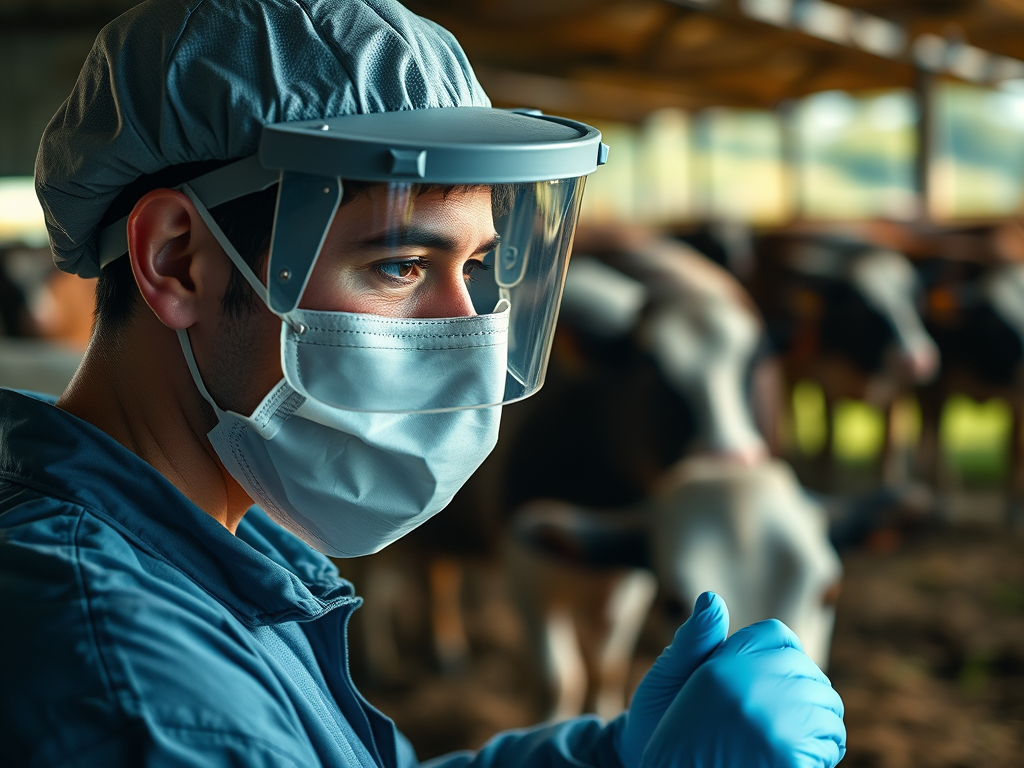
Researchers studying the H5N1 avian flu virus, which can potentially spread from cows to humans, reported findings indicating that an isolate from a sick dairy worker could replicate in human airway cells and was pathogenic in mice and ferrets. The study, published in *Nature*, revealed that the isolate contained a PB2-E627K mutation typical of mammalian-replicating H5N1 viruses. The virus was sensitive to most antivirals, except oseltamivir. In ferret experiments, the infection mirrored human cases, with all infected ferrets dying within five days and showing high viral levels in respiratory tissues. Transmission among ferrets via respiratory droplets was observed, but with limited efficiency. The team emphasized the need to contain highly pathogenic avian influenza outbreaks in dairy cattle to prevent further human infections. Meanwhile, California reported another suspected human H5N1 case, raising concerns as the state faces a surge in outbreaks among dairy cattle and poultry, totaling 178 outbreaks in California alone. (CIDRAP)
RESEARCHER HIGHLIGHTS DIVERSITY OF DESTRANSITION EXPERIENCES AT CONFERENCE
Kinnon MacKinnon, a Canadian researcher and transgender individual, recently discussed the complex topic of detransitioning at a conference organized by the Pediatric Endocrine Society. His presentation highlighted the challenges and controversies surrounding patients who transition to a different gender but later regret it. MacKinnon’s research involved over 900 detransitioners in the U.S. and Canada, revealing that detransition is multifaceted, with factors such as mental health issues and identity changes playing significant roles. Despite detransitioners becoming public figures in anti-gender medicine campaigns, MacKinnon argues that these experiences are often misrepresented and that the majority do not support outright bans on gender-affirming care. He emphasizes the need for a nuanced understanding of detransition within the broader context of LGBTQ+ healthcare, noting that political polarization can overshadow individual experiences and the need for improved healthcare systems. MacKinnon also advocates for sharing knowledge about the medical implications of transition, particularly regarding fertility. (New York Times)
THOUSANDS OF UNTESTED RAPE KITS A WORRY
In Austin, Texas, two women were raped a year apart after leaving bars, but their cases remained unsolved for years. DNA evidence later linked their attacks to the same serial rapist, highlighting the failures of the National Sexual Assault Kit Initiative (SAKI). Despite nearly $350 million allocated by the U.S. Department of Justice to test unprocessed rape kits, many cases face persistent obstacles, including untested kits and inadequate police investigations. An investigation revealed that of the thousands of kits tested nationwide, many victims remained uninformed about their cases. In places like Charlotte and Mobile, backlogs yielded minimal convictions. Additionally, biases within law enforcement often led to the dismissal of cases based on victims’ backgrounds, with many cases remaining closed even after DNA matches. Victims frequently experienced further trauma from the lack of communication and support from authorities. The initiative’s limited success underscores the need for systemic changes in handling sexual assault cases to ensure accountability and justice for survivors. (USA Today)
OPENAI’S WHISPER TOOL FREQUENTLY FABRICATES MEDICAL TRANSCRIPTIONS
An Associated Press investigation has revealed that OpenAI’s Whisper transcription tool frequently fabricates text in medical and business contexts, despite warnings against its use in high-risk domains. Interviews with over a dozen software engineers and researchers indicated that Whisper often “hallucinates” or invents content that speakers never said, with one researcher noting 80% of public meeting transcripts contained inaccuracies. The tool is currently employed by over 30,000 medical professionals, including institutions like the Mankato Clinic and Children’s Hospital Los Angeles, which use Whisper-based AI for transcribing patient visits. However, the practice raises significant concerns, as medical staff may not be able to verify accuracy against original recordings, potentially impacting patient care, especially for deaf individuals reliant on accurate transcripts. Additionally, research from Cornell and the University of Virginia found that Whisper sometimes adds false violent or racially charged content to neutral speech. OpenAI acknowledges the issue and aims to reduce these inaccuracies, but the underlying technology inherently predicts likely outputs rather than ensuring accuracy. This can lead to misleading results based on the training data, prompting calls for regulation and certification of AI tools in healthcare to prevent adverse effects from such errors. (Ars Technica)
Sign up for the Daily Dose Newsletter and get every morning’s best science news from around the web delivered straight to your inbox? It’s easy like Sunday morning.
WIKIPEDIA USERS SHOW THREE DISTINCT STYLES OF CURIOSITY
An analysis of the browsing patterns of nearly half a million Wikipedia users reveals three distinct styles of curiosity: the ‘hunter,’ ‘busybody,’ and ‘dancer.’ The study, published in Science Advances, is the first to examine these curiosity frameworks outside of a laboratory. The research, conducted by a team including scientists from Stanford and the University of Pennsylvania, utilized two months of anonymized data from over 482,000 users across 50 countries and 14 languages. Hunters seek specific answers, while busybodies explore diverse information, akin to social butterflies. The dancers creatively link unrelated concepts during their exploration. The study found a correlation between users’ browsing styles and the levels of social equality in their countries; for example, diverse knowledge networks are more prevalent in nations with lower gender and education inequality. Understanding these styles could enhance collaboration and improve the online information ecosystem, suggesting a nuanced approach to how individuals seek knowledge online. (Nature)
MEDIUM FACES SURGE IN AI-GENERATED CONTENT AMIDST CONCERNS
An investigation by WIRED reveals that Medium, the 12-year-old publishing platform, is facing an influx of AI-generated content, with studies suggesting over 47% of recent posts may be machine-produced. This marks a significant increase from just 3.4% in 2018. AI detection firms like Pangram Labs and Originality AI found that certain tags, especially those related to cryptocurrency, contain a high proportion of AI-generated articles. Despite CEO Tony Stubblebine’s assertion that Medium is combating this issue and viewing it as less significant, he acknowledges a tenfold increase in AI-generated content since the beginning of the year. Medium has updated its AI policy, banning undisclosed AI writing from paywalled content and affiliate promotions while allowing disclosed AI content to be shared more broadly. Some writers commend the platform’s focus on human curation, arguing it helps maintain quality, while others express frustration over the persistence of AI-generated articles. The challenge of managing AI content reflects broader issues faced by the internet, as platforms strive to highlight genuine human writing amidst the growing prevalence of AI-generated material. (Wired)
THC-CONTAMINATED PIZZA SICKENS DOZENS IN WISCONSIN OUTBREAK
Dozens of people in Wisconsin became ill after eating pizza inadvertently contaminated with Delta-9-tetrahydrocannabinol (THC), the main psychoactive compound in cannabis. This contamination occurred at Famous Yeti’s Pizza in Stoughton between October 22 and October 24, leading to at least five individuals requiring emergency medical services. Public Health Madison & Dane County officials urged customers to discard any pizza from the restaurant during this time. The health department began investigating after EMS transported multiple individuals with similar symptoms, initially suspecting carbon monoxide poisoning. However, they traced the issue to the oil used in the pizza dough, which was found to contain THC. Co-owner Cale Ryan explained that a cook mistakenly borrowed oil from a shared industrial kitchen, which was incorrectly labeled. THC exposure can cause various symptoms, and the health department is continuing to gather information on the outbreak, including potential effects on children, who may react more severely to THC. (Ars Technica)
CHINESE WOMEN REPORT INTRUSIVE CALLS ABOUT FAMILY PLANNING
Chinese women have recently reported receiving intrusive phone calls from individuals claiming to be government workers, inquiring about family planning and pregnancy. These calls, shared widely on the social media platform Xiaohongshu and discussed on Sina Weibo, have sparked significant concern and outrage. For example, one user recounted being asked when she planned to conceive her third child, prompting discussions about the appropriateness of such invasive questioning. These calls are part of a government campaign aimed at understanding why many women are hesitant to have more children, amid plummeting birth rates in China. Reports indicate that grassroots workers are collecting marriage and childbirth statistics to feed into a central monitoring system. Additionally, a nationwide survey targeting women aged 15 to 49 will seek to understand the challenges families face regarding birth and parenting. With birth rates dropping from about 17 million in 2014 to 9 million in 2023, officials are working to implement measures that promote a new culture of marriage and childbearing to address the demographic crisis. (Channel News Asia)
RESEARCHER SUGGESTS KISSING EVOLVED FROM APE GROOMING RITUALS
Adriano Lameira’s research on the evolution of kissing offers intriguing insights into a behavior that resonates deeply with human affection. His hypothesis posits that kissing may have originated as a grooming ritual observed in great apes, where the act of latching on with protruded lips to remove parasites resembles modern kissing. This perspective highlights the complexity of human behaviors, connecting them to our evolutionary past. Lameira suggests that as our ancestors transitioned to a terrestrial lifestyle and lost their fur, the hygienic purpose of grooming diminished. However, the symbolic act of kissing persisted, evolving into a crucial expression of affection. His approach emphasizes the importance of understanding the roots of our behaviors, much like how you explore connections between science and culture in your writing. Testing this hypothesis could involve observing apes in captivity to see if they still perform this “last kiss” in their grooming routines. This research not only sheds light on our social rituals but also invites us to appreciate the evolutionary threads that connect us to our ancestors. (Science)
IMAGE CREDIT: NASA.


Leave a Reply