A recent study has revealed the genetic mechanisms behind transgenerational phenotypic plasticity—a crucial factor in plant adaptation to environmental changes. By investigating Arabidopsis thaliana grown under different light conditions across generations, researchers demonstrated how maternal environments shape offspring traits. These findings could inform new strategies for crop improvement and ecological conservation.
Phenotypic plasticity enables plants to adjust their physical traits in response to environmental variations, playing a vital role in their survival and adaptability. While past research has primarily focused on how these traits manifest within a single generation, the genetic basis of transgenerational inheritance remains largely unexplored. Addressing this gap is essential to fully understand how plants transmit adaptive traits from one generation to the next.
This research (DOI: 10.1093/hr/uhae172), conducted by teams from Beijing Forestry University and Tsinghua University, was published on June 25, 2024, in Horticulture Research. Utilizing a nested experimental design, the study explored how maternal light conditions influence the phenotypic traits of Arabidopsis thaliana offspring. By integrating ecological and computational methods, the researchers identified critical genetic regions associated with transgenerational phenotypic plasticity, providing fresh insights into plant adaptation mechanisms.
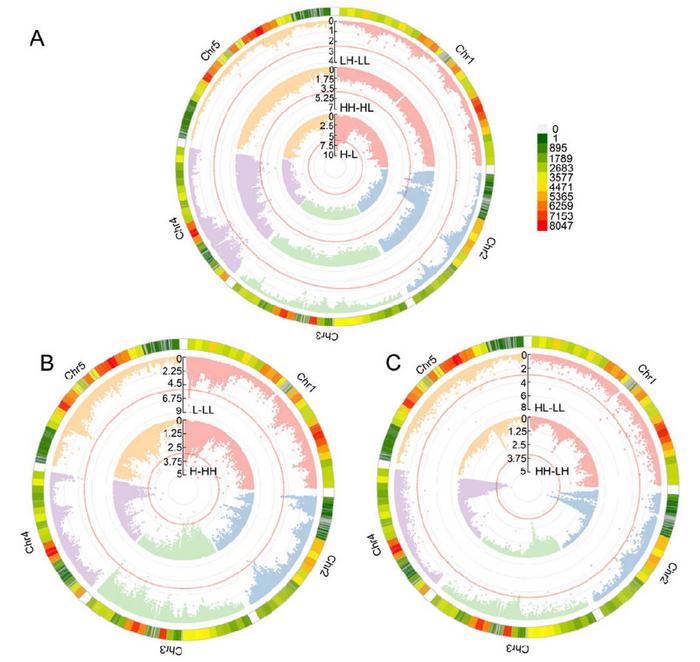
The study implemented a reciprocal experimental design, cultivating recombinant inbred lines (RILs) of Arabidopsis under high- and low-light conditions. Offspring were then grown in both matching and contrasting light environments. This setup allowed researchers to assess the influence of maternal conditions on traits such as leaf number and to understand how these traits are inherited across generations. The findings revealed that the genetic framework of phenotypic plasticity evolves between generations and is significantly impacted by maternal environmental experiences. Specific Quantitative Trait Loci (QTLs) linked to phenotypic plasticity were identified, varying with light conditions and generational context. The study underscored a complex interplay between genetic and epigenetic factors that drive these adaptive responses.
Sign up for the Daily Dose Newsletter and get every morning’s best science news from around the web delivered straight to your inbox? It’s easy like Sunday morning.
Dr. Rongling Wu, the study’s lead author, noted, “Our research provides a detailed view of how plants inherit adaptive traits across generations through both genetic and non-genetic pathways. Recognizing the complex interactions between maternal environments and offspring traits could pave the way for enhancing plant resilience in the face of climate change.”
This research offers critical insights into plant adaptation strategies, which are invaluable for agriculture and environmental conservation. Understanding the genetic and epigenetic foundations of phenotypic plasticity can help breeders and scientists predict plant responses to future environmental challenges, guiding the development of more resilient crops. The study also enriches our understanding of evolutionary biology, revealing how organisms manage environmental variability across generations.
IMAGE CREDIT: Horticulture Research



Leave a Reply