Ozone gas is reducing the growth of tropical forests – leaving an estimated 290 million tonnes of carbon uncaptured each year, new research shows.
The ozone layer in the stratosphere shields our planet from harmful ultraviolet radiation – and protecting it is one of the major successes of environmental action.
But ozone at ground level – formed by the combination of pollutants from human activities in the presence of sunlight – interferes with plants’ ability to absorb carbon dioxide. Ozone is also harmful to human health.
The new study, published in the journal Nature Geoscience, calculates that ground-level ozone reduces new yearly growth in tropical forests by 5.1% on average.
The effect is stronger in some regions – with Asia’s tropical forests losing 10.9% of new growth.
Tropical forests are vital “carbon sinks” – capturing and storing carbon dioxide that would otherwise stay in the atmosphere and contribute to global warming.
Sign up for the Daily Dose Newsletter and get every morning’s best science news from around the web delivered straight to your inbox? It’s easy like Sunday morning.
“Tropical forests play a crucial role in mopping up our carbon dioxide emissions,” said co-lead author Dr Alexander Cheesman, of James Cook University and the University of Exeter.
“Our study shows that air pollution can jeopardise this critical ecosystem service.
“We estimate that ozone has prevented the capture of 290 million tonnes of carbon per year since 2000. The resulting cumulative loss equates to a 17% reduction in carbon removal by tropical forests so far this century.”
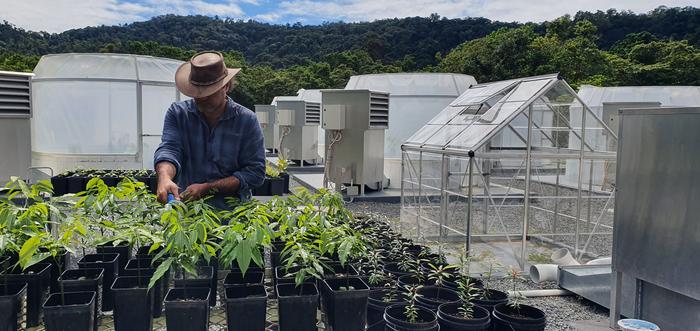
The researchers ran experiments to measure the ozone susceptibility of various tropical tree species, then incorporated the results into a computer model of global vegetation.
Urbanisation, industrialisation, burning fossil fuels and fires have led to an increase in “precursor” molecules – such as nitrogen oxides – that form ozone.
“Ozone concentrations across the tropics are projected to rise further due to increased precursor emissions and altered atmospheric chemistry in a warming world,” said co-lead author Dr Flossie Brown, a recent graduate of the University of Exeter.
“We found that areas of current and future forest restoration – areas critical for the mitigation of climate change – are disproportionately affected by this elevated ozone.
“It is clear that air quality will continue to play an important but often overlooked part in the way forests absorb and store carbon.”
Professor Stephen Sitch, from the University of Exeter, added: “Embracing a future with greater environmental protection would lead to reduced ground-level ozone, thus improved air quality and the additional benefit of enhanced carbon uptake in tropical forests.”
IMAGE CREDIT: Kali Middleby



Leave a Reply