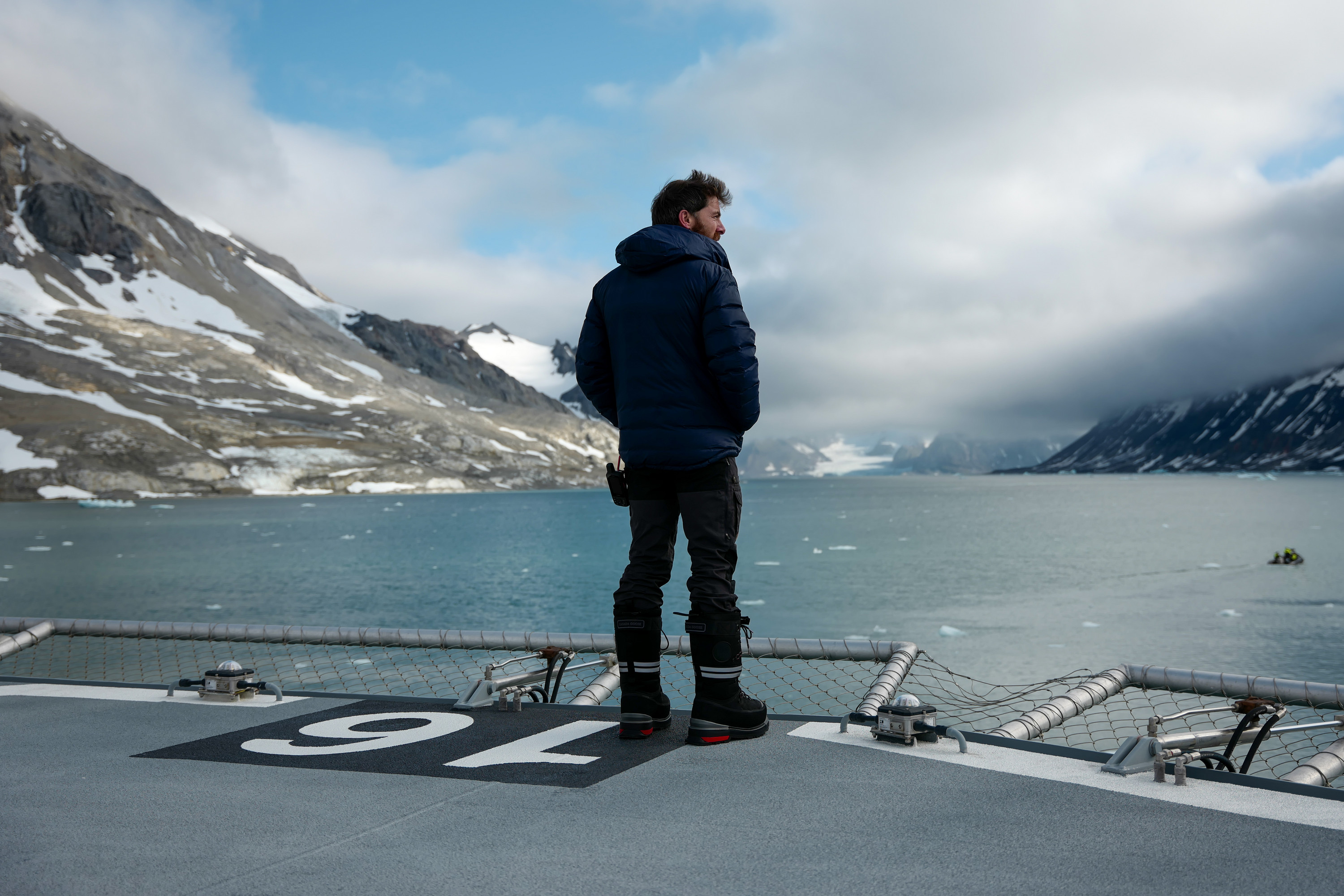
National Geographic’s ambitious new series, OCEANXPLORERS, is a groundbreaking ocean adventure produced in collaboration with James Cameron, BBC Studios Natural History Unit, and OceanX. This series takes viewers aboard the OceanXplorer, a cutting-edge research vessel, to explore the world’s least known oceanic regions. With its advanced technology and a team of dedicated explorers and scientists, the series ventures to the farthest frontiers of the ocean, from the Atlantic depths to the Arctic ice, uncovering the mysteries of marine life and ecosystems along the way.
The six-part series showcases dramatic and visually stunning episodes, including explorations of humpback whales in the Caribbean, deep-sea sperm whales in the Azores, and the elusive Greenland shark in the Arctic. The OceanXplorer is equipped with submersibles, a helicopter, and marine science labs to capture unprecedented imagery and data. The series, which features experts like Zoleka Filander and Melissa Cristina Márquez, aims to inspire and educate viewers about ocean science and conservation. Co-produced by BBC Studios and OceanX for National Geographic, OCEANXPLORERS combines high-end documentary filmmaking with real-time discoveries, pushing the boundaries of ocean exploration.
Aldo Kane plays an important role in OCEANXPLORERS. He is a world-record-setting adventurer, explorer, author, and TV presenter renowned for his work in the most dangerous, extreme, and remote locations. With over 20 years of experience in inhospitable environments and nearly 100 countries under his belt, Kane has fronted epic series for National Geographic, BBC, and Channel 4. A former Royal Marine Commando and one of the youngest snipers in the U.K. armed forces, Kane has transitioned from a decade of military service to a career in television and film. Whether climbing glaciers, exploring active volcanoes, avoiding cartel hitmen, or navigating underground labyrinths, Kane is known for his extraordinary feats and unyielding spirit.
OCEANXPLORERS premieres Aug. 18 on National Geographic and all episodes will stream the next day on Disney+ and Hulu.
You’ve had a fascinating career from Royal Marine Commandos to world-record-setting adventurer. What motivated you to transition from the military to exploration and television?
I joined the Royal Marines Commandos at the age of 16, undergoing the longest and hardest infantry training in the world. Over the next 10 years serving in the UK’s elite forces, I became an expert in leading teams in extreme, remote, and hostile locations. I was trained not just to survive but to thrive in the desert, mountains, Arctic, jungles, and even the ocean. The same drive for exploration and adventure that led me into the Marines propelled me further into leading expeditions around the world. It naturally followed that I was in demand to oversee film crews operating in these environments.

How did you become involved with the OceanXplorers team and this fantastic project?
Having worked on several large-scale productions, many of them for Nat Geo behind the camera in my safety role, I was asked if I would like to come to LA for a meeting with James Cameron and his team, including the BBC, to discuss the role of Expedition and Logistics Lead for an upcoming Nat Geo series. I jumped at the chance, as it was an opportunity to work with an elite team, explore the oceans, and communicate our findings to the world—a true once-in-a-lifetime opportunity to inspire the next generation of explorers and scientists.

You had a bit of a scary incident with David in the Greenland Shark episode. What were you exploring and what ended up happening under the ice?
We were diving under the ice at about 82.5 degrees north, approximately 450 miles south of the North Pole. We were collecting bacteria samples from under the multi-year ice for the scientists on board the OceanXplorer. Seawater starts to freeze at around minus 1.5 to minus 2 degrees Celsius. As we were diving well under the ice, our first-stage regulators completely froze open, filling our masks with air and leaving us with only a few minutes of air. The dive was aborted, and we pulled ourselves to the surface under the ice using our lifelines.

Has your work with OceanXplorers changed the way you view science and exploration?
Very much so. I used to explore the far reaches of the world for myself, but now I focus on using my experience to help scientists achieve their goals in some of the hardest-to-reach places. I have an incredibly versatile set of unique skills that are well-suited to helping others learn more about our world and communicate those findings to the public.
IMAGE CREDIT: National Geographic/Mario Tadinac

.jpg)

Leave a Reply