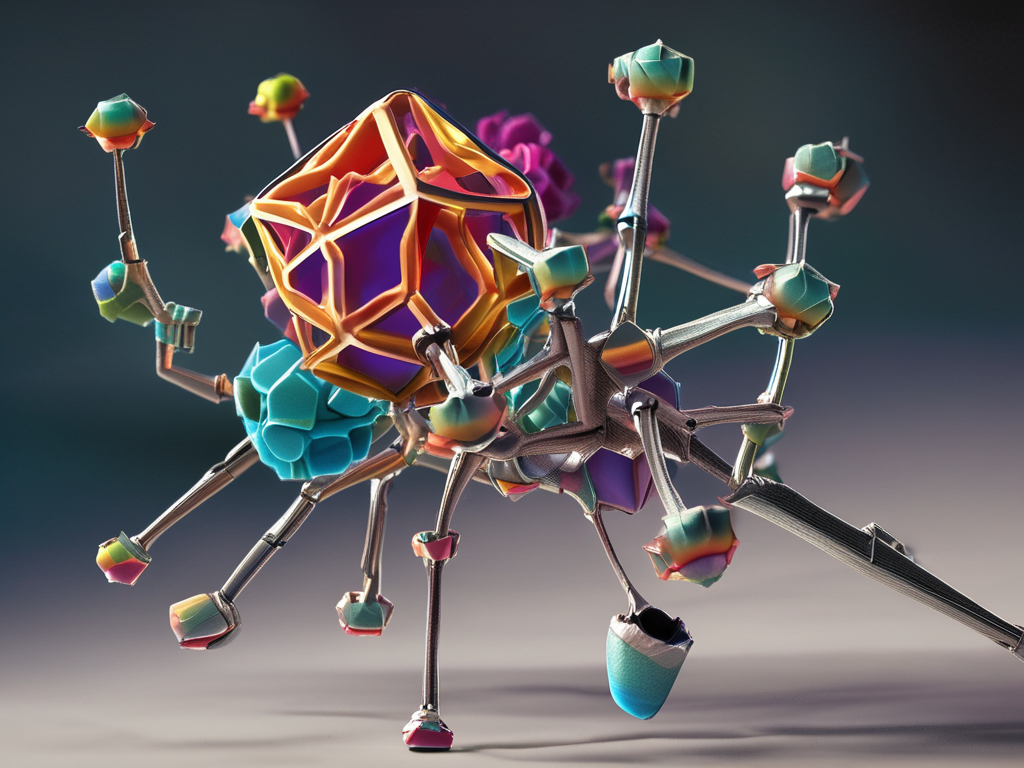
Researchers at Karolinska Institutet in Sweden have developed nanorobots that kill cancer cells in mice. The robot’s weapon is hidden in a nanostructure and is exposed only in the tumour microenvironment, sparing healthy cells. The study is published in the journal Nature Nanotechnology.
The research group at Karolinska Institutet has previously developed structures that can organise so-called death receptors on the surface of cells, leading to cell death. The structures exhibit six peptides (amino acid chains) assembled in a hexagonal pattern.
“This hexagonal nanopattern of peptides becomes a lethal weapon,” explains Professor Björn Högberg at the Department of Medical Biochemistry and Biophysics, Karolinska Institutet, who led the study. “If you were to administer it as a drug, it would indiscriminately start killing cells in the body, which would not be good. To get around this problem, we have hidden the weapon inside a nanostructure built from DNA.”

Created a ‘kill switch’
The art of building nanoscale structures using DNA as a building material is called DNA origami and is something Björn Högberg’s research team has been working on for many years. Now they have used the technique to create a ‘kill switch’ that is activated under the right conditions.
“We have managed to hide the weapon in such a way that it can only be exposed in the environment found in and around a solid tumour,” he says. “This means that we have created a type of nanorobot that can specifically target and kill cancer cells.”
The key is the low pH, or acidic microenvironment that usually surrounds cancer cells, which activates the nanorobot’s weapon. In cell analyses in test tubes, the researchers were able to show that the peptide weapon is hidden inside the nanostructure at a normal pH of 7.4, but that it has a drastic cell-killing effect when the pH drops to 6.5.
Sign up for the Daily Dose Newsletter and get every morning’s best science news from around the web delivered straight to your inbox? It’s easy like Sunday morning.
Reduced tumour growth
They then tested injecting the nanorobot into mice with breast cancer tumours. This resulted in a 70 per cent reduction in tumour growth compared to mice given an inactive version of the nanorobot.
“We now need to investigate whether this works in more advanced cancer models that more closely resemble the real human disease,” says the study’s first author Yang Wang, a researcher at the Department of Medical Biochemistry and Biophysics, Karolinska Institutet. “We also need to find out what side effects the method has before it can be tested on humans.”
The researchers also plan to investigate whether it is possible to make the nanorobot more targeted by placing proteins or peptides on its surface that specifically bind to certain types of cancer.
If you enjoy the content we create and would like to support us, please consider becoming a patron on Patreon! By joining our community, you’ll gain access to exclusive perks such as early access to our latest content, behind-the-scenes updates, and the ability to submit questions and suggest topics for us to cover. Your support will enable us to continue creating high-quality content and reach a wider audience.
Join us on Patreon today and let’s work together to create more amazing content! https://www.patreon.com/ScientificInquirer




Leave a Reply