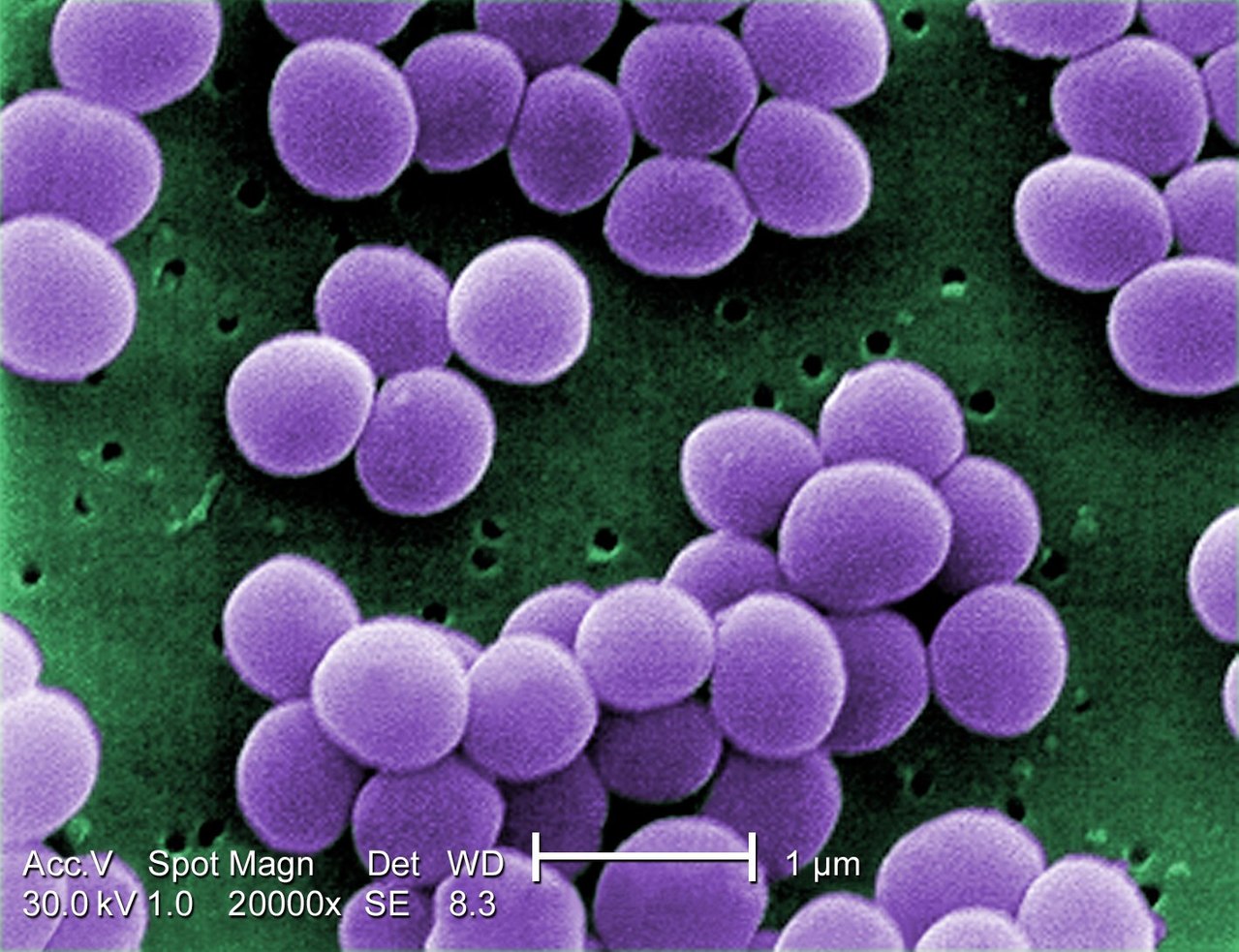
Researchers from Trinity College Dublin have taken a leap forward in understanding how we might fight back against the potentially deadly MRSA bacterium. They have shown in an animal model that targeting a key suppressive immune molecule (IL-10) during the delivery of a vaccine improves the ability of the vaccine to protect against infection.
The bacterium Staphylococcus aureus is one of the leading causes of community- and hospital-acquired bacterial infection, and is associated with over one million deaths worldwide each year. Unfortunately, antibiotics are becoming increasingly less effective against this bacterium with the antibiotic-resistant form, MRSA, responsible for the highest number of deaths in high-income countries that are attributable to antimicrobial resistant bacterial infections.
As a result, scientists are keenly focused on finding solutions to turn the tide in fighting S. aureus-related infections. One hugely appealing option is a vaccine but, while some progress has been made on that front in recent years, a number of major hurdles remain. One of these appears to be the bacterium’s ability to dampen the immune response by turning on one of the natural breaks that exists within the immune system, an important immune-suppressive molecule known as Interleukin-10 (IL-10), which acts to reduce inflammation in the body.

The interesting thing about S. aureus is that in addition to being a deadly pathogen, forms of this bacteria live in and on our bodies without causing harm. During these asymptomatic interactions the bacterium is, however, shaping the immune response – meaning that when a vaccine against S. aureus is administered the immune system struggles to respond appropriately.
Here, in the work just published in leading journal JCI Insight, the researchers showed in the animal model that if they immunised subjects with a vaccine that primed their immune systems to respond to infection in tandem with antibodies that neutralised IL-10, the immune response (via specialised T cells) was improved and bacterial clearance was likewise improved following subsequent infection.
The research team was led by Rachel McLoughlin, Professor in Immunology in Trinity College Dublin’s School of Biochemistry and Immunology. Rachel, who is based in the Trinity Biomedical Sciences Institute, said: “Taken in combination, our results offer significant promise for what would be a novel strategy for improving the efficacy of vaccines developed with the aim of suppressing S. aureus infection.
“Our work also strongly suggests that prior exposures to this bacterium may create a situation whereby our immune system no longer sees it as a threat and thus does not respond appropriately to a vaccine due to the creation of this immune-suppressed state. Again, this underlines why immunisation delivered with something that helps neutralise IL-10 offers renewed hope for effective vaccines against S. aureus.”
IMAGE CREDIT: NIAID.


Leave a Reply