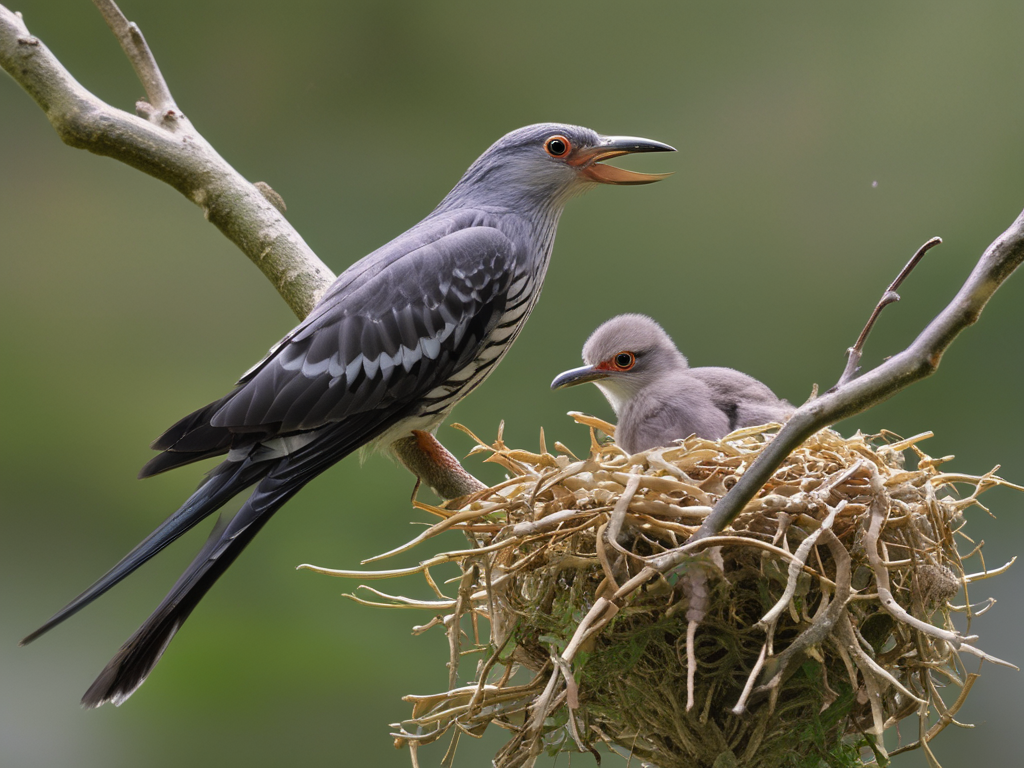
Cuckoos – which lay their eggs in nests of other birds – have higher speciation rates when they lay their eggs in a broader range of host bird species’ nests, a new study reports. This higher speciation rate is driven by host rejection and cuckoo selection for mimetic nestling traits. How new species arise is a fundamental question in biology. Coevolution between closely interacting species is thought to increase biodiversity and potentially explain the vast number of distinctly specialized species.
However, evidence linking macroevolutionary patterns to microevolutionary processes driving speciation remains sparse. Cuckoo birds present a useful system for studying coevolutionary diversification. In some species, cuckoo chicks kick the host young from the nest, whereas in others, cuckoo birds are reared alongside the host young. This variation in brood parasitism strategies places a very high selective pressure on hosts to develop defenses and could lead to a coevolutionary arms race that may drive the emergence of counteradaptations in cuckoos, such as mimicry of host eggs or nestlings.
Combining 20 years of behavioral and genetic investigations, Naomi Langmore and colleagues investigated how these interactions drive speciation in bronze cuckoos. Langmore et al. found that cuckoo taxa that exploit several different host species have higher speciation rates and are more likely to speciate in sympatry than their less-virulent and nonparasitic relatives. This is due to a selection for mimicry of the morphological distinct nestlings of different hosts, which drives genetic and phenotypic divergence of cuckoos into host-specific lineages, creating new cuckoo species.

“An understanding of the processes of coevolutionary diversification is important, now more than ever, as anthropogenic climate change both disrupts existing tightly coupled interspecific relationships and generates new interactions,” write Langmore et al. “Understanding and modeling interspecies evolutionary dynamics will be critical for obtaining accurate models of environmental change and for prioritizing conservation efforts.”
Sign up for the Daily Dose Newsletter and get the morning’s best science news from around the web delivered straight to your inbox? It’s easy like Sunday morning.




Leave a Reply