Deposits of designated critical minerals needed to transition the world’s energy systems away from fossil fuels may, ironically enough, be co-located with coal deposits that have been mined to produce the fossil fuel most implicated in climate change.

Now, research led by the University of Utah has documented elevated concentrations of a key subset of critical minerals, known as rare earth elements, or REEs, in active mines rimming the Uinta coal belt of Colorado and Utah.
These findings open the possibility that these mines could see a secondary resource stream in the form of metals used in renewable energy and numerous other high-tech applications, according to study co-author Lauren Birgenheier, an associate professor of geology and geophysics.
Sign up for the Daily Dose Newsletter and get every morning’s best science news from around the web delivered straight to your inbox? It’s easy like Sunday morning.
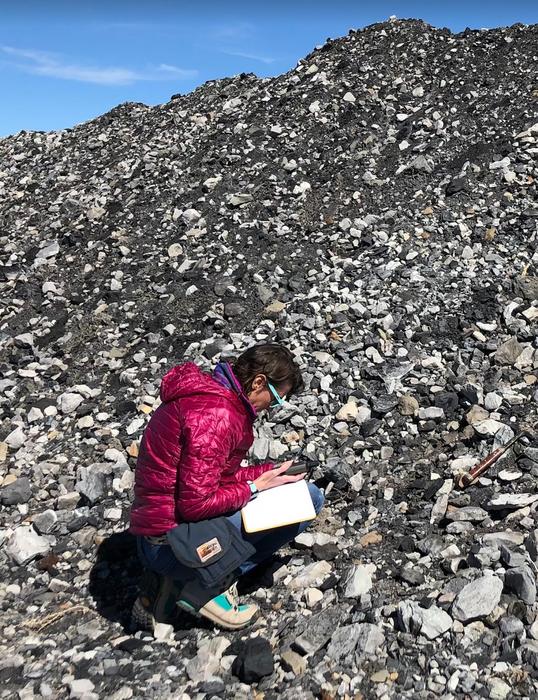
“The model is if you’re already moving rock, could you move a little more rock for resources towards energy transition?” Birgenheier said. “In those areas, we’re finding that the rare earth elements are concentrated in fine-grain shale units, the muddy shales that are above and below the coal seams.”
This research was conducted in partnership with the Utah Geological Survey and Colorado Geological Survey as part of the Department of Energy-funded Carbon Ore, Rare Earth and Critical Minerals project, or CORE-CM. The new findings will form the basis for a grant request of an additional $9.4 million in federal funding to continue the research.
While these metals are crucial for U.S. manufacturing, especially in high-end technologies, they are largely sourced from overseas.
“When we talk about them as ‘critical minerals,’ a lot of the criticality is related to the supply chain and the processing,” said Michael Free, a professor metallurgical engineering and the principal investigator on the DOE grant. “This project is designed around looking at some alternative unconventional domestic sources for these materials.”
The association between coal and REE deposits has been well documented elsewhere, but little data had been previously gathered or analyzed in Utah and Colorado’s coal fields.
“The goal of this phase-one project was to collect additional data to try and understand whether this was something worth pursuing in the West,” said study co-author Michael Vanden Berg, Energy and Minerals Program Manager at the Utah Geological Survey. “Is there rare earth element enrichment in these rocks that could provide some kind of byproduct or value added to the coal mining industry?”
Researchers analyzed 3,500 samples from 10 mines, four mine waste piles, seven stratigraphically complete cores, and even some coal ash piles near power plants.
“The coal itself is not enriched in rare earth elements,” Vanden Berg said. “There’s not going to be a byproduct from mining the coal, but for a company mining the coal seam, could they take a couple feet of the floor at the same time? Could they take a couple feet of the ceiling? Could there be potential there? That’s the direction that the data led us.”
The team deployed two different methods to record levels of rare earths, expressed in parts per million, or ppm, in the samples. One was a hand-held device for quick readings in the field, the other used Inductively Coupled Plasma-Mass Spectrometry, or ICP-MS, in an on-campus lab.
“We’re mostly using this portable x-ray fluorescence device, which is an analysis gun that we hold to the rock for two minutes, and it only gives us five or six of the 17 rare earth elements,” Birgenheier said. If samples showed concentrations higher than 200 ppm, they ran a more complete analysis using the more costly mass spectrometry equipment.
The Department of Energy has set 300 ppm as the minimum concentration for rare earth mining to be potentially economically viable. But for the study, researchers deemed concentrations greater than 200 ppm to be considered “REE enriched.”
The study found the highest prevalence of such concentrations in coal-adjacent formations of siltstone and shale, while sandstone and the coal itself were mostly devoid of rare earths.
The team has analyzed 11,000 samples to date, far more than were used in the published study. Next steps include determining how much rare earth ore is present, likely to be done with colleagues at the University of Wyoming and New Mexico Institute of Mining and Technology.
IMAGE CREDIT: Michael Vanden Berg, Utah Geological Survey
If you enjoy the content we create and would like to support us, please consider becoming a patron on Patreon! By joining our community, you’ll gain access to exclusive perks such as early access to our latest content, behind-the-scenes updates, and the ability to submit questions and suggest topics for us to cover. Your support will enable us to continue creating high-quality content and reach a wider audience.
Join us on Patreon today and let’s work together to create more amazing content! https://www.patreon.com/ScientificInquirer


Leave a Reply