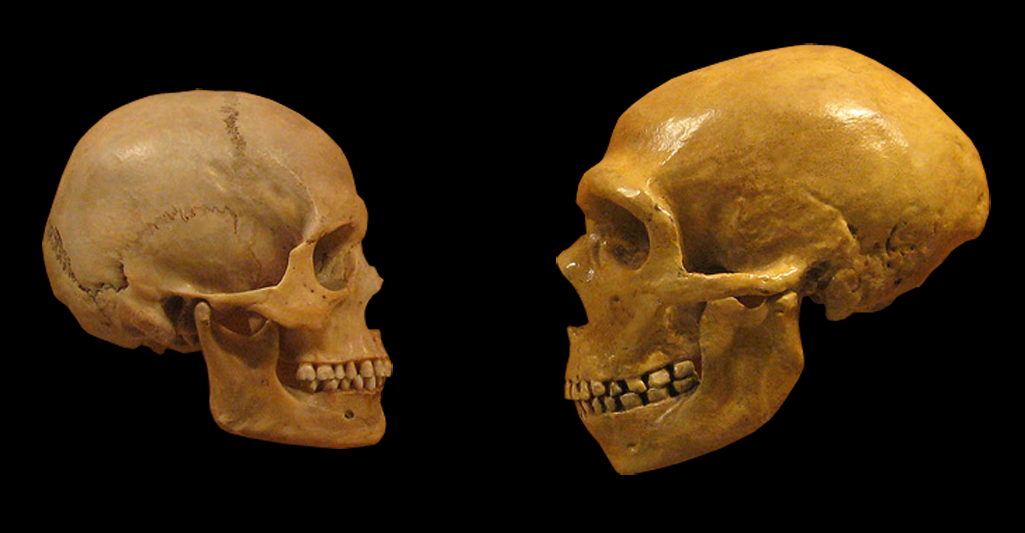
HUMAN-NEANDERTHAL MIXING PINPOINTED TO 47,000 YEARS AGO
Researchers have refined the timeline of when modern humans interbred with Neanderthals, pinpointing a single, extended period of gene flow around 47,000 years ago. This conclusion comes from an analysis of both ancient and modern human genomes, providing a clearer picture of this significant event in human evolution. The study analyzed genomes from 59 ancient humans dating back as far as 45,000 years and from contemporary populations worldwide. By comparing these genomes, the researchers traced the persistence and evolution of Neanderthal DNA over time. They suggest that interactions between Neanderthals and modern humans were not sporadic but rather part of a continuous mixing period lasting approximately 6,000 to 7,000 years. This period coincides with the initial migrations of modern humans out of Africa and across Eurasia, where they likely met and mingled with Neanderthals. The findings also align with the timing of other major human migrations, such as the arrival of modern humans in Australia, suggesting that these events occurred after the Neanderthal mixing. (Science)
BACTERIAL ENZYME CREATES NEW GENES TO FIGHT VIRUSES.
Scientists have uncovered a groundbreaking mechanism in bacteria involving reverse transcriptase, an enzyme previously known only in viruses for converting RNA back into DNA. This bacterial version of the enzyme can actually create entirely new DNA genes from RNA templates. These newly-formed genes then produce RNA that translates into protective proteins when the bacterium faces viral infection, differing from viral reverse transcriptases that simply transfer RNA information into DNA without creating new genes. Researchers, including Stephen Tang and Samuel Sternberg from Columbia University, identified a specific bacterial reverse transcriptase in Klebsiella pneumoniae that forms long DNA sequences with repetitive segments. This repetitive DNA codes for a protein named Neo, which inhibits cell division upon viral infection. The detailed mechanism of how Neo functions or is triggered remains unknown, but its discovery has significant implications for understanding genetic regulation and developing biotechnological applications, potentially revolutionizing how we perceive genome functionalities. (Nature)
If you’re enjoying the Daily Dose, sign up for the Daily Dose Newsletter and get the morning’s best science news from around the web delivered straight to your inbox? It’s easy like Sunday morning.
ADULT ADHD DIAGNOSIS CHALLENGES HIGHLIGHTED BY PERSONAL JOURNEY
Katie Marsh struggled with intense boredom and a pervasive sense of restlessness during college, which led her to suspect she might have ADHD. Her initial evaluation yielded inconclusive results, and she dropped out without receiving a diagnosis. It wasn’t until four years later, after seeking further evaluation, that she was diagnosed with ADHD by a specialist. ADHD is common yet often goes undiagnosed in adults due to inconsistent training among healthcare providers and the lack of established guidelines for adult diagnosis and treatment in the U.S. The diagnostic criteria from the DSM-5 require that significant symptoms be present in multiple settings before age 12, which can complicate diagnosis for adults who do not recall their childhood symptoms clearly. Additional challenges in diagnosing adult ADHD include distinguishing its symptoms from those of coexisting conditions such as depression or anxiety. Marsh’s eventual diagnosis and treatment with Focalin significantly improved her ability to manage her symptoms, highlighting the complexities and the critical nature of accurate ADHD assessment in adults. (New York Times)
TECH INDUSTRY’S ETHICS SCRUTINIZED AMID ACCELERATING AI INNOVATION
The tech mantra “Move fast and break things,” popularized by Mark Zuckerberg, underscores ongoing concerns about the tech industry’s disregard for the repercussions of rapid innovation. Recently, Scarlett Johansson accused OpenAI of using her voice likeness without consent for ChatGPT, despite denials, highlighting fears of AI replacing human creativity. This reflects the larger Silicon Valley ethos of prioritizing forgiveness over permission, though today’s tech companies, including OpenAI, strive to distance themselves from such practices. Originally a nonprofit, OpenAI shifted towards profit-making in 2019, causing some controversy and the departure of co-founder Elon Musk. Despite this shift, the company emphasizes its commitment to ethical AI development. The AI sector faces urgent calls for regulation, as underscored by a UK report questioning AI’s capabilities and risks, and the recent resignation of an OpenAI safety engineer citing prioritization of product over safety. Legal frameworks lag behind, necessitating enforceable regulations to ensure responsible AI development. (BBC)

EXTREME HEAT LINKED TO RISING HOWLER MONKEY DEATHS IN MEXICO
In southern Mexico, a significant number of mantled howler monkeys have perished, sparking concerns about the impact of extreme temperatures on wildlife. Biologist Gilberto Pozo, while monitoring a forest, witnessed two dehydrated monkeys fall from a tree, both of whom later died despite receiving treatment. Initially, it was suspected that smoke from nearby land clearing might have affected the monkeys, but as similar incidents increased, with 147 deaths recorded in the states of Tabasco and Chiapas, heat stress emerged as a potential primary cause. These incidents highlight broader environmental challenges, including habitat reduction due to deforestation and logging, which confine animals to dwindling forest patches devoid of adequate shade, food, or water. The situation is exacerbated by a drought affecting Mexico, stressing small mammals and the ecosystems they inhabit. Scientists, while unsure of the exact causes of the die-offs, emphasize the urgent need for further research and conservation efforts, as the rapid pace of climate change outstrips many species’ ability to adapt. (New York Times)
PRE-HISPANIC CIVILIZATIONS’ DEEP ASTRONOMICAL KNOWLEDGE REVEALED
The Incas and other pre-Hispanic groups in Latin America had profound astronomical knowledge, particularly evident in their recognition of both bright and dark constellations within the Milky Way. Notable among these dark constellations were those observed by the Incas, like the serpent Mach’acuay and Yacana, the llamas, which played crucial roles in their cosmology and mythology. Astronomer Dr. Steven Gulberg, who has extensively studied Inca archaeological sites, recounts learning about these constellations during expeditions in the Andes, highlighting the cultural depth and historical continuity of these celestial patterns. Similarly, other indigenous groups in regions like Uruguay and southern Brazil recognized shapes like the rhea in these dark patches, with their settlements reflecting sophisticated celestial alignments. These astronomical observations were integral not only in cultural and religious practices but also in practical applications such as agriculture, where celestial cues dictated planting seasons and predicted climatic changes. This celestial wisdom, encapsulated in various forms such as solar observatories and ceremonial mounds, underpinned pre-Hispanic civilizations’ understanding and management of their environment, showcasing a deep, enduring connection to the cosmos. (El Pais)
Thanks for reading. Let’s be careful out there.
WORDS: The Biology Guy.




Leave a Reply