Korea relies on imports for most of its metal resources, and in recent years, due to resource depletion and rising raw material prices, ‘circular resources’ that recycle waste metal resources have emerged. In response, SK hynix has established a mid- to long-term plan to increase the percentage of copper, gold, etc. recovered and reused from waste generated in the semiconductor manufacturing process to more than 30% by 2030, and Samsung Electronics is running a collection program for used mobile phones in cooperation with E-circulation Governance, a non-profit corporation. The global circular economy market is expected to more than double in size from approximately $338 billion in 2022 to approximately $712 billion in 2026.
In this context, a team led by Dr. Jae-Woo Choi of the Water Resource Cycle Research Center at the Korea Institute of Science and Technology (KIST) announced that they have developed a technology that can selectively recover high-purity gold from electrical and electronic waste containing various metals using textile materials.

Adsorbents for metal recovery are generally granular in shape to increase adsorption efficiency based on high specific surface area, but they are difficult to control underwater, resulting in low recovery rates and even secondary environmental pollution. On the other hand, fiber-like materials are easy to control underwater and can be made into various shapes through the weaving process, so they have high potential for industrial application. However, due to their thin thickness and low strength, they are easily broken when gold recovery is applied to the support.
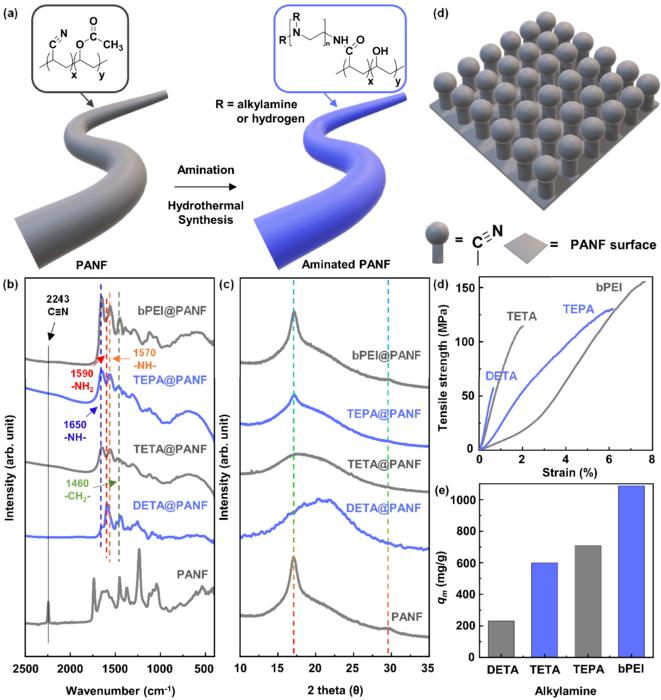
KIST researchers have chemically immobilized alkaline molecules on the surface of polyacrylonitrile (PANF) fibers to improve both molecular gold recovery performance and structural stability. The amine-containing polymer fiber has a dramatically larger surface area, which can improve the adsorption performance of gold ions (Au) in waste by up to 2.5 times (from 576 mg/g to 1,462 mg/g) compared to the team’s previously developed granular gold adsorption material.
Sign up for the Daily Dose Newsletter and get every morning’s best science news from around the web delivered straight to your inbox? It’s easy like Sunday morning.
The developed fibrous adsorbent not only showed a gold recovery efficiency of more than 99.9% in solutions obtained by leaching real CPUs, but also achieved a gold recovery efficiency close to 100% in a wide range of pH 1-4, which includes most waste liquids. It is particularly noteworthy that only gold ions can be recovered with a high purity of over 99.9%, even in the presence of 14 other metal ions coexisting in the solution. Furthermore, the gold recovery rate was maintained at 91% even after 10 uses, demonstrating excellent reusability.
“By enabling efficient and eco-friendly metal resource recovery, the fiber-type adsorbent developed by KIST can reduce Korea’s dependence on resource imports and prepare for the risk of rising raw material prices,” said Dr. Jae-Woo Choi. “We plan to expand the scope of future research to selectively recover various target metals in addition to gold, said Dr. Youngkyun Jung.”
IMAGE CREDIT: Korea Institute of Science and Technology
If you enjoy the content we create and would like to support us, please consider becoming a patron on Patreon! By joining our community, you’ll gain access to exclusive perks such as early access to our latest content, behind-the-scenes updates, and the ability to submit questions and suggest topics for us to cover. Your support will enable us to continue creating high-quality content and reach a wider audience.
Join us on Patreon today and let’s work together to create more amazing content! https://www.patreon.com/ScientificInquirer



Leave a Reply