A major research programme led by the University of East Anglia (UEA) has quantified how climate change risks to human and natural systems increase at a national scale as the level of global warming increases.
A collection of eight studies – all focusing on Brazil, China, Egypt, Ethiopia, Ghana and India – shows that the risks of drought, flooding, declines in crop yields, and loss of biodiversity and natural capital greatly increase for each additional degree of global warming.

The overarching picture for the accrual of climate risk across these countries as global warming increases from 1.5 ºC to 4 ºC above pre-industrial levels is presented in a final paper synthesizing the findings and published today in the journal Climatic Change.
The team found very large increases in the exposure of agricultural land to drought with 3 ºC warming – more than 50 per cent of the agricultural land in each country is projected to be exposed to severe droughts of longer than one year in a 30-year period.
Sign up for the Daily Dose Newsletter and get every morning’s best science news from around the web delivered straight to your inbox? It’s easy like Sunday morning.
However, limiting global warming to 1.5 ºC would reduce the increase in exposure of agricultural land to drought by between 21 per cent (India) and 61 per cent (Ethiopia) as well as reduce economic damages due to fluvial flooding.
Avoided increases in human exposure to severe drought are also 20–80 per cent lower at 1.5 °C than 3 °C across the six countries. Economic damages associated with sea-level rise are projected to increase in coastal nations, but more slowly if warming were limited to 1.5 °C.
The researchers warn that more effort is needed to reduce global warming, as currently the policies in place globally are likely to result in 3 ºC of global warming.
Also published today alongside the synthesis paper is a study on biodiversity in the six countries, exploring the risks to plants and vertebrates increases with global warming, and another paper that develops a new natural capital risk register for each country that also included the projected changes in risk stemming from future human population changes.
This combination shows that many areas in the six countries are already at high natural capital risk at 1.5 ºC when effects of increasing human population is accounted for. When global warming increases, the risks escalate substantially.
The study also showed that an expansion of protected area networks is necessary in order to deliver climate resilient biodiversity conservation.
They are the last in the Topical Collection of studies published over the last three years in Climatic Change, addressing a research gap in assessing future climate change risks associated with global warming levels from 1.5 ºC to 4 ºC in a consistent and harmonised way across countries, yet at the national, not global, scale.
Programme lead and lead author of the synthesis paper Prof Rachel Warren, of the Tyndall Centre for Climate Change Research at UEA, said: “Until now, people have used very different datasets and models to explore climate change risks in different countries, or have conducted global analyses that make it difficult to resolve the implications for individual countries.
“Since important decisions about climate change mitigation and adaptation are made at the national scale, national scale outputs are needed for informing policy. The results presented in this collection confirm the need for the implementation of climate policies aligned to the Paris Agreement limits if widespread and escalating climate change risk is to be avoided.
“They provide additional confirmation of the rapid escalation of climate change risks with global warming found in the IPCC 2022 report, which identifies how the risk of severe consequences increases with every additional increment of global warming.”
Co-author Dr Jeff Price, also of the Tyndall Centre at UEA, added: “Although these studies focus on the risks to six countries only, other nations are projected to experience similar issues. Therefore, greater emphasis needs to be placed on both climate change mitigation and climate change adaptation to avoid large increases in risk to both human and natural systems.
“For example, a good way to combat the effects of climate change on natural systems and soak up carbon from the atmosphere is to restore ecosystems to their natural state, especially if warming can be held to 2 °C or less. This has the additional benefit of restoring the natural capital bank in these areas.”
The work focuses on developing countries as they tend to be more vulnerable to climate change than others. Spanning the continents of Asia, Africa, and South America, the case studies present examples of both large and small countries and cover a range of levels of socioeconomic development.
The risks assessed are the additional risks due to anthropogenic climate change corresponding to the elevated global warming in comparison with a baseline of levels of risk in 1961-1990, when global warming was approximately 0.3 °C above pre-industrial levels.
Together the nine papers together provide a harmonised assessment for the six countries of projected changes in exposure of humans and land to climate-related hazards, such as drought, water stress, fluvial and coastal flooding, and the projected effects of climate change on biodiversity, as well as the economic and societal implications of climate risks.
‘Risks associated with global warming of 1.5 to 4 °C above preindustrial levels in human and natural systems in six countries’, Rachel Warren et al, is published in Climatic Change on Wednesday, February 28.
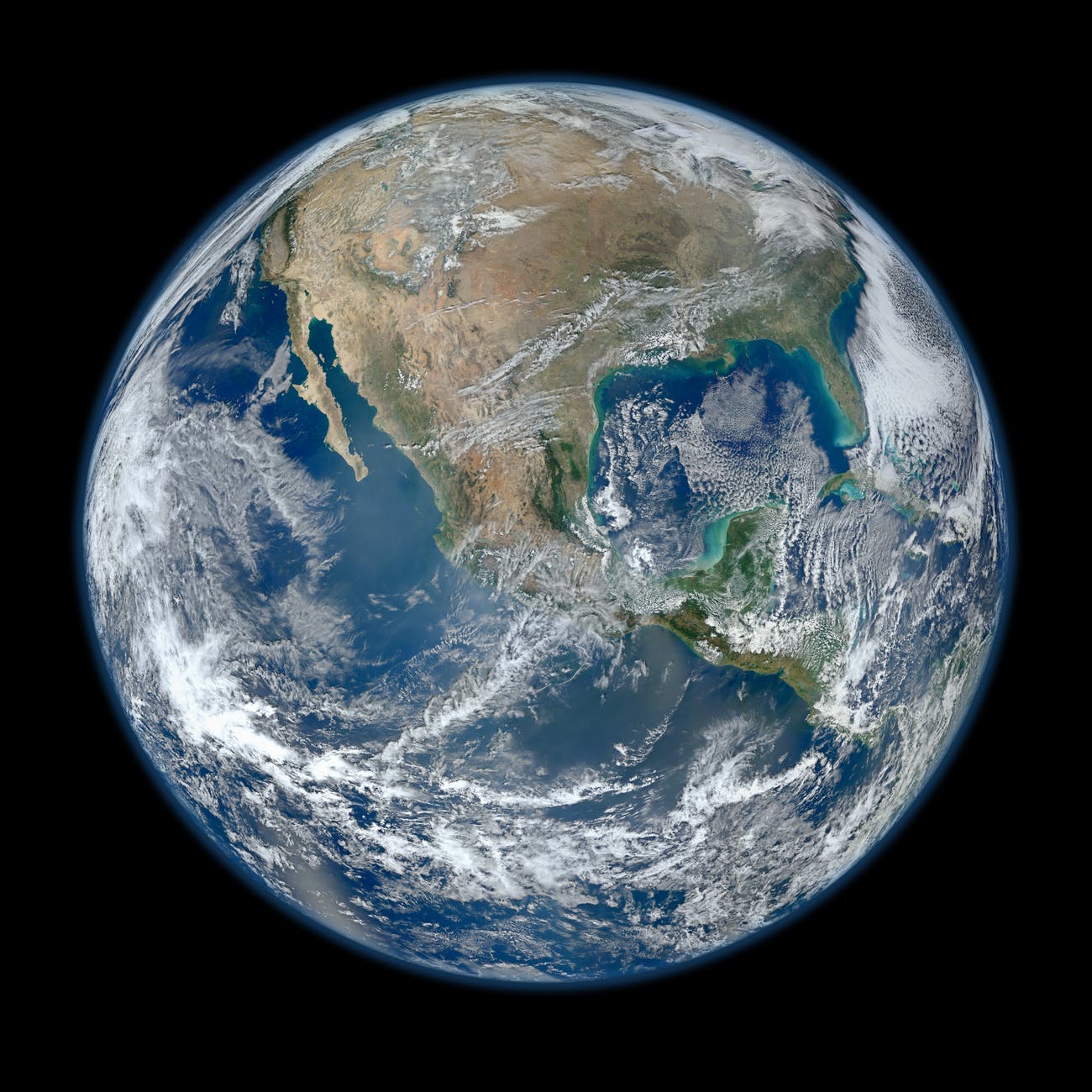
IMAGE CREDIT: NASA.
If you enjoy the content we create and would like to support us, please consider becoming a patron on Patreon! By joining our community, you’ll gain access to exclusive perks such as early access to our latest content, behind-the-scenes updates, and the ability to submit questions and suggest topics for us to cover. Your support will enable us to continue creating high-quality content and reach a wider audience.
Join us on Patreon today and let’s work together to create more amazing content! https://www.patreon.com/ScientificInquirer
Leave a Reply