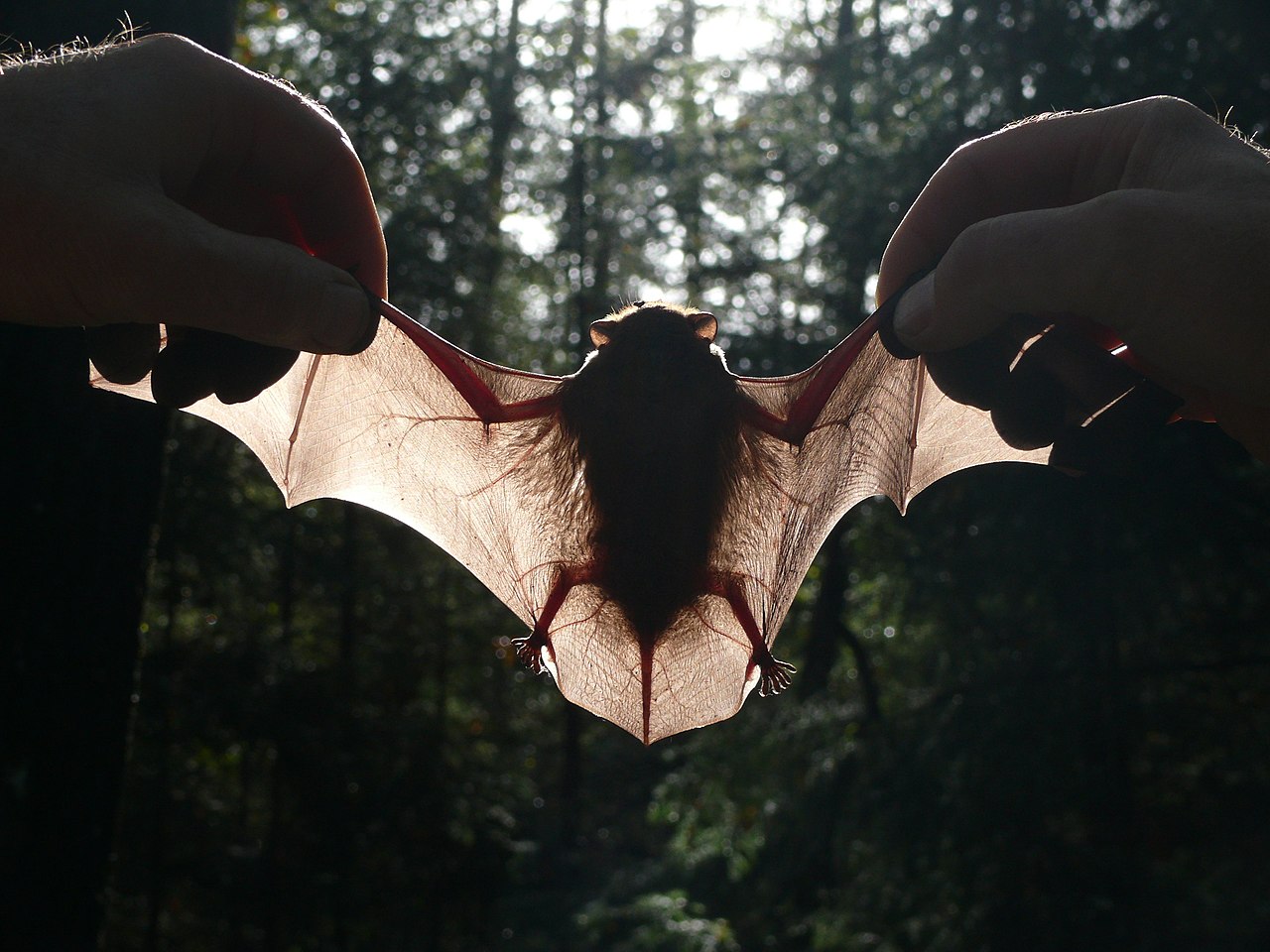
Bat numbers declined as Britain’s trees were felled for shipbuilding in the early colonial period, new research shows.
The study, by the University of Exeter and the Bat Conservation Trust (BCT), found Britain’s Western barbastelle bat populations have dropped by 99% over several hundred years.
Animals’ DNA can be analysed to discover a “signature” of the past, including periods when populations declined, leading to more inbreeding and less genetic diversity.
Scientists used this method to discover the historic decline of Western barbastelles in Britain – and also analysed modern landscapes to see what helps and harms bats.

They found more genetic diversity among bats in areas rich in broadleaf woodland and diverse habitats.
Artificial light reduced connectivity between populations, probably because bats avoid areas with bright lighting, while rivers and woodlands increased connectivity.
“These bats usually roost in mature oak and beech trees, and move around every few nights – so they benefit from areas with substantial woodland cover,” said Dr Orly Razgour, from the University of Exeter.
“Our findings reveal that both the northern and southern British barbastelle populations have declined over several centuries, beginning about 500 years ago.
“This coincides with a period of widespread tree-felling to supply wood for colonial shipbuilding.
“It is likely that the decline we found was triggered by this loss of woodland – which has continued since that period.”
Barbastelles give birth in early summer, with mothers raising a single pup each year.
The species’ habit of moving frequently makes population surveys difficult, so the study provides a valuable update on their status (they are classified as “near threatened” globally, and “vulnerable” in the UK).
“Our findings are used to inform the Natural England conservation status definition for the barbastelle, in turn influencing conservation decisions,” Dr Razgour said.
“While increasing coverage of mature trees is difficult, our findings highlight the need to protect existing woodlands and manage woodlands to increase roost availability for tree-roosting bats.”
Commenting on wider conservation in the UK, Dr Razgour added: “There is an urgent need to carry out similar studies for many other species so we can better understand the state of UK biodiversity and causes of decline.”
Dr Katherine Boughey, Head of Science & Monitoring at BCT, said: “This technique is a game changer for bat conservation.
“Until now, we have only been able to look at recent changes in populations, though anecdotal evidence suggests UK bat populations are at historic lows.
“Now we have evidence for the historic decline of barbastelle, and it has made an immediate impact.
“But we urgently need similar evidence for other bat species – and this study provides a way get it.”
The study was funded by the Natural Environment Research Council (NERC) and the Chapman Charitable Trust.
The paper, published in the Journal of Applied Ecology, is entitled: “Applying genomic approaches to identify historic population declines in European forest bats.”
IMAGE CREDIT: Harald Süpfle
Sign up for the Daily Dose Newsletter and get the morning’s best science news from around the web delivered straight to your inbox? It’s easy like Sunday morning.




Leave a Reply