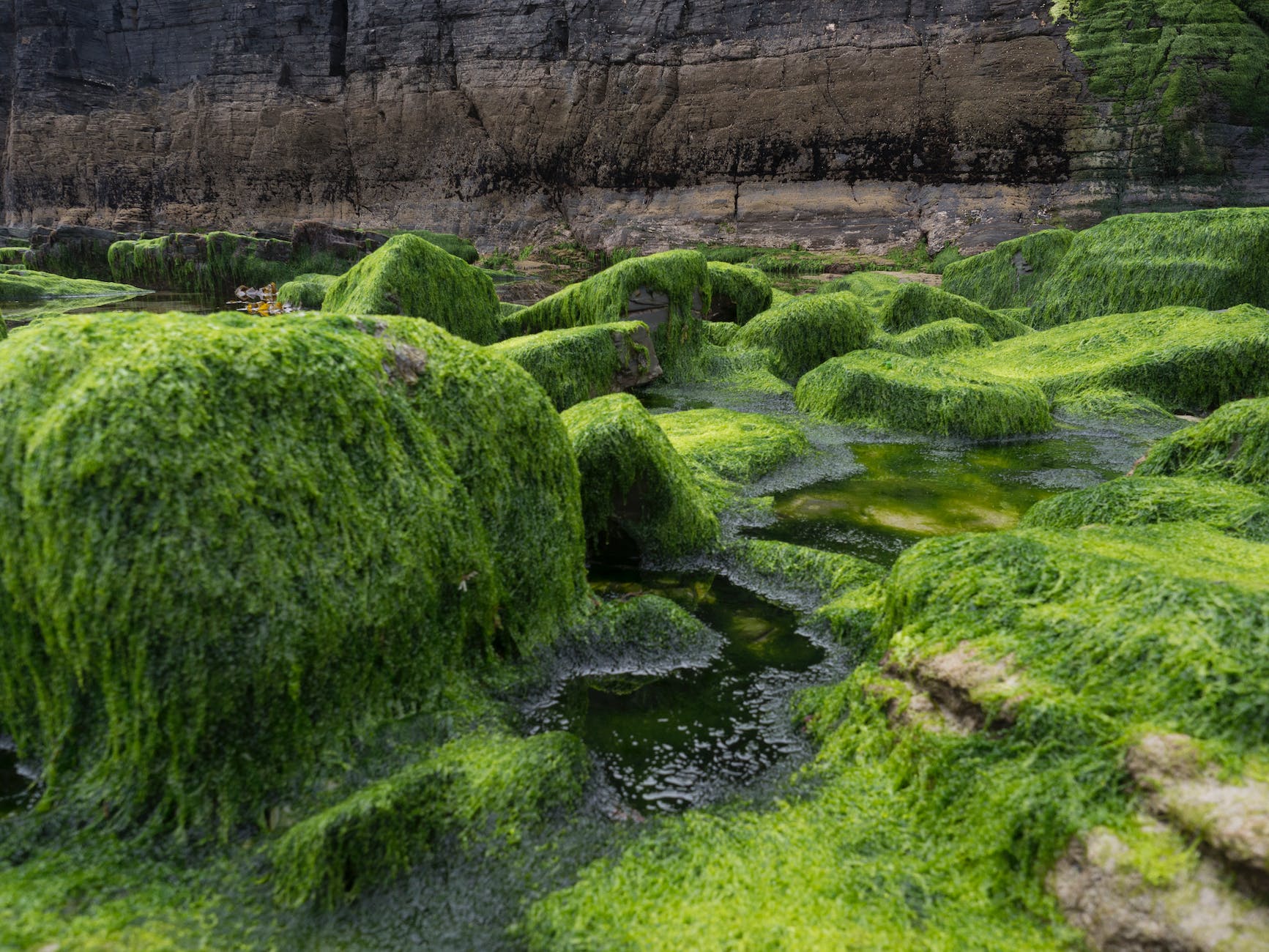
The Earth’s surface is covered by plants. They make up the majority of biomass on land and exhibit a wide range of diversity, from mosses to trees. This astounding biodiversity came into existence due to a fateful evolutionary event that happened just once: plant terrestrialization. This describes the point where one group of algae, whose modern descendants can still be studied in the lab, evolved into plants and invaded land around the world. An international group of researchers, spearheaded by a team from the University of Göttingen, generated large scale gene expression data to investigate the molecular networks that operate in one of the closest algal relatives of land plants, a humble single-celled alga called Mesotaenium endlicherianum. Their results were published in Nature Plants.
Using a strain of Mesotaenium endlicherianum that has been kept safe in the Algal Culture Collection at Göttingen University (SAG) for over 25 years and the unique experimental set-up there, the researchers exposed Mesotaenium endlicherianum to a continuous range of different light intensities and temperatures. Janine Fürst-Jansen, researcher at the University of Göttingen, states: “Our study began by examining the limits of the alga’s resilience – to both light and temperature. We subjected it to a wide temperature range from 8 °C to 29 °C. We were intrigued when we observed the interplay between a broad temperature and light tolerance based on our in-depth physiological analysis.”

How the algae respond was not only investigated on a morphological and physiological level, but also by reading the information of about 10 billion RNA snippets. The study used network analysis to investigate the shared behaviour of almost 20,000 genes simultaneously. In these shared patterns, “hub genes” that play a central role in coordinating gene expression in response to various environmental signals were identified. This approach not only offered valuable insights into how algal gene expression is regulated in response to different conditions but, combined with evolutionary analyses, how these mechanisms are common to both land plants and their algal relatives.
Professor Jan de Vries, University of Göttingen, says: “What is so unique about the study is that our network analysis can point to entire toolboxes of genetic mechanisms that were not known to operate in these algae. And when we look at these genetic toolboxes, we find that they are shared across more than 600 million years of plant and algal evolution!” As Armin Dadras, PhD student at the University of Göttingen, explains: “Our analysis allows us to identify which genes collaborate in various plants and algae. It’s like discovering which musical notes consistently harmonize in different songs. This insight helps us uncover long-term evolutionary patterns and reveals how certain essential genetic ‘notes’ have remained consistent across a wide range of plant species, much like timeless melodies that resonate across different music genres.”
IMAGE CREDIT: Charl Durand.
Sign up for the Daily Dose Newsletter and get the morning’s best science news from around the web delivered straight to your inbox? It’s easy like Sunday morning.


Leave a Reply