HAVE YOUR SAY.
Join us in The Bullpen, where the members of the Scientific Inquirer community get to shape the site’s editorial decision making. We’ll be discussing people and companies to profile on the site. On Wednesday, April 12 at 5:30pm EST, join us on Discord and let’s build the best Scientific Inquirer possible.
The diet quality of fish across large parts of the world’s oceans could decline by up to 10 per cent as climate change impacts an integral part of marine food chains, a major study has found.
QUT School of Mathematical Sciences researcher Dr Ryan Heneghan led the study published in Nature Climate Change that included researchers from the University of Queensland, University of Tasmania, University of NSW and CSIRO.
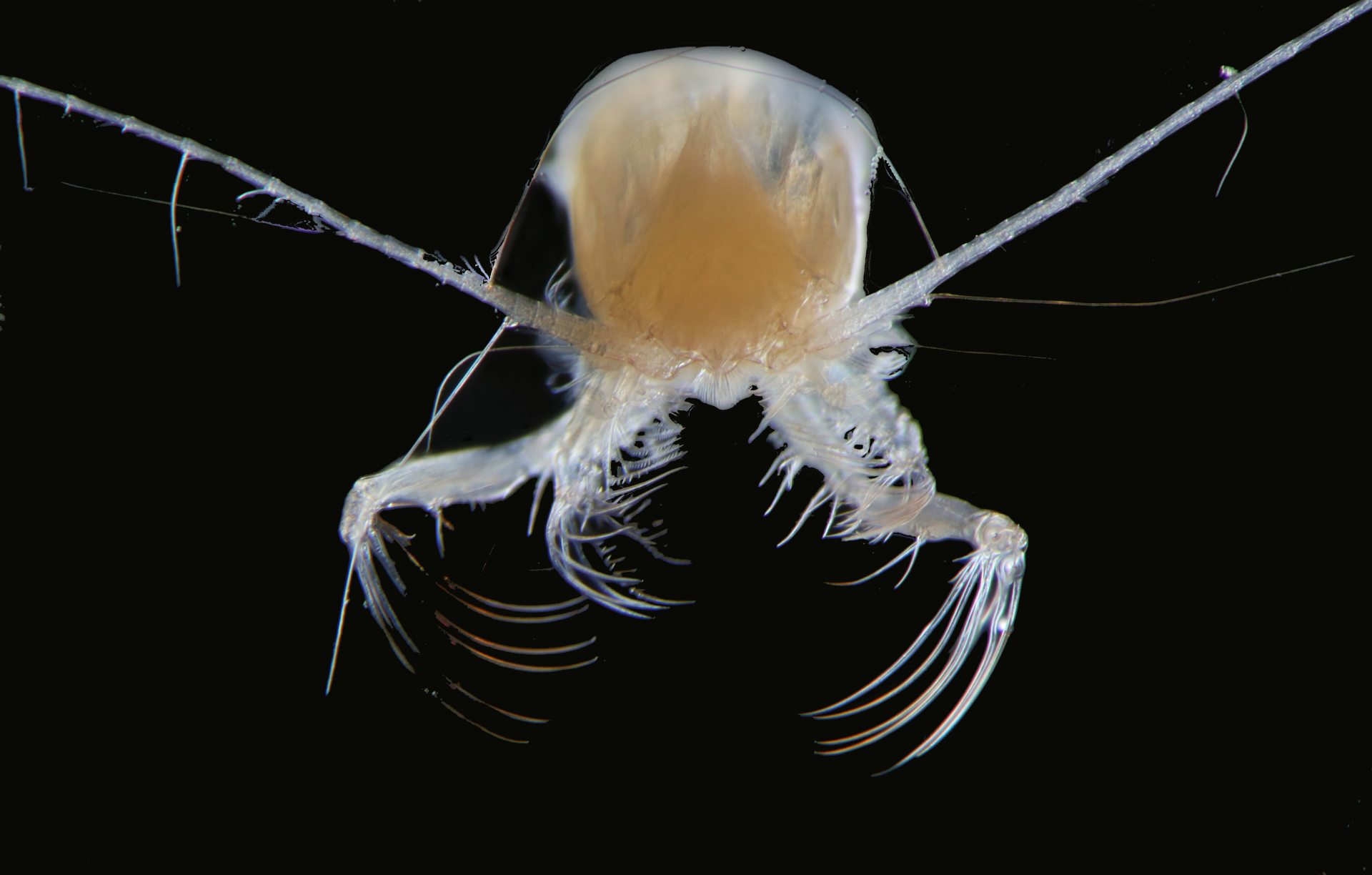
They modelled the impact of climate change on zooplankton, an abundant and extremely diverse group of microscopic animals accounting for about 40 per cent of the world’s marine biomass.

Zooplankton are the primary link between phytoplankton—which convert sunlight and nutrients into energy like plants do on land—and fish. Zooplankton include groups such as Antarctic krill—a major food source for whales—and even jellyfish.
“Despite their abundance, diversity and critical importance in transferring energy from phytoplankton to fish, knowledge about what shapes the composition of zooplankton communities across the world’s oceans is relatively limited,” Dr Heneghan said.
“This is a challenge, since if zooplankton are affected by climate change, this could have important implications for the ocean’s ability to sequester carbon emissions, and the productivity of fisheries.”
The research team used a global marine ecosystem model to look at the impact of climate change on the major zooplankton groups, from single-cell zooplankton, to krill, and all the way up to jellyfish.
“We used the model to project changes in the zooplankton community in response to climate change, and then assess how these changes could affect the diet quality of small fish—the primary predators of zooplankton beyond the zooplankton themselves,” Dr Heneghan said.
“We found future climate change drives shifts in the composition of zooplankton communities across most of the world’s oceans. These changes were mostly caused by decreases in the size of phytoplankton under climate change.”
The researchers found future zooplankton communities will be increasingly dominated by carnivorous groups, such as chaetognaths, and gelatinous groups, such as salps and larvaceans, at the expense of small crustacean omnivores such as krill and copepods.
“In the oceans, energy is transferred from microscopic plankton up to fish and whales by size-based predation—big things eating small things,” Dr Heneghan said.
Like blue whales, which eat krill, gelatinous salps and larvaceans eat prey millions of times smaller than themselves, which means unlike other larger zooplankton eaten by fish, they can directly access smaller phytoplankton for food.
As a result, salps and larvaceans provide an effective shortcut for the transfer of energy from increasingly dominant small phytoplankton to fish.
“This shortcut partially offsets the increase in the number of steps from phytoplankton to fish from shrinking phytoplankton and increases in carnivorous zooplankton,” Dr Heneghan said.
“But, it comes at a cost: these groups are gelatinous, having about five per cent of the carbon contained in omnivorous zooplankton such as krill and copepods.
“In terms of nutrition, this would be like replacing a rib-eye steak with a bowl of jelly.
“As a result, our model projects that the diet quality of small fish could decline across large areas of the world’s oceans, which would exacerbate declines in fish biomass from climate change by up to 10 per cent.”
Dr Heneghan said shifts to more gelatinous fish diets had already been observed during a recent marine heatwave in the North Pacific, commonly called “the Blob”.
“The higher temperatures drove declines in phytoplankton production, which in turn drove decreases in the prevalence of carbon-dense krill, which were replaced by gelatinous zooplankton,” he said.
“As a result, small fish in the region shifted to more gelatinous diets, which drove declines in their weight and abundance.
“Our model results indicate the shift to more gelatinous diets for small fish could become more common in the future under ocean warming.
“For human societies, the this could have far-reaching implications globally, since according to the United Nations Food and Agriculture Organization fisheries are a key ecosystem service worth US$150 billion a year and providing more than 20 per cent of dietary animal protein for 3.3 billion people, and supporting 60 million livelihoods.”
IMAGE CREDIT: Julian Uribe-Palomino IMOS-CSIRO


Leave a Reply