HAVE YOUR SAY.
We are proud to announce the inaugural session of The Bullpen, where the members of the Scientific Inquirer community get to shape the site’s editorial decision making. We’ll be discussing people and companies to profile on the site. On Wednesday June 8th at 5:30pm EST, join us on Discord and let’s build the best Scientific Inquirer possible.
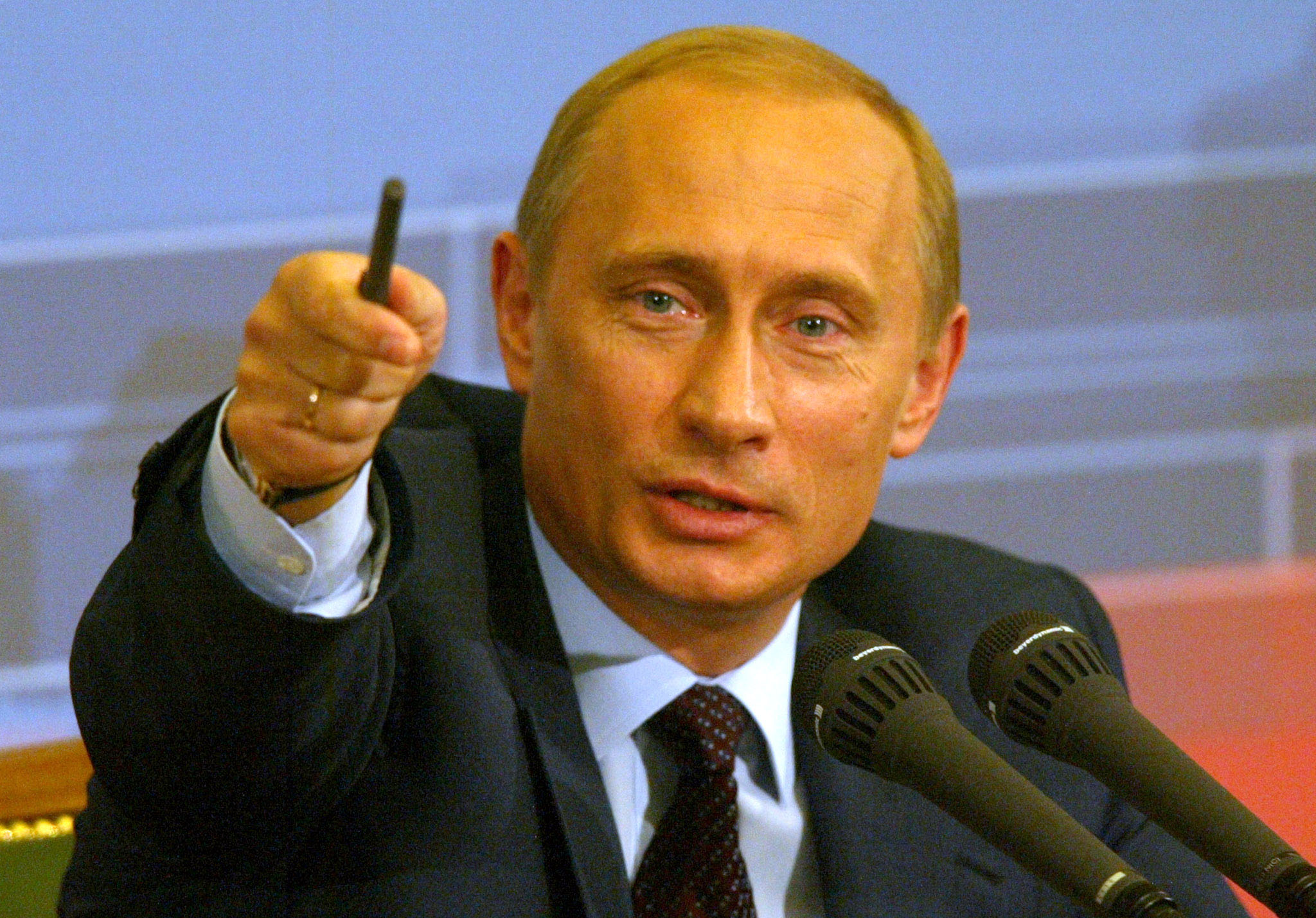
Russia is reinventing decades-old propaganda based on supposed humanitarian principles to justify its invasion of Ukraine, according to research published in the peer-reviewed journal, The International Spectator.
Carried out by an expert on Russia-NATO relations, this extensive analysis of Russia’s official foreign policy statements since the USSR’s collapse provides new insights into Vladimir Putin’s tactics regarding separatism.
The research identifies attempts by officials to mask a policy change from intervention to invasion towards former Soviet republics. This shift is apparent from 2008 – when Russian forces went into Georgia – according to the study which covers the years after the Soviet Union’s collapse until present day.
The study has been conducted by Dr Vasile Rotaru, from the Department of International Relations and European Integration, at the National University of Political Studies and Public Administration, Bucharest, in Romania.
His findings demonstrate that the Kremlin has used narratives from the 1990s to claim Russian minorities need protecting with military support. A former research fellow at the NATO Defence College, Dr Rotaru also states that his analysis highlights how Russia has embellished rhetoric used in the years after the USSR’s dissolution to legitimise a new more aggressive approach towards secessionist conflicts.
“The narratives post-2008 seek to present themselves as consistent with the past,” says Dr Rotaru, who specialises in Russian foreign policy, the former Soviet region, the Eastern Partnership, and the Eurasian Economic Union.
“The aim is inducing the perception that Russia’s strategy towards the secessionist conflicts…has remained the same. That is, supporting the separatist regions militarily with the proclaimed aim of protecting the Russian minority living in those regions.
“By using the arguments emerged already in the 1990s, the Kremlin suggests the continuity of its strategy towards separatist conflicts.
“However, empirical evidence has shown that since 2008 Moscow has not simply intervened in secessionist territories to put pressure on central governments of other post-Soviet states. It has also not abstained from direct invasion to control the foreign policy of the countries in its neighbourhood.”
Russia’s invasion of Ukraine has triggered international condemnation and fears of a Third World War.
This military action is the latest carried out by Russia in post-Soviet republics – known as ‘the near abroad’ – since the dissolution of the USSR in 1991.
The study findings are based on a review of written documents, and audio and video records by Russian foreign policy-makers.
The author analysed statements regarding the country’s position towards secessionist conflicts. These include in South Ossetia, Crimea, Donbas, and preliminary evidence on the Russia-Ukraine war.
The study author investigated both similarities and differences between official Russian narratives. These related to conflicts in the 1990s when the USSR was breaking up, and post 2008.
They reveal that the humanitarian narratives from the 1990s and post 2008 share common patterns. Both relate to sovereignty and territorial integrity; the right to self-determination; and the illegitimacy of central authority.
Examples include references to Ukrainian authorities as ‘Neo-Nazis and Banderovtsy’ in the context of the recognition of the independence of the Lugansk and Donetsk regions and the invasion of Ukraine.
However, the study highlights that foreign policy statements post 2008 also cite historical injustices, and invoke the Kosovo precedent (the country’s independence from Serbia) which President Putin has used to justify Russia’s annexation of the Crimea.
In addition, the legality of Russia’s actions is presented as a humanitarian feature of foreign policy with the Ukraine invasion deemed in accordance with international law.
Overall, the authors conclude post-2008 narratives are more coherent. They attribute this to power being regained by former members of the Soviet leadership – those trained during the Cold War – without much opposition and with Putin’s backing.


Leave a Reply