
Much of what scientists think about soil metabolism may be wrong. New evidence from Northern Arizona University suggests that microbes in different soils use different biochemical pathways to process nutrients, respire, and grow. The study, published last month in Plant and Soil, upends long-held assumptions in the field of soil ecology and calls for more investigation and higher-resolution methods to be applied to what has been a black box for the field.
“As ecologists, we generally don’t think about soil metabolism in terms of pathways,” said Paul Dijkstra, research professor of biology in the Center for Ecosystem Science and Society at NAU and lead author of the study. “But we now have evidence that metabolism differs from soil to soil. We’re the first to see that.”
“We’ve learned that biochemistry—more specifically, the metabolic pathways the soil microbiota chooses—matters, and it matters a lot,” said co-author Michaela Dippold, a professor of geo-biosphere interactions at University of Tübingen in Germany. “Our field urgently needs to develop experimental approaches that quantify maintenance energy demand and underlying respiration in a robust way. It’s a challenge to which future soil ecology research will have to respond.”
As part of his team’s work to make soil ecology a more specific, quantitatively rigorous science, Dijkstra adapted a method from basic and applied microbiology that is used to model metabolism for single microbial species under laboratory conditions. This technique, called 13C metabolic flux analysis, involves tagging the carbon atoms at each position in a glucose molecule so one can be distinguished from the others. By adding that labeled glucose to a soil sample, the researchers can trace how much CO2 was produced from each carbon atom in the molecule. In the way a single letter revealed in the gameshow “Wheel of Fortune” can point to an entire phrase, the position-specific CO2 is a clue to the biochemical pathway taken.
“When we developed this method in 2011 to distinguish between metabolic pathways in soil, we essentially had an answer to a question no one had asked yet,” Dijkstra said.
When his team added this labeled glucose to a marsh soil, an alpine conifer forest soil, and a cool desert grassland soil, they noticed that most CO2 was produced from the third C-atom in one soil, but from the first C-atom in the other two soils, suggesting that the soil microbial community in each was using a different biochemical route to process the sugar. The standard assumption in many ecological models is that soil metabolism is a homogenous process whose rate, but not pathway, changes.
For Dijkstra, the first measurements caused a kind of eureka moment. “It was a Friday at 4 o’clock and I was bored, so I went down to the lab. I quickly made a mix of these carbon isotopes, injected them into the soil, and measured the resulting CO2. After 40 minutes, I stopped. And I threw everything away, not believing I saw what I saw.”
While the researchers don’t yet know why soil communities use different pathways, one hypothesis is that some pathways provide protection against oxygen stress in certain environments.
The team’s proposed framework has rippling implications for future soil research and management. If, as the team suspects, some small proportion of the soil microbiome is highly active and optimized for metabolizing and mobilizing nutrients, it will be important for researchers to know who those microbes are and to support their efficiency, Dippold said. Predator and grazer microbes may control an important dynamic in community metabolism, said Dijkstra, so learning more about the trophic dynamics of different soils could point to management strategies.
In a field that has historically relied on proxy measurements to describe how microbes go about the work of eating, building cells, respiring, and dying, this study suggests that these placeholder assumptions may hamper the field’s ability to apply what it knows about soils to the challenge of climate warming.
“Soil ecology cannot be summarized in a simple proxy,” said Dippold. “We need to focus on microbial metabolism in soils, and we need more diverse and more powerful tools to do so—no matter how difficult such study might be. If not, we will again and again end up with inconclusive results whose underlying processes are not well understood.” That, Dippold said, will limit our ability to manipulate soil microbial processes in order to mitigate greenhouse gas emissions, and to reduce the negative impacts of climate change on soil health.
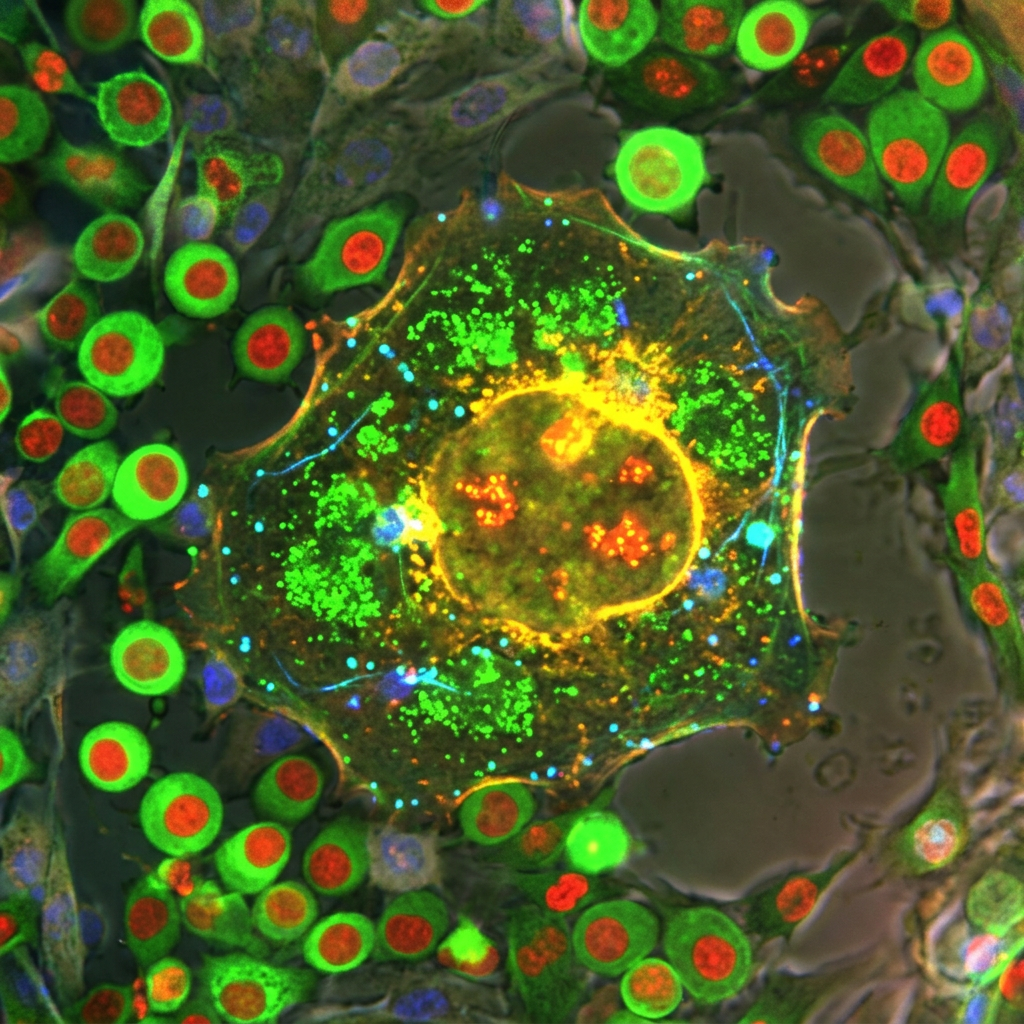
IMAGE CREDIT: Victor O. Leshyk, Center for Ecosystem Science and Society

Leave a Reply