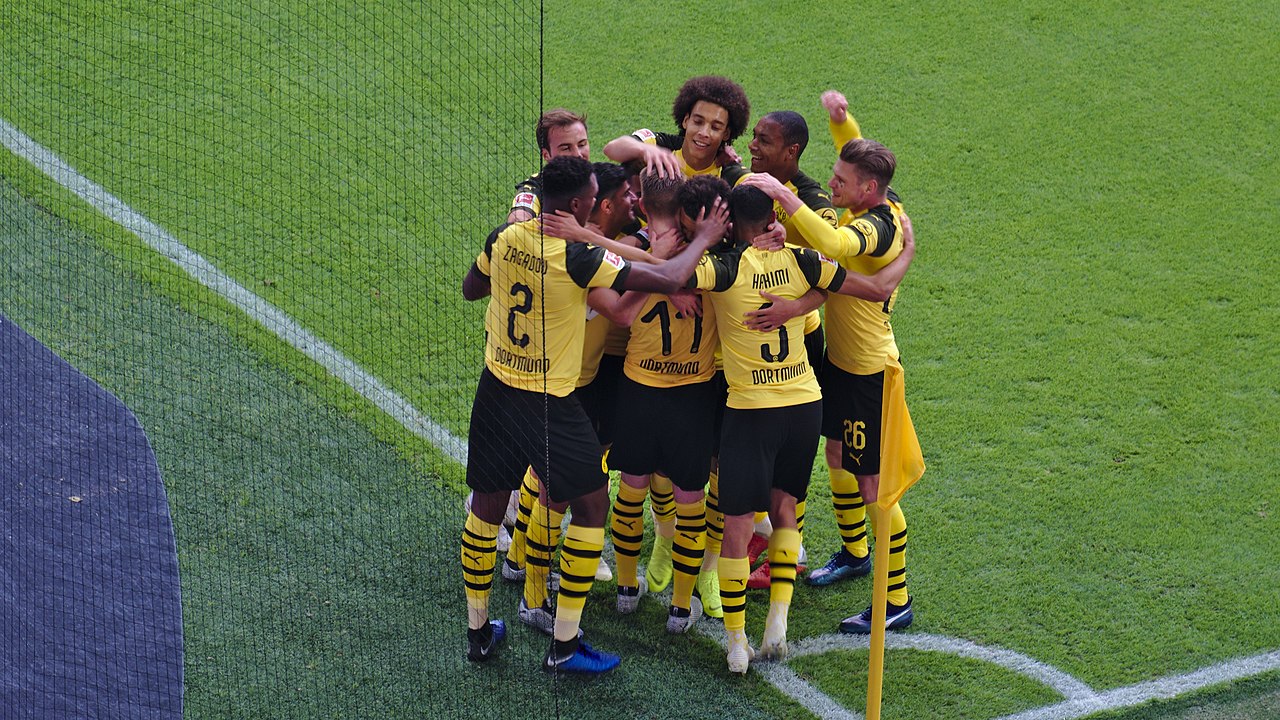
In sports and in life, hard work ultimately breeds success. At least that’s what we’ve been told, right? It’s a nice idea because it places our ultimate fate in our own hands. Whether it’s actually true is a whole different matter altogether. A team of researchers at Poznań University of Physical Education in Poland wanted to find out whether a team’s hard work or work-rate on the pitch over the course of a season actually translated to winning results. Their study was published in BMC Sports Science, Medicine and Rehabilitation.
Marcin Andrzejewski et al. wanted to determine the match technical and running performance required by different teams based on their final ranking position in a professional soccer league. Using this data, analyze the correlation between teams’ success at the end of the season and variables related to match technical and running performance.
Andrzejewski collected match technical and running performance data, using electronic performance and tracking systems during 612 matches in two consecutive German Bundesliga seasons (2017–2018 and 2018–2019). The data were subsequently analyzed. Next, the total of points obtained at the end of each season was registered in order to study the correlation between the team success and the variables related to match technical and running performance.
According to their data, there was a significant interaction (p < 0.05) between the ranking position, and both match technical and running performance. That said, the strongest signals came from other data points. Goals scored, saved shots on goal by the goalkeeper, assists, allowed shots on goal, goals conceded, ball possession ratio and successful passes from open play ended up being the variables with the strongest correlation (r > 0.7; p ≤ 0.01) with the total of points obtained at the end of the season.
“Our analysis indicated that significant interactions were observed between the ranking position and both physical and technical performance, which is in line with previous studies,” wrote Andrzejewski. “From a technical performance perspective, higher-ranked teams had better performance than lower-ranked teams in variables related to offense (e.g., ball possession, corners, shots on goal, or successful passes) and defense (e.g., fouls or yellow cards).”
It’s worth noting that not all forms of running had equal beneficial impacts. In fact, distance covered when not in possession of the ball tended to correlate with lower league position.
IMAGE CREDIT: Steffen Flor.




Leave a Reply