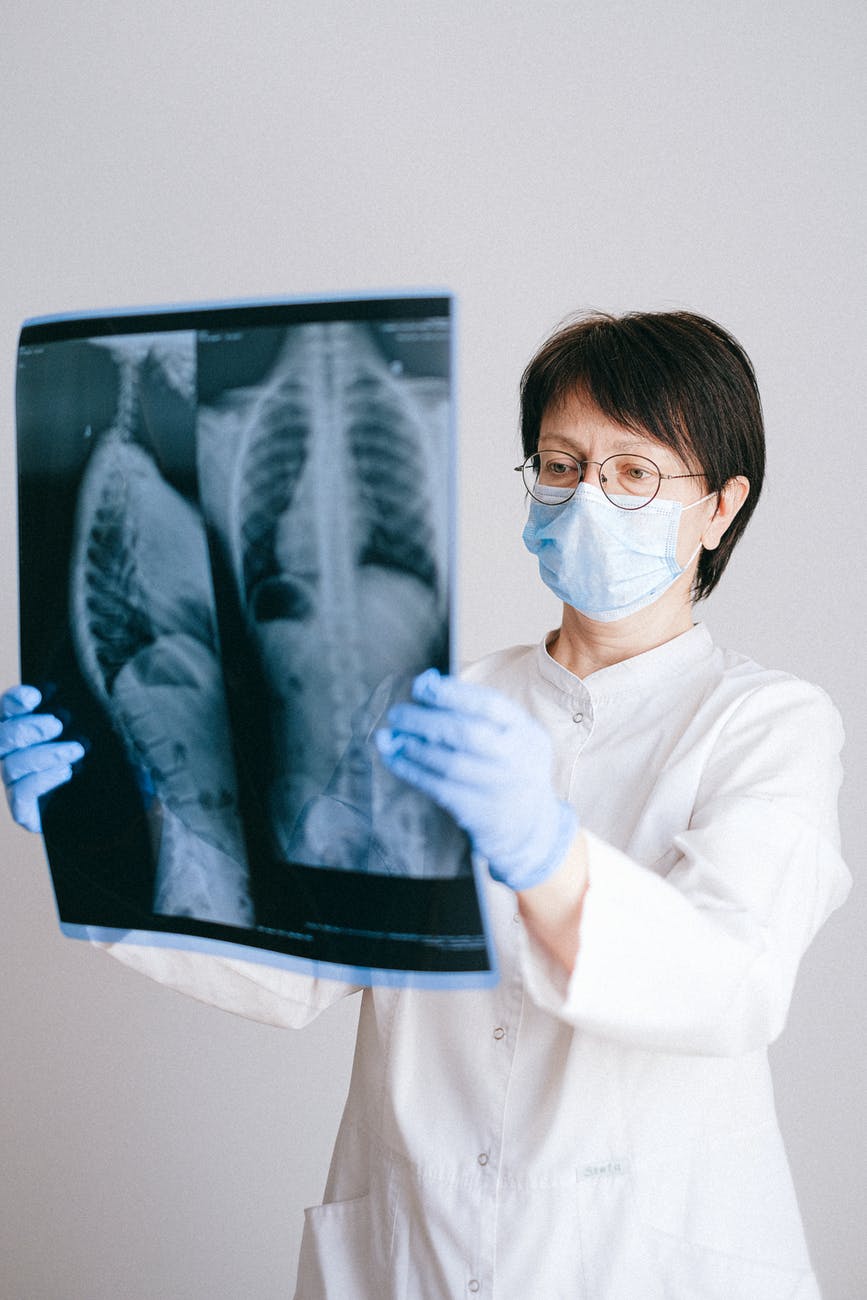
Severe injuries to the lung from diseases such as COVID-19 trigger abnormal stem cell repair that alters the architecture of the lung. The aberrant stem cell differentiation in response to injury can prevent the restoration of normal lung function.

In a collaborative study between UCSF researchers appearing December 30 in Nature Cell Biology, UCSF researchers Jaymin Kathiriya, PhD, and Chaoqun Wang, PhD, discovered that severe lung injuries can trigger lung stem cells to undergo abnormal differentiation. Drs. Kathiriya and Wang, supervised by Hal Chapman, MD, and Tien Peng, MD, respectively, utilized stem cell organoid models to uncover a novel stem cell pathway that is seen in severely injured lungs from COVID-19 and idiopathic pulmonary fibrosis patients.
This study offers a roadmap to understand how severely injured lungs can remodel and scar and provides a potential pathway to reverse the remodeling by targeting the abnormal stem cells differentiation.
It has been previously accepted that the regenerative capacity of resident stem cells of the alveolus (AEC2s), operates similarly mice and humans. The researchers unexpectedly found that human AEC2s (hAEC2s), unlike mouse AEC2s, robustly transdifferentiate into functional basal cells with cues from pathological fibroblasts. Single-cell analysis of the hAEC2-to-basal cell trajectory in vitro revealed the presence of transitional cell types and basal cell subsets previously identified in lungs with Idiopathic Pulmonary Fibrosis (IPF).
Utilizing a novel fibroblast/hAEC2 organoid platform, the authors could model the stem cell metaplasia, or abnormal stem cell differentiation, seen in severe alveolar injury. Furthermore, the discovery that hAEC2s can generate pathologic transitional cell types and basal cells provides experimental confirmation of a stem cell trajectory that is seen in diseased human lungs.
“The first time we saw hAEC2s differentiating into basal cells, it was so striking that we thought it was an error,” said Peng. “But rigorous validation of this novel trajectory has provided enormous insight on how the lung remodels in response to severe injury, and a potential path to reverse the damage.”
The finding that hAEC2s undergo progressive transdifferentiation to metaplastic basal cells is not unique to IPF. Alveolar metaplastic basal cells are also common in sections of scleroderma and COVID lungs, and these are intermingled with transitional cells in areas of active remodeling. The common finding of transitional cells in hAEC2-derived organoids as well as hAEC2 xenografts and in histologic analyses of fibrotic lungs, suggest hAEC2s are a major source of metaplastic basal cells in diseases with severe alveolar injury.
The study provides the groundwork for future research to identify therapeutic targets that might prevent or reverse metaplastic differentiation in severe lung injury, and whether other components of the fibrotic niche such as endothelial cells and immune cells are able to drive the metaplastic phenotype.
IMAGE CREDIT: (ENTER NAMES)



Leave a Reply