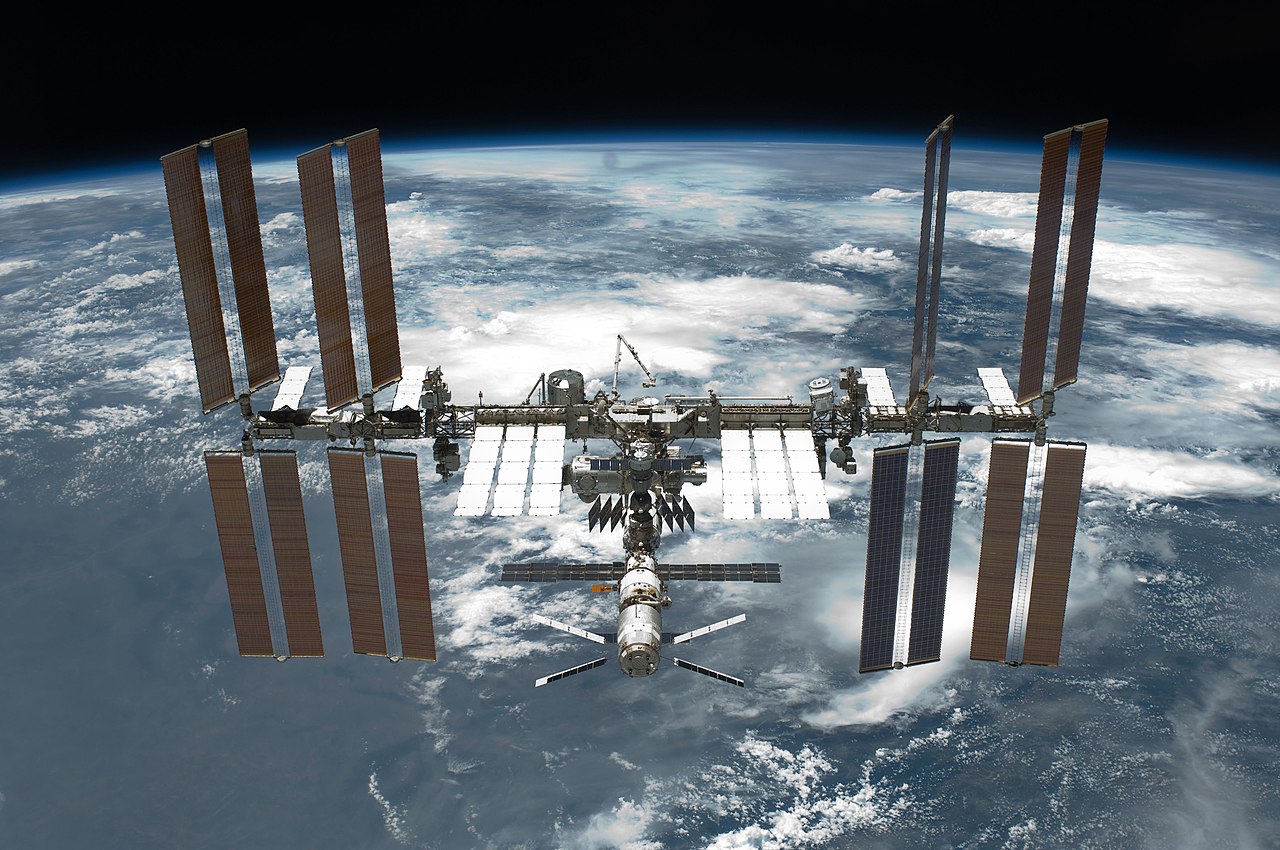
In an out of this world study, space archaeologists are reconstructing life on the International Space Station (ISS) over the past two decades, to better understand space culture and get an inside look at how astronauts interact with their tools and colleagues when above Earth.
The ability to understand the ‘microsociety’ of crews onboard the ISS will offer a window into how life in space functions, as humans consider interplanetary exploration. So how is this gravity defying research made possible?
Internationally recognised space archaeologist, Associate Professor Alice Gorman at Flinders University, says ISS researchers won’t be able to travel to the space station themselves, instead opting to use millions of photographs taken onboard over nearly two decades, to document developments and changes within the station’s lifestyle and cultural makeup.
“Fortunately for us, the first occupation of the ISS coincided with the emergence of digital photography,” says Associate Professor Gorman.
“The images include metadata recording the time and date, which become an excavation, linking the contents of images to moments in time. Given that the crew takes approximately 400 photographs per day, images depicting the station interior now number in the millions.”
“We’ll eventually use crowdsourcing to help tag and catalogue that huge cache of photos, with the project likely to take several years.”
However, the researchers will also be able to get onboard with the help of astronauts conducting archaeological surveys of the ISS interior, to document aspects of life that can’t be derived from image analysis alone.

“One potential survey is surface sampling for the build-up of dust, hair, skin cells, oil, dirt, food, broken fragments of equipment and other materials,” says Associate Professor Justin Walsh of Chapman University in California, a co-investigator on the project.
“An aerosol sampling experiment, which collects air and particulates on the station, provides valuable baseline data.
“Other techniques include audio recording to identify levels of ambient sound and documentation of specific public spaces, such as eating areas, and, if possible, private spaces such as crew berths.”
“Understanding how individuals and groups use material culture in space stations, from discrete objects to contextual relationships, promises to reveal intersections of identity, nationality and community.”
Research methods will focus on:
- Image analysis: using machine learning to catalogue association between crew members, spaces within the station and objects/tools.
- Interviews and anonymised questionnaires with flight and ground crews.
- The development of procedures for the ISS crew to perform archaeological surveys on site.
- The investigation of ISS cargo return (‘de-integration’) activity and analysis of the values and meanings associated with returned items.
- The investigation and possible excavation of archaeological sites on Earth related to the development, deployment and discard of technology and resources consumed by the crew.
Associate Professor Gorman says an often overlooked but important component of operations on the ISS is the return of items to Earth.
“The return of items from the ISS can be interpreted archaeologically as a form of discard process. Preliminary analysis of our interview transcripts indicates the complexity of the process whereby items enter the inventory and are subsequently dispersed.”
“If items associated with the ISS have been discarded on Earth in soil matrices, traditional archaeological excavation techniques could be used to retrieve and analyse them.”



Leave a Reply