A new study led by the University of Colorado Boulder reveals the complex history behind one of the Grand Canyon’s most well-known geologic features: A mysterious and missing gap of time in the canyon’s rock record that covers hundreds of millions of years.
The research comes closer to solving a puzzle, called the “Great Unconformity,” that has perplexed geologists since it was first described nearly 150 years ago.
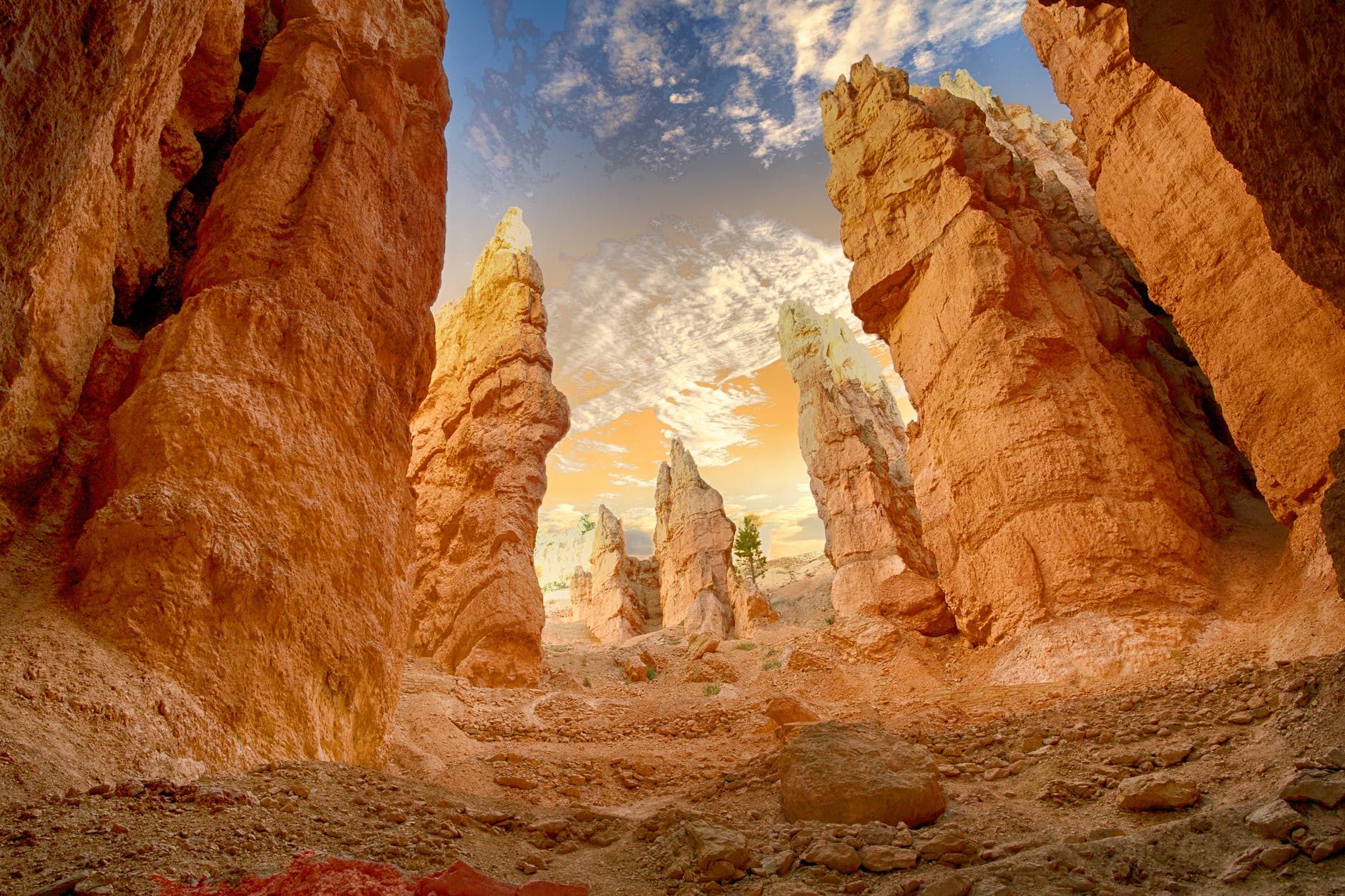
Think of the red bluffs and cliffs of the Grand Canyon as Earth’s history textbook, explained Barra Peak, lead author of the new study and a graduate student in geological sciences at CU Boulder. If you scale down the canyon’s rock faces, you can jump back almost 2 billion years into the planet’s past. But that textbook is also missing pages: In some areas, more than 1 billion years’ worth of rocks have disappeared from the Grand Canyon without a trace.
The best kept secret in online betting? Canadian casinos. Check it out. You can thank us later.
Geologists want to know why.
“The Great Unconformity is one of the first well-documented geologic features in North America,” Peak said. “But until recently, we didn’t have a lot of constraints on when or how it occurred.”
Now, she and her colleagues think they may be narrowing in on an answer in a paper published this month in the journal Geology. The team reports that a series of small yet violent faulting events may have rocked the region during the breakup of an ancient supercontinent called Rodinia. The resulting havoc likely tore up the earth around the canyon, causing rocks and sediment to wash away and into the ocean.
The team’s findings could help scientists fill in missing pieces of what happened during this critical period for the Grand Canyon—today one of North America’s foremost natural wonders.
“We have new analytical methods in our lab that allow us to decipher the history in the missing window of time across the Great Unconformity,” said Rebecca Flowers, coauthor of the new study and a professor of geological sciences. “We are doing this in the Grand Canyon and at other Great Unconformity localities across North America.”
Beautiful lines
It’s a mystery that goes back a long way. John Wesley Powell, the namesake of today’s Lake Powell, first saw the Great Unconformity during his famed 1869 expedition by boat down the rapids of the Colorado River.
Peak, who completed a similar research rafting trip through the Grand Canyon in spring 2021, said that the feature is stark enough that you can see it from the river.
“There are beautiful lines,” Peak said. “At the bottom, you can see very clearly that there are rocks that have been pushed together. Their layers are vertical. Then there there’s a cutoff, and above that you have these beautiful horizontal layers that form the buttes and peaks that you associate with the Grand Canyon.”
The difference between those two types of rocks is significant. In the western part of the canyon toward Lake Mead, the basement stone is 1.4 to 1.8 billion years old. The rocks sitting on top, however, are just 520 million years old. Since Powell’s voyage, scientists have seen evidence of similar periods of lost time at sites around North America.
“There’s more than a billion years that’s gone,” Peak said. “It’s also a billion years during an interesting part of Earth’s history where the planet is transitioning from an older setting to the modern Earth we know today.”
A continent splits
To explore the transition, Peak and her colleagues employed a method called “thermochronology,” which tracks the history of heat in stone. Peak explained that, when geologic formations are buried deep underground, the pressure building on top of them can cause them to get toasty. That heat, in turn, leaves a trace in the chemistry of minerals in those formations.
Using this approach, the researchers conducted a survey of samples of rock collected from throughout the Grand Canyon. They discovered that the history of this feature may be more convoluted than scientists have assumed. In particular, the western half of the canyon and its eastern portion (the part that tourists are most familiar with) may have undergone different geologic contortions throughout time.
“It’s not a single block with the same temperature history,” Peak said.
Roughly 700 million years ago, basement rock in the west seems to have risen to the surface. In the eastern half, however, that same stone was under kilometers of sediment.
The difference likely came down to the breakup of Rodinia, a gigantic land mass that began to pull apart at about the same time, Peak said. The researchers results suggest that this major upheaval may have torn at the eastern and western halves of the Grand Canyon in different ways and at slightly different times—producing the Great Unconformity in the process.
Peak and her colleagues are now looking at other sites of the Great Unconformity in North America to see how general this picture might be. For now, she’s excited to watch geologic history play out in one of the country’s most picturesque landscapes.
“There are just so many things there that aren’t present anywhere else,” she said. “It’s a really amazing natural lab.”



Leave a Reply