UBC researchers have developed a method for monitoring bacterial responses to antibiotics in health-care settings that opens the door to personalized antibiotic therapy for patients.
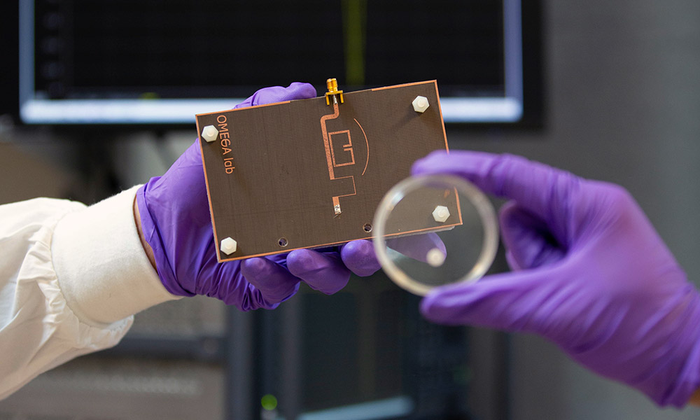
Using microwave sensing technology, UBC Okanagan Assistant Professor Mohammad Zarifi and his team at the Okanagan Microelectronics and Gigahertz Applications (OMEGA) Lab have developed a low-cost, contactless, portable and reusable microwave sensor that acts as a fast and reliable evaluation tool for measuring antibiotic resistance.
According to the World Health Organization, over-prescription of antibiotics has led to growing resistance of bacteria towards drug treatments. As a result, the newly evolved “superbugs” have put a large strain on health-care systems globally, says Zarifi.
This newly developed sensor aims to combat the drawbacks of the current Antibiotic Susceptibility Test (AST), as it reduces the time and cost taken to conduct the test, while increasing the portability for AST to be used in remote regions.
“Many types of bacteria are continuously evolving to develop resistance to antibiotics. This is a pressing issue for hospitals around the globe, while sensor and diagnosis technology has been slow to adapt,” explains Zarifi, who teaches at the School of Engineering.
Existing AST practices are expensive and can take up to 48 hours to process results.
“Longer wait times can significantly delay the treatments patients receive, which can lead to further medical complications or even fatalities. This method showcases the requirement for a reliable, rapid and cost-effective detection tool,’’ he says.
The new sensor, developed by the UBC team, can differentiate bacterial growth variations before any visible cues are evident. Therefore, the dosage or type of antibiotics can be fine-tuned to combat the specific bacterial infection.
In the next phase of development, the OMEGA lab aims to integrate artificial intelligence algorithms with this sensing device to develop smart sensors, which would be a big leap towards personalized antibiotic therapy.
“Our ultimate goal is to reduce inappropriate usage of antibiotics and enhance quality of care for the patients,” says Zarifi. “The more quality tools like this that health-care practitioners have at their disposal, the greater their ability to combat bacteria and viruses.”
This research has been published in Nature Scientific Reports with financial and instrumental support from the Natural Sciences and Engineering Council of Canada, the Canada Foundation for Innovation and CMC Microsystems.
IMAGE CREDIT: UBC Okanagan




Leave a Reply