
With the summer Olympics within spitting distance, things are beginning to get a little fraught in Japan, the country set to host the event. With the COVID-19 pandemic still threatening to burst into another wave of infections at any moment, politicians, public health experts, and the population are at odds about what to do. Per the Associated Press, “With tens of thousands of visitors coming to a country that is only 13.8% fully vaccinated, gaps in border controls have emerged, highlighted by the discovery of infections among the newly arrived team from Uganda, with positive tests for the highly contagious delta variant. As cases grow in Tokyo, so have fears that the games will spread the virus. ‘We must stay on high alert,’ Prime Minister Yoshihide Suga told reporters on July 1. Noting the rising caseloads, he said ‘having no spectators is a possibility.’” There is a sense of resignation that, as the event’s opening nears, the only option on the table is mitigation. That seems far from ideal. https://bit.ly/3dQrcOC
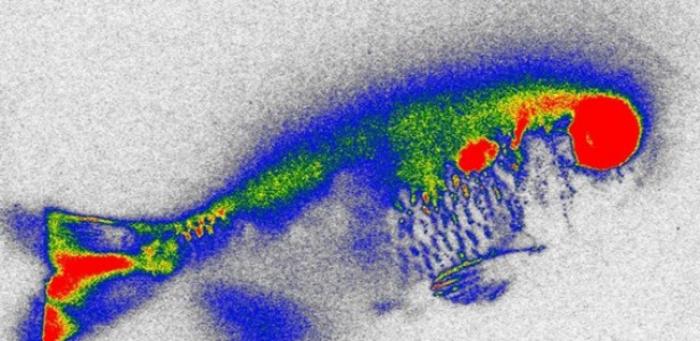
The United Arab Emirates is one of a handful of nations with a satellite orbiting Mars. Now, some impressisve images have been beamed back from their orbiter. Per Nature, “The United Arab Emirates’ Hope spacecraft has taken the most detailed pictures yet of the ‘discrete auroras’ of Mars. The ultraviolet emissions — seen by the orbiter’s onboard spectrometer — arise when solar wind runs into magnetic fields that emanate from Mars’s crust. Charged particles then collide with oxygen in the upper atmosphere, causing it to glow.” We’ve said it before. It’s exciting times when it comes to planetary exploration and things will only get better. https://go.nature.com/3AtwVnf
Scientists, public health officials, and healthcare professionals have been hoping for a reiliable indicator that can clue them in on how well vaccines are illiciting immune responses. Now, it seems they may have their indicator. Per Nature, “The team at the University of Oxford, UK, identified a ‘correlate of protection’ from the immune responses of trial participants — the first found by any COVID-19 vaccine developer. Identifying such blood markers, scientists say, will improve existing vaccines and speed the development of new ones by reducing the need for costly large-scale efficacy trials.” https://go.nature.com/3ykdyem
Speaking of data… A paper in the Proceedings of the National Academy of Sciences describes a new tool that may predict the likelihood of spillover from known viruses. Per the authors, “We developed an open-source risk assessment to systematically evaluate novel wildlife-origin viruses in terms of their zoonotic spillover and spread potential. Our tool will help scientists and governments assess and communicate risk, informing national disease prioritization, prevention, and control actions. The resulting watchlist of potential pathogens will identify targets for new virus countermeasure initiatives, which can reduce the economic and health impacts of emerging diseases.” https://bit.ly/3ysP2I1
There’s this perception that plastics will be living with the cockroaches in the post-apocalyptic world. The reason being that they are not biodegradable and will stick around forever (maybe with those Maraschino cherries in your stomach). But it turns out, not all plastics are created equal and some end up being too fragile to last even fifty years. Museums are learning that lesson the hard way. An article in Science takes a look at what museums are doing to try and preserve works of art made from fragile plastics: “Until recently, museums only had to worry about traditional materials. ‘We know how to approach the restoration of paintings, books, and materials like wood, metals, and glass,’ says Anna Laganà, a research specialist at the Getty Conservation Institute. ‘But for plastics, our knowledge is still limited.’ Tonkin, now a doctoral researcher in fashion conservation at Nottingham Trent University, agrees: ‘We’re now scuttling around trying to figure out how to conserve’ plastics, she says. The variety of plastic objects at risk is dizzying: early radios, avant-garde sculptures, celluloid animation stills from Disney films, David Bowie costumes, the first artificial heart. Nearly every museum in the world has plastic items, and even well-cared-for objects can fall apart alarmingly quickly. https://bit.ly/3AuKfHQ
Thanks for reading. Let’s be careful out there.
Leave a Reply