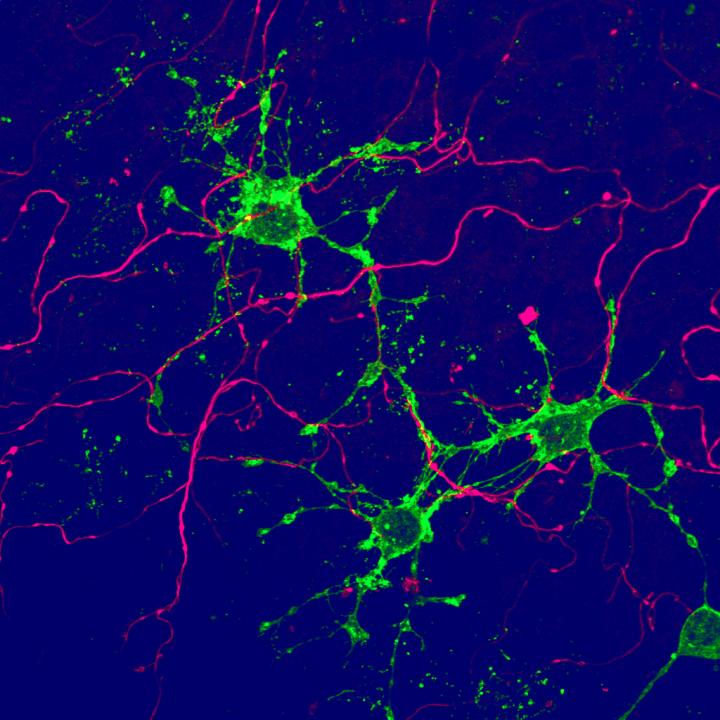
Neurons, nerve cells in the brain, are central players in brain function. However, a key role for glia, long considered support cells, is emerging. A research group at the University of Basel has now discovered two new types of glial cells in the brain, by unleashing adult stem cells from their quiescent state. These new types of glia may play an important role in brain plasticity and repair.
The brain is malleable well into adulthood. Brain plasticity is not only due to the formation of new nerve connections. Stem cells present in the adult brain also generate new nerve cells. For more than a hundred years, scientists have concentrated on investigating different types of nerve cells.
In the brain, however, another class of cells, called glia, are also essential for brain function. However, the importance of glial cells has been underestimated for decades. How many types of glia there are, how they develop and what roles they play are all still largely unexplored.
The research group of Prof. Fiona Doetsch at the Biozentrum of the University of Basel is investigating stem cells in the ventricular-subventricular zone in the adult mouse brain. In this region, many of the stem cells are in a quiescent state, sensing signals in the environment that stimulate them to awaken and transform into new nerve cells.
In their study in the journal Science, Doetsch’s team identified a molecular signal that awakened the stem cells from their quiescent state, allowing them to uncover multiple domains that give rise to glial cells in this stem cell reservoir.
Stem cells – birthplace of glial cells
“We found an activation switch for quiescent stem cells,” Doetsch explains. “It is a receptor that maintains the stem cells in their resting state. We were able to turn off this switch and thus activate the stem cells,” Doetsch says. In addition, the researchers were able to visualize the development of the stem cells into different glial cells in specific areas of the stem cell niche.
“Some of the stem cells did not develop into neurons, but into two different novel types of glial cells,” Doetsch reports. This brain region studied is therefore a birthplace for different types of glial cells as well as its role as a breeding ground for neurons.
“What was very unexpected was that one glial cell type was found attached to the surface of the wall of the brain ventricle, rather than in the brain tissue.” These cells are continuously bathed by cerebrospinal fluid and interact with axons from other brain areas, and therefore are poised to sense and integrate multiple long-range signals.
Glial cells – active in health and disease
The research team also found that both glial cell types were activated in a model of demyelination. These new glial cell types may therefore be a source of cells for repair in neurodegenerative diseases, such as multiple sclerosis or after injury.
As a next step, Doetsch would like to specifically trace these new glial cell types and to investigate their roles in normal brain function and how they respond in different physiological contexts. This will provide important clues to understanding brain plasticity and how the renewal and repair of neural tissue occurs.
IMAGE: University of Basel, Biozentrum.



Leave a Reply