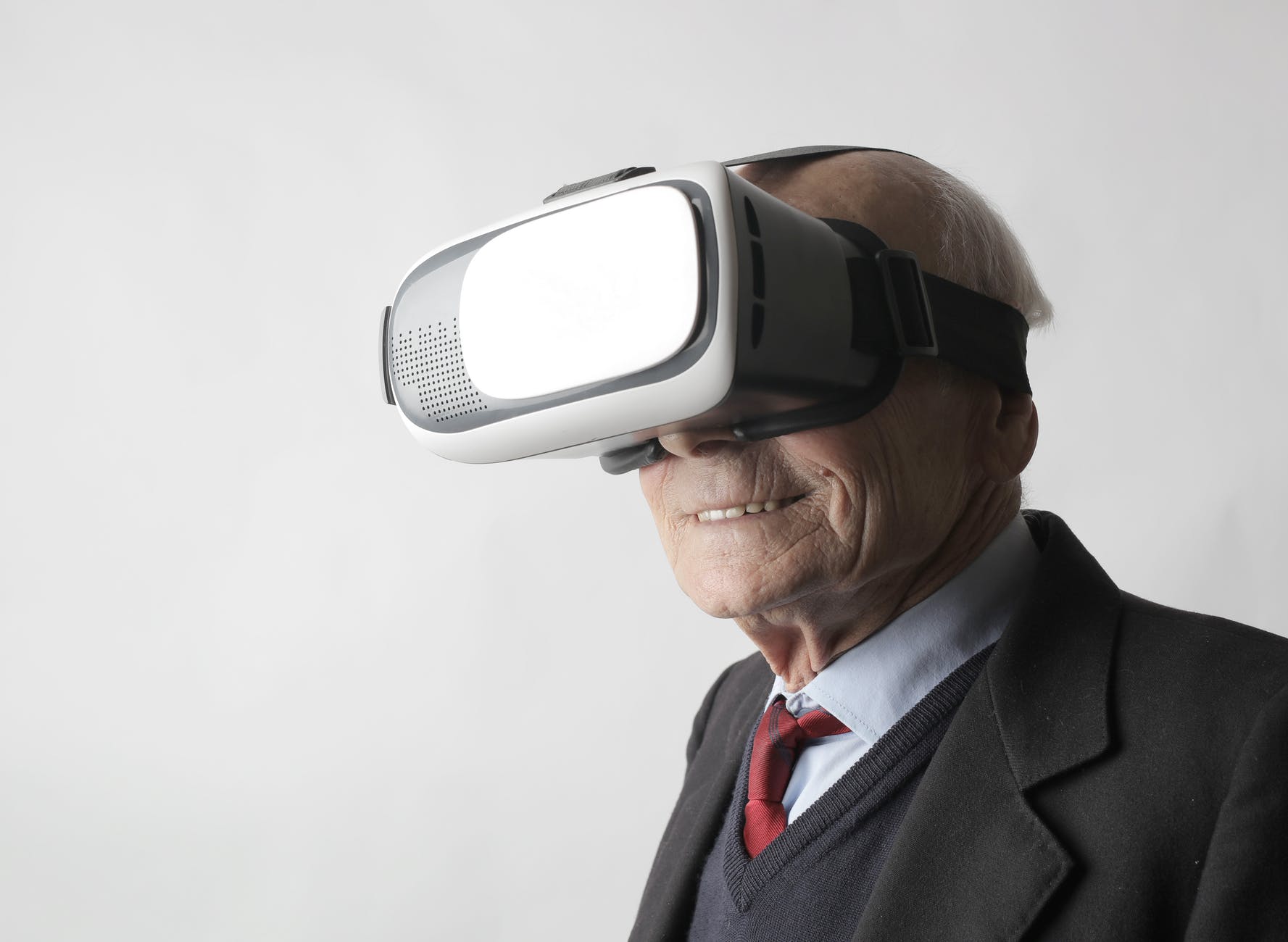
Cutting-edge technology is normally associated with youth, but a group of aged care residents in Adelaide are learning how useful (and how much fun) virtual reality can be.
Recalling their past adventures and most positive memories through VR technology is helping residential aged care residents at Helping Hand to improve their mental health, thanks to a new study by the University of South Australia.
UniSA PhD candidate Jim Saredakis is using virtual reality to address widespread apathy in aged care homes, which hastens cognitive decline and can affect up to 84 per cent of older residents.
“Lack of interest in life and loss of motivation are extremely common among people in aged care homes,” Saredakis says. “Apathy contributes to a poorer quality of life and is associated with a three-fold risk of earlier death compared to those without apathy.”
Music and art therapy are often used to motivate aged care residents, but virtual reality can be used as a powerful tool for “reminiscence therapy” which allows seniors to immersive themselves in happier memories from their past.
Saredakis tailored VR experiences for 17 residents at Helping Hand, interviewing each about their life history with a focus on positive memories and then sourcing content specifically for each person.
The content was viewed through a 360-degree video on head-mounted displays, allowing residents to relive autobiographical memories of travel, favourite places, jobs, family videos and other social connections.
“It’s a digital life storybook; a powerful tool which takes aged care residents away from the world they’re in and into a happier time and place with no other distractions,” Saredakis says.
The feedback has been overwhelmingly positive.
“I saw a visible change in them. The emotional responses were varied (including happy tears) but always positive.”
More importantly, the improvements in verbal fluency – a key indicator of apathy – were marked.
The residents with higher levels of apathy recalled a lot more words immediately after the immersive sessions than beforehand, possibly activating specific regions of their brain.
“We believe that being in the immersive environment stimulates the brain areas involved in verbal fluency,” Saredakis says. “What we found was that people with high levels of apathy said more words after the experience, triggering something in their brain. It was an immediate effect and we don’t know how long it lasts.”
Some negative side effects of the virtual reality experience were reported, including dizziness and nausea – like motion sickness – and some eye strain. However, all participants endorsed the project and said it was their favourite activity in the home.
“The fact that residents with the highest levels of apathy showed the most improvements tells us that virtual reality could help improve the lives of older adults in residential aged care,” Saredakis says.
This research is currently being expanded to directly examine apathy and compare virtual reality to traditional forms of reminiscence therapy and a usual care group.



Leave a Reply