Milan researchers wrapped the cell’s energy factories in metal-organic frameworks, the Nobel-winning materials, and found the mitochondria kept producing energy.
Mitochondria are among the busiest structures in biology. Hundreds or thousands of them fill a typical cell, converting the food we eat into the chemical energy that powers everything from heartbeats to thought. They are also notoriously fragile. Their double membranes are easily disrupted, and once damaged, they stop doing their job.
That fragility has made one idea seem almost fanciful: coating mitochondria with a synthetic material to give them new abilities. Researchers in Milan have now shown it can be done. Working in a joint laboratory called BraiNs, teams from the IRCCS Fondazione Istituto Neurologico Carlo Besta (FINCB) and the Politecnico di Milano coated mitochondria with metal-organic frameworks, or MOFs, and found that the coated organelles kept producing energy. The study appears in the Journal of the American Chemical Society.
When the power plant fails
Mitochondrial dysfunction lies behind a group of often rare disorders known as mitochondrial diseases. Because mitochondria supply energy, these conditions hit hardest in the tissues that need the most of it, especially the brain and muscles. Symptoms can include muscle weakness, seizures, vision and hearing loss, and developmental delays, and many forms appear in childhood. Treatment options remain limited, and most care focuses on managing symptoms.
Mitochondria are also unusual for another reason. They carry their own small genome, a relic of their origin more than a billion years ago as free-living bacteria that were engulfed by an ancestral cell and became permanent residents. Mutations in that mitochondrial DNA, or in the many nuclear genes that support mitochondrial function, can disrupt the organelle’s ability to produce energy.
Taken together, mitochondrial diseases are thought to affect roughly one in every 5,000 people, making them among the more common inherited metabolic disorders, even though each individual form is rare. Mitochondrial decline is also implicated more broadly in aging and in neurodegenerative conditions such as Parkinson’s disease.
The project brought together two very different kinds of expertise. Dr Valeria Tiranti’s group at FINCB, which leads the Medical Genetics and Neurogenetics Complex Unit and the Fondazione Mariani Centre for Paediatric Mitochondrial Diseases, contributed knowledge of mitochondrial biology. Professor Pierangelo Metrangolo’s group at the Politecnico di Milano brought chemical and materials engineering.
Nobel-winning scaffolds
Metal-organic frameworks are crystalline materials built from metal ions linked by organic molecules into porous, cage-like structures. Because chemists can swap the metal and organic components, MOFs can be tuned for an enormous range of tasks, from capturing carbon dioxide to harvesting water from desert air. Their development earned the 2025 Nobel Prize in Chemistry for Susumu Kitagawa, Richard Robson and Omar Yaghi.
What makes MOFs remarkable is their internal surface area. Their pores are so extensive that a single gram of some frameworks can contain several thousand square metres of internal surface, an area comparable to a football pitch. That porous architecture lets them trap, store and release molecules with great selectivity, and it is one reason researchers have explored them for drug delivery inside the body.
Applying them to mitochondria, however, is difficult. The process of growing a crystalline coating on a surface can easily damage something as delicate as an organelle. The Milan team developed a method to coat mitochondrial surfaces directly using very small quantities of MOF, working at micromolar concentrations, as the paper’s title notes.
The key test was whether the mitochondria would survive the treatment with their function intact. They did. The coated mitochondria retained their ability to produce energy, the release reports.
A coating with a purpose
For Metrangolo, the significance is less the coating itself than what it makes possible. “The possibility of modifying the coating now opens up new research prospects,” he said. “In the future, it will be possible to develop MOF with different characteristics depending on the objective, creating coatings capable of performing specific functions.”
One potential application is mitochondrial transplantation, an experimental approach in which healthy mitochondria are delivered into cells whose own mitochondria are failing. The idea has been explored in animal studies and in a small number of experimental clinical cases, including efforts to treat heart tissue damaged by interrupted blood flow in children. A persistent challenge is getting transplanted mitochondria to survive the journey and be taken up efficiently by the target cells.
Tiranti believes a well-designed coating might help. “A specifically designed coating could, in the future, facilitate this transfer,” she said, improving “the interaction between mitochondria and cells.”
Cells themselves already swap mitochondria. Studies have shown that cells can pass mitochondria to damaged neighbours through thin membrane tubes or in tiny vesicles, a process that appears to help rescue stressed tissue. Mitochondrial transplantation aims to harness and amplify that natural phenomenon.
Early days
The researchers are clear that this benefit remains hypothetical. Further studies will be needed to show whether coated mitochondria actually perform better than uncoated ones in transplantation. The release does not report which cell types the mitochondria came from, how long their function was monitored after coating or any quantitative measures of energy production.
Still, demonstrating that mitochondria can be wrapped in a functional synthetic material without being destroyed clears an important first hurdle. MOFs can be designed to carry drugs, sense chemical signals or protect against oxidative stress, and the ability to attach such capabilities to living organelles opens a new space for experimentation.
The work formed part of the PhD project of Marco D’Amato and was funded by the Cal.Hub.Ria project through the Italian Ministry of Health’s Health Operational Plan. For patients with mitochondrial diseases, where options are few, even a speculative new route is worth watching.
Notes
- “Engineered Metal-Organic Frameworks Preserve Mitochondrial Bioenergetics at Micromolar Concentrations.” Journal of the American Chemical Society, 18 September 2026. DOI: 10.1021/jacs.6c11154.
- Politecnico di Milano. “Coating mitochondria without damaging them: research opens a possible avenue for addressing their dysfunction.” EurekAlert!, 29 September 2026. https://www.eurekalert.org/news-releases/1145871.
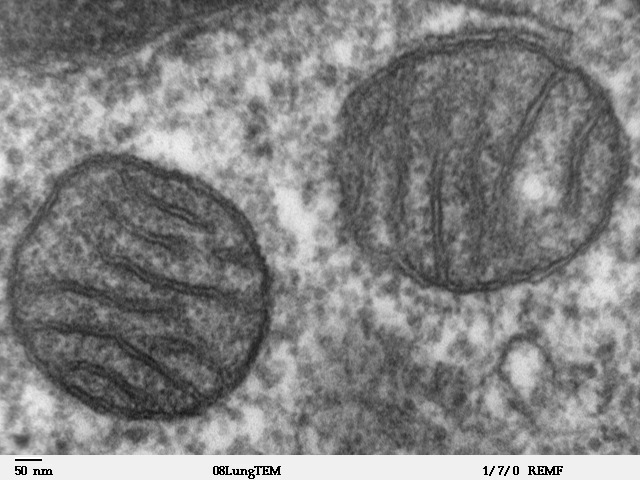
Featured image: Transmission electron micrograph of mitochondria in mammalian lung tissue. Credit: Louisa Howard




Leave a Reply