
When the FDA expanded approval for semaglutide to weight management in 2021, the drug’s sales weren’t the only thing that took off. So did calls to poison control centers across the country — and a University of Texas at San Antonio undergraduate set out to find out whether that surge was a real consequence of the approval or simply a coincidence.
Jordan Miller, then an undergraduate at UT San Antonio, began digging into the question under the guidance of David Han, the Romo Endowed Professor in the university’s Department of Statistics & Data Science. Semaglutide and the broader class of drugs it belongs to, known as Glucagon-Like Peptide-1 Receptor Agonists (GLP-1RAs), had originally been developed to treat type 2 diabetes. After the FDA’s 2021 approval for chronic weight management, the drugs became a cultural phenomenon — and poison control centers started fielding a lot more calls.
“One of them was this quite odd category of semaglutide,” Han said. “We suspected that the call volume was skyrocketing because of the misuse and mishandling of this drug and that it may be attributed to the FDA approval of this drug for weight management.”
With support from a Provost’s Undergraduate Research Fellowship, Miller teamed up with Robert S. Miller, a senior specialist in poison information at UT Health San Antonio’s Long School of Medicine, and Shawn M. Varney, a professor of emergency medicine and medical director of the South Texas Poison Center, to comb through the data.
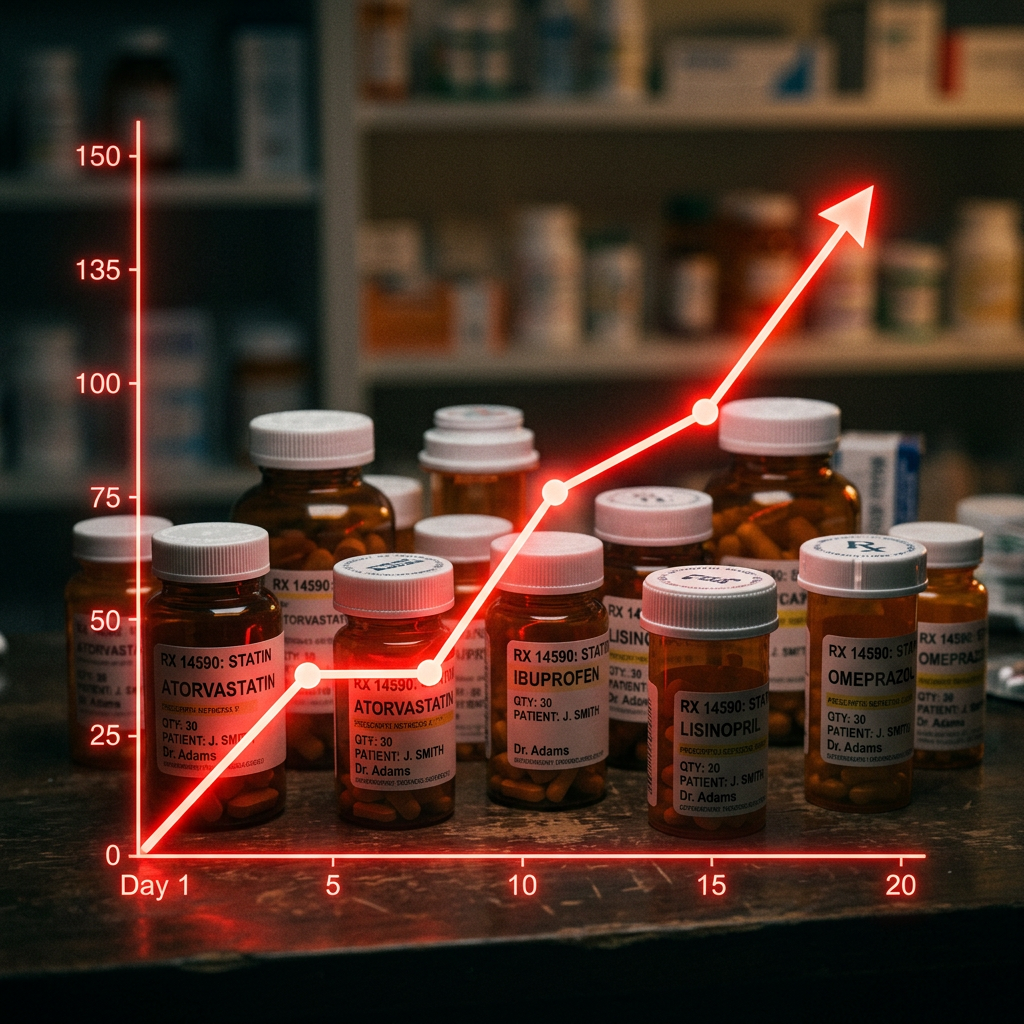
The numbers told a stark story. Before 2021, poison control centers nationwide logged roughly 1,000 to 1,500 GLP-1RA-related cases a year. After mid-2021, those volumes nearly doubled. By 2023, poison centers were recording more than 8,000 calls tied to the drug class — an increase of more than fivefold from the pre-approval baseline.
“In that figure that tracks the increase by specific drug, I wasn’t expecting semaglutide to be so incredibly dominant,” Miller recalled. “I figured that it would lead the pack, but it was staggering. On the other hand, it makes sense with all the media attention.”
Most of the calls, the team found, didn’t stem from deliberate misuse but from unintentional dosing and therapeutic errors — mistakes that, in many cases, were entirely preventable. Semaglutide is meant to be injected once a week, with patients starting at a low dose and gradually increasing it over time. Two errors showed up again and again in the data: people injecting the drug daily instead of weekly, and people starting at the full target dose right away instead of titrating up gradually.
“Can you imagine something you’re supposed to trickle up to, and you’re going full blast and seven times more often than you’re supposed to?” Miller said.
Han said the gap between the diabetic patient population that had long used GLP-1RAs and the much larger population now using them purely for weight loss helped explain why call volume changed so dramatically after 2021. “When the GLP-1RA drugs are being sold to diabetic patients, that’s a completely different story versus when the drug is used for weight management,” Han said. “So we had to quantify this evidence to show that it stemmed from the FDA approval and how to contain the risk. We need to better educate the public, because how this drug behaves in our body and its long-term safety are not yet fully understood.”
Miller, who has since become a UT San Antonio graduate student in mathematics, said the project began almost by accident, with a question she nearly talked herself out of asking. “You lose nothing by asking,” she said. “If you have a professor you really get along with or admire, you lose nothing by asking them what they’re working on or if they have space for a research assistant. I got really lucky with Dr. Han saying, ‘I’m here to help — you pick what you want to work on.’”
Han described the project as an example of what data science is ultimately supposed to accomplish. “This work demonstrates the quantified impact of these drugs on public health,” he said. “Statistics, data science, analytics, machine learning and AI are meant to help people. We use them to transform data from any field into meaningful insight and informed action. Without that focus, it becomes hollow — numbers without real impact.”
Miller went on to present the findings at UT San Antonio’s Los Datos conference, where she won first prize. The research was later published in the Journal of Medical Toxicology, the official journal of the American College of Medical Toxicology, and was also featured as a cover story in Significance, the flagship magazine jointly published by the Royal Statistical Society and the American Statistical Association.
Both Miller and Han see the fix as largely a matter of communication — from the prescriber’s office to the pharmacy counter — rather than any flaw in the drug itself. Clearer counseling on the weekly injection schedule and the importance of gradual dose escalation, they argue, could head off a large share of the errors driving the call volume. As GLP-1RAs continue to reshape obesity treatment and weight-loss culture more broadly, the study adds a cautionary data point: a drug’s surging popularity can outpace the public’s understanding of how to use it safely, with consequences that show up first in the unglamorous, easily overlooked logs of the nation’s poison control hotlines.
Endnotes
Journal: Journal of Medical Toxicology
Also featured in: Significance (Royal Statistical Society / American Statistical Association)
Source: University of Texas at San Antonio, via EurekAlert!, June 23, 2026



Leave a Reply