
HHS Cuts Routine Childhood Vaccine Recommendations, Shifting More Shots to “High-Risk” or Shared Decisions: Federal officials announced an immediate overhaul of the US childhood immunization schedule, cutting universally recommended vaccines from 17 to 11 and modeling the policy on Denmark’s schedule. CDC acting director Jim O’Neill said six vaccines are now recommended only for “high-risk” children: RSV, hepatitis A, hepatitis B, dengue, and two meningococcal vaccines (MenACWY and MenB). A third pathway—“shared clinical decision-making”—will apply to rotavirus, COVID-19, influenza, meningococcal disease, hepatitis A, and hepatitis B. The CDC also shifted to a single dose of HPV vaccine and said all vaccines in any category remain insurance-covered. Public health and pediatric groups condemned the move as bypassing the usual evidence-based ACIP process and warned it could fuel a return of preventable diseases; court challenges are expected. (CIDRAP)
Africa’s oldest cremation: a 9,500-year-old pyre rewrites mortuary practice in Malawi: A Science Advances study reports the oldest known evidence of intentional cremation in Africa: an in-situ funerary pyre dated to about 9,500 years ago at Hora 1, beneath a rock shelter at the base of Mount Hora in northern Malawi. Researchers recovered around 170 cremated bone fragments and identified the individual as an adult female. Burning patterns suggest the body was placed on the pyre soon after death; cut marks on limb bones indicate deliberate processing, and the absence of skull fragments and teeth suggests the head may have been removed before burning. The authors also report broader traces of repeated ritual fires at the site across the early Holocene, hinting that cremation was part of a longer-lived ceremonial landscape. (Archaeology)
Medieval burials in Spain’s Menga dolmen show a Neolithic monument’s long afterlife: Two adult burials placed in the atrium of the Menga dolmen in Antequera, Spain—built in the late Neolithic—suggest the monument remained a meaningful landmark thousands of years later. Radiocarbon dates place the interments between the 8th and 11th centuries CE, during Al-Andalus. With no grave goods, both individuals were buried face-down and aligned with the dolmen’s central axis, a pattern broadly consistent with Islamic funerary practice but unusually attentive to the architecture of the monument itself. Researchers were able to recover ancient DNA from only one person, identified as an adult male, underscoring how preservation limits can shape what we learn. The case illustrates how later communities could reuse prehistoric monuments to anchor newer identities and rituals. (Archaeology)
New fresco fragments at the Villa of Poppaea expand the artistry preserved by Vesuvius: Archaeologists at the Villa of Poppaea in Oplontis—an elite Roman residence preserved by Mount Vesuvius in 79 C.E.—have uncovered additional fragments of wall painting that add detail to the villa’s decorative program. Smithsonian reports the new imagery includes part of a peahen, which appears to echo a peacock motif known from another section of the same wall, and fragments of a comedic theatrical mask that complement earlier finds of tragedy-mask imagery. Rather than a single showpiece, the discovery is a reminder that these villas were layered, room by room, with scenes meant to impress and entertain. Each newly exposed patch helps reconstruct not only what people saw on the walls, but how they staged status through art in the shadow of Vesuvius. (Smithsonian)
Sahelanthropus gets fresh “bipedal” evidence—plus fresh reasons for caution: Sahelanthropus tchadensis, a roughly seven-million-year-old primate from Chad’s Djurab desert, sits near the debated edge of the human lineage. A new Science Advances paper reexamines limb bone fragments attributed to Sahelanthropus—especially a femur and ulnae—comparing their anatomy with living primates and other fossils. Smithsonian highlights one key feature the authors emphasize: a rounded femoral tubercle that anchors a major ligament important for stabilizing upright locomotion. The researchers argue the suite of traits is more consistent with bipedalism than knuckle-walking. But the story also stresses how contested these inferences remain, because fragmentary bones can be assigned and interpreted in multiple ways. The upshot is less a final verdict than a sharpened call for more fossils and more transparent comparative analyses. (Smithsonian)
After 96 years, a colossal Ramesses II statue may be reunited from two halves: Popular Mechanics reports that archaeologists have identified the long-missing upper portion of a colossal statue of Ramesses II, potentially allowing it to be reunited with the lower half excavated in 1930. The earlier discovery led researchers to estimate the monument originally stood about 23 feet tall. The newly announced top half—found by U.S. and Egyptian teams near the ancient city of Hermopolis—is described as being in pristine condition, a rare state for a massive stone sculpture. Reassembly would be more than a photogenic win: matching breaks, proportions, and iconography can clarify workshop practices and how royal imagery was displayed and reused over time. It’s a reminder that archaeology can be a decades-long puzzle, with key pieces surfacing generations after the first excavation. (Popular Mechanics)
DNA shows three 1,100-year-old Hungarian “elite warrior” graves belonged to relatives: Archaeologists in Hungary have excavated three richly furnished burials dating to roughly 1,100 years ago, each containing ornate weapons and other high-status items. Live Science reports that ancient DNA analysis indicates the men were biologically related—two likely a father and son—adding a family dimension to an elite “warrior grave” narrative that often stops at artifacts. The grave goods still matter: weapon forms and craftsmanship help place the burials within the politics and military culture of the era. But kinship turns the interpretation outward, toward inheritance, household power, and how status may have been reproduced across generations. It’s a good example of how genomics is changing field archaeology: the story of a cemetery now routinely includes who people were to one another, not just what they were buried with. (LiveScience)
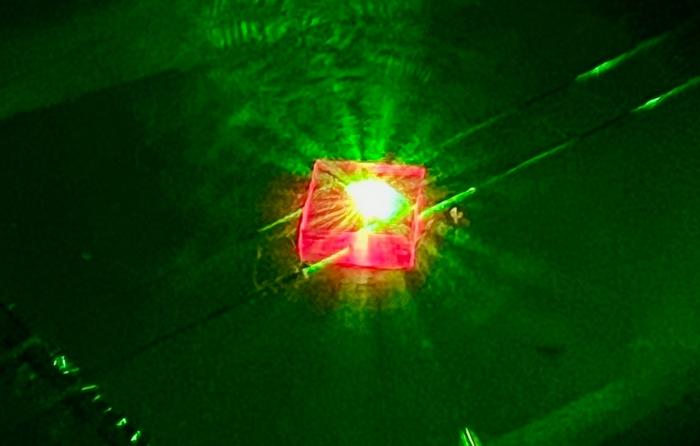
A laser “time-gating” method reveals how 3,000-year-old ivory decays—without harming it: Studying ancient ivory is notoriously hard: aging makes it fragile, and fluorescence under laser light can swamp the Raman signals used for chemical identification. A team at the Chinese Academy of Sciences has developed a microscope-integrated, time-gated Raman spectrometer that suppresses fluorescence by capturing Raman information after a short delay, enabling micrometer-scale, non-destructive chemical mapping. Phys.org reports the method was tested on about 3,000-year-old ivories from China’s Sanxingdui site, where conventional Raman approaches struggle. The researchers say the approach can distinguish key chemical signatures tied to deterioration and treatment history without removing samples, which is crucial when objects are too delicate to touch with a blade. If it scales, the tool could make conservation decisions more evidence-based: diagnose decay before it becomes visible, then choose gentler stabilization strategies. (phys.org)
Tooth enamel “big data” maps continuous, gendered migration into early medieval England: A University of Edinburgh release describes a study arguing that migration into England from roughly AD 400–1100 was continuous and multi-directional, not just a few isolated waves. Researchers analyzed more than 700 isotopic signatures from tooth enamel—chemical traces of childhood geography—and paired those mobility signals with ancient DNA from 316 individuals. They report migrants arriving not only from nearby Wales and Ireland but also from farther afield, including the Mediterranean and the Arctic. The study also finds a spike in movement during the 7th–8th centuries, with women appearing more likely to have moved long distances than men. Together, the data portrays early medieval England as a connected society shaped by steady mobility as much as by headline conquests. (EurekAlert)
Ancient HHV-6 genomes show a modern childhood virus was already circulating in the Iron Age: Human herpesvirus 6 (HHV-6) infects most people in early childhood today, but Discover reports that a new Science Advances study pushes its documented history back at least 2,500 years. Researchers reconstructed ancient genomes of HHV-6A and HHV-6B from archaeological human remains across Europe, showing both lineages were already circulating in the Iron Age. The work also highlights what makes HHV-6 unusual: in rare cases, it can integrate into human chromosomes, turning infection into a genomic passenger that can be inherited. Ancient sequences let scientists track viral evolution alongside human history and ask whether past variants shaped today’s disease patterns. It’s pathogen archaeology in the literal sense—using burials to recover not just people, but their viruses. (Discover)
A legendary fossil is forcing scientists to rethink human origins: “Little Foot” may be a new species: ScienceDaily reports that new research argues South Africa’s “Little Foot”—one of the most complete early hominin skeletons ever recovered—doesn’t fit cleanly within any known Australopithecus species. The team contends Little Foot’s distinctive mosaic of anatomical traits warrants classification as a new species, which would add another branch to the early human family tree and complicate simple narratives of a single dominant lineage. Because Little Foot preserves far more of the skeleton than most contemporaneous fossils, the argument leans on whole-body comparisons rather than a single jaw or tooth. If accepted, the reclassification would reshape how researchers interpret diversity among southern African hominins, including which lineages overlapped in time and space. As with many major fossil claims, the next step will be testing the proposal against other specimens and alternate anatomical models. (Science Daily)


Leave a Reply